TheYavue Official Website › Blog › Serving size
One capsule on the panel, two on the label: reading the TheYavue serving size
The TheYavue Supplement Facts panel is written against a serving of one capsule. The directions ask for one capsule twice a day. Both statements are printed on the same bottle, and together they mean every figure on that panel is a half-day.
Why this is the first thing to check on any panel
Most advice about reading a supplement label starts with the ingredient list. That is the wrong place to start, because a number you have not scaled correctly is worse than no number at all.
Start with two things instead: the serving size printed at the top of the Supplement Facts panel, and the directions printed somewhere else on the label. If they agree, read on normally. If they do not, every figure in the table needs multiplying before it means anything.
On TheYavue they do not agree. The panel reads Serving Size: 1 Capsule and Servings Per Container: 60. The directions read: For best results, take one (1) veggie capsule twice daily, 20-30 minutes before a meal with an 8 oz. glass of water.
So the panel is describing a half-day. Sixty servings in the bottle is thirty days at the label dose, which is the other thing that falls out of the same observation and is much more often got right.
What the two statements actually say
A Supplement Facts panel has a serving size chosen by the manufacturer. It is a unit of account, not an instruction. Everything below it, every milligram and every percentage of a daily value, is expressed per that unit.
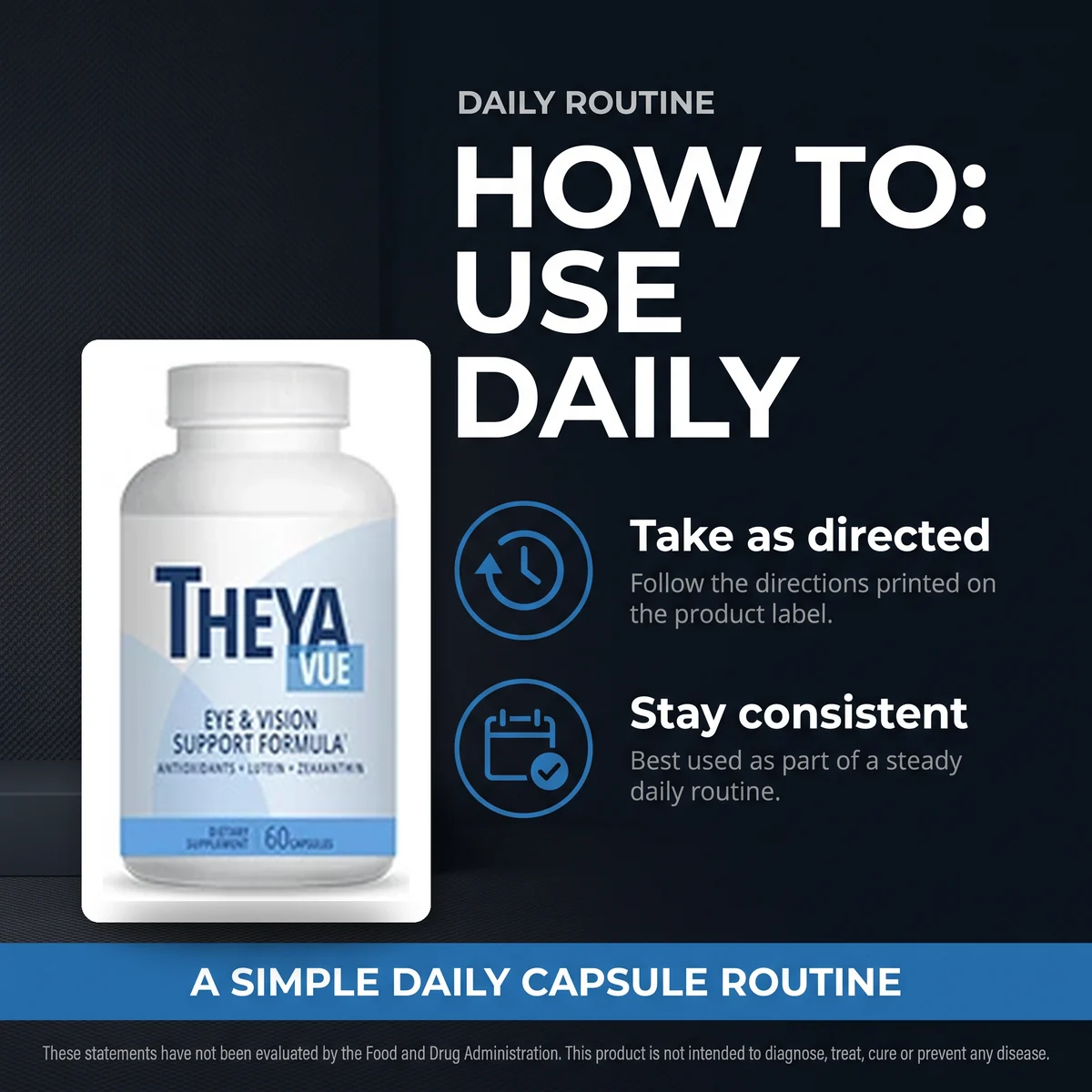
The directions are separate and they are the instruction. They tell you how many of those units to take and when.
When the two match, a reader can take the panel at face value. When they differ, the panel understates or overstates what a person consumes by exactly that ratio. Here the ratio is two, and it runs in the direction of understating.
That is worth being precise about because the error is invisible. Nothing looks wrong. The panel is accurate, the directions are accurate, and a reader who takes the first at face value walks away with half the formula in their head.
- The panel is per one capsule. It is a unit of account.
- The directions are two capsules a day. They are the instruction.
- Sixty capsules a bottle is thirty days, not sixty.
- Every amount in the table doubles across a day.
- Nothing on the bottle prints the doubled figures.
| Row on the panel | Per 1 capsule | Per day at two | Does the difference matter? |
|---|---|---|---|
| Vitamin B3 (as Niacin) | 20 mg NE | 40 mg NE | Yes. 35 mg is the adult upper intake level for nicotinic acid |
| Zinc (as Zinc oxide) | 16 mg | 32 mg | Yes, if you take anything else containing zinc |
| Biotin | 400 mcg | 800 mcg | Worth a sentence to a laboratory |
| Vitamin C | 100 mg | 200 mg | No. Both are comfortable |
| Vitamin B12 | 13.5 mcg | 27 mcg | No. Water-soluble, surplus excreted |
| Selenium | 4 mcg | 8 mcg | No. Both are a rounding error against a dose |
| Proprietary Blend | 240.5 mg | 481 mg | Yes, and in the product’s favour for once |
The first two number columns are the label. The third is the first multiplied by two, which is what the directions ask for.
The three rows where the difference matters
Most of the doubling is unremarkable. Twice a rounding error is still a rounding error, and twice a comfortable amount of vitamin C is still comfortable. Three rows are different and they are worth knowing before the first capsule rather than after it.
Niacin, which crosses a published ceiling
The panel prints 20 mg NE per capsule, so 40 mg NE a day. A 2017 systematic review and meta-analysis derived the adult tolerable upper intake level for nicotinic acid at 35 mg a day. Two capsules clear it; one does not.
That limit is set on flushing rather than on any organ toxicity, which makes it a tolerability figure rather than an alarm. A 2024 review describes the mechanism: prostaglandin release in the skin, small vessels dilating, and warmth and redness across the face and upper chest for under an hour. It fades with repeated exposure.
It is still the clearest example of why this arithmetic matters. A reader who thinks they are taking 20 mg of niacin is under the ceiling. A reader following the directions is not, and nothing on the bottle told them.
Zinc, where the risk is additive
Sixteen milligrams a capsule is 32 mg a day, against an adult upper intake level of 40 mg. On its own that is a well-chosen amount: the original AREDS trial used 80 mg, AREDS2 tested a 25 mg arm, and this sits between them.
The problem is arithmetic rather than chemistry. A multivitamin carrying 11 to 15 mg takes the daily total over the ceiling. A zinc immune formula during a cold takes it well over, usually for a week at a stretch. A 2026 systematic review covers what sustained excess produces, and it is mostly a copper problem rather than a zinc one.
A reader working from the panel figure of 16 mg would conclude there was plenty of room. There is about eight milligrams of room.
Biotin, which is a laboratory problem rather than a safety one
Four hundred micrograms a capsule is 800 mcg a day, which is a great deal of a daily value and not a safety concern. There is no established upper level for biotin.
What it is, is a measurement issue. A 2022 review sets out how circulating biotin interferes with streptavidin-biotin immunoassays, which includes thyroid panels and cardiac troponin. Documented interference is generally reported from about 5 mg a day, well above this.
So the risk is low and the right response is one sentence at the blood-test desk. Getting the figure right still matters, because 800 mcg is the number to mention and 400 is not.
Order TheYavue on the official website
Sixty capsules a bottle, one twice a day, thirty days a bottle. Every amount on this website is printed per capsule and per day, because the bottle only prints one of them.
One bottle $59 · six bottles $234 · 60-day money-back guarantee
Order TheYavue On The Official WebsiteOne capsule twice a day · 60 a bottle · lot THE-26/TH-4593
Why a label is allowed to do this
There is no rule requiring a panel’s serving size to match a product’s directions. The serving size is the manufacturer’s to choose and the directions are the manufacturer’s to write, and nothing obliges them to agree.
The labelling regulation governs what a panel must contain and how it must be laid out. It is specific about declaring a serving size and about expressing amounts against it, and silent on whether that serving is a day’s intake.
Why a manufacturer would choose the smaller unit is not knowable from outside. A per-capsule panel makes percentages of a daily value look more modest, which some formulators prefer. It also makes a multi-capsule product easy to compare, wrongly, against a single-capsule competitor.
None of that is an accusation and the practice is entirely ordinary. It is simply a thing a reader has to do for themselves, and a thing almost nobody does.
A panel headed “Serving Size: 2 Capsules” with doubled figures would describe exactly the same product, sell exactly the same bottle, and be read correctly the first time. There is no argument against it that survives being written down.
How to spot it on any bottle
This is the transferable part and it works on every supplement on every shelf. It takes about ten seconds.
- Find the serving size at the top of the Supplement Facts panel. It is always the first line.
- Find the directions. They are usually on a side panel or the back, under “Suggested Use”.
- Divide the daily direction by the serving size. That is your multiplier.
- If the multiplier is one, read the panel as printed.
- If it is anything else, multiply every figure you care about before comparing it with anything.
- Then check the servings-per-container line, which tells you how many days the bottle covers once you have done the division.
| If a page tells you | It has | What it should say |
|---|---|---|
| “16 mg of zinc” | Quoted the panel and ignored the directions | 32 mg a day at the label dose |
| “20 mg of niacin” | The same error, on the row where it matters most | 40 mg NE a day, above a 35 mg upper intake level |
| “60 servings per bottle” | Quoted the panel accurately | Thirty days, because a day is two servings |
| “A 240.5 mg blend” | Quoted the panel accurately | 481 mg a day, which is the number worth comparing against a trial |
Every row in the left column is a true statement about the panel and a misleading statement about the product.
- The panel is per one capsule. The directions are two a day.
- Every printed amount doubles before it reaches you.
- Niacin reaches 40 mg NE a day against a 35 mg upper intake level.
- Zinc reaches 32 mg against a 40 mg upper level, before anything else you take.
- Sixty capsules is thirty days, not sixty.
What this does not change
Three things, so the point is not overstated.
It is not a safety failure. Forty milligrams of niacin and 32 mg of zinc are amounts many people take deliberately. The ceiling on the first is about flushing and the second is under its limit.
It is not unique to this product. Per-serving panels on multi-serving products are everywhere in this category, and the arithmetic above works on all of them.
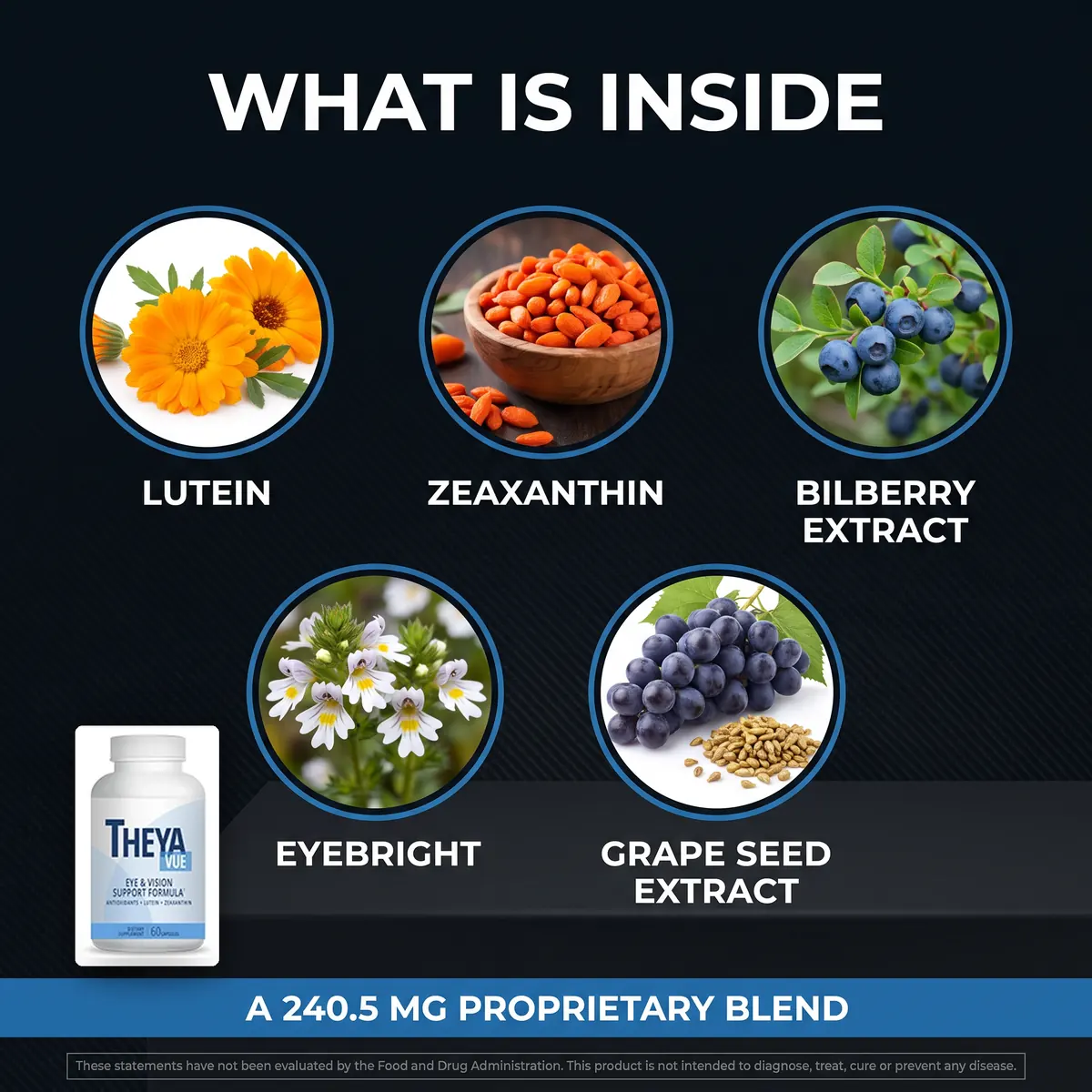
And it does not tell you anything about the blend. Doubling 240.5 mg gives 481 mg a day, which is a larger number and still a total shared between ten ingredients with no individual figures. That is a separate problem and it has its own article.
What it does change is the accuracy of everything else you read. The panel is on the supplement facts page with both columns printed side by side, which is the arrangement the bottle should have used.
New floaters, flashes of light, a shadow across part of your vision, sudden blurring or pain in the eye need an examination within days. No supplement and no article is a reason to wait. If you take prescription medicine, take the bottle to a pharmacist: a Supplement Facts panel reads in seconds and a brand name does not.
References
- Minto C, Vecchio MG, Lamprecht M, et al. Definition of a tolerable upper intake level of niacin: a systematic review and meta-analysis of the dose-dependent effects of nicotinamide and nicotinic acid supplementation. Nutr Rev. 2017;75(6):471-490. PMID 28541582. https://pubmed.ncbi.nlm.nih.gov/28541582/
- Javaid A, Mudavath SL. Niacin-induced flushing: mechanism, pathophysiology, and future perspectives. Arch Biochem Biophys. 2024;761:110163. PMID 39322100. https://pubmed.ncbi.nlm.nih.gov/39322100/
- Dutta A, Chaudhary V, Kumari S, et al. Zinc-induced hematologic toxicities: a systematic review of descriptive studies. Biol Trace Elem Res. 2026;204(9):6628-6642. PMID 42087025. https://pubmed.ncbi.nlm.nih.gov/42087025/
- Age-Related Eye Disease Study Research Group. A randomized, placebo-controlled, clinical trial of high-dose supplementation with vitamins C and E, beta carotene, and zinc for age-related macular degeneration and vision loss: AREDS report no. 8. Arch Ophthalmol. 2001;119(10):1417-36. PMID 11594942. https://pubmed.ncbi.nlm.nih.gov/11594942/
- 21 CFR 101.36 — Nutrition labeling of dietary supplements. U.S. Food and Drug Administration, Code of Federal Regulations. https://www.ecfr.gov/current/title-21/chapter-I/subchapter-B/part-101/subpart-A/section-101.36
- Dasgupta A. Immunoassay design and biotin interference. Adv Clin Chem. 2022;109:165-183. PMID 35953126. https://pubmed.ncbi.nlm.nih.gov/35953126/