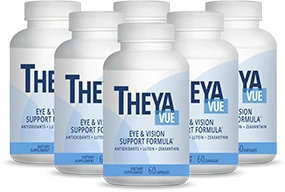
TheYavue Official Website › How It Works
How It WorksHow TheYavue works: macular pigment, an antioxidant base, and the clock both run on
TheYavue works on two tracks at once. Lutein and zeaxanthin accumulate in the macula over weeks and behave as a filter and an antioxidant there. Vitamin C, vitamin E, zinc and copper make up the nutrient base the large eye trials were built from. Neither track is fast, and the sixty-day window exists because of that.
What follows is a mechanism read off this label, with the measurements the research actually took rather than the ones a sales page would prefer.
The first track: what TheYavue’s carotenoids do in the retina
The macula is the small central region of the retina that does detailed vision, and it is yellow. The colour comes from three carotenoids held in the tissue: lutein, zeaxanthin and meso-zeaxanthin. Together they are called the macular pigment.
The body does not make any of them. They come from food, chiefly dark leafy greens, and from supplements, and they are transported on lipoproteins to the retina where they are concentrated far above blood levels. That concentration is measurable through the closed eye, as macular pigment optical density.
Two properties are usually given for why the pigment is there. It absorbs short-wavelength light before that light reaches the photoreceptors, and it quenches reactive oxygen species in a tissue with one of the highest oxygen demands in the body. Both are physical chemistry rather than speculation.
What supplementation does to that measurement has been tested repeatedly. A 2024 network meta-analysis pooled the randomised trials across a network of comparisons and found carotenoid supplementation raises macular pigment optical density. An open-label trial against the AREDS2 formula and a head-to-head randomised trial each compared formulations directly and reported changes in both pigment and visual function.
Macular pigment optical density going up is a real, repeatable finding. It is a biomarker. AREDS2 followed hard clinical outcomes over five years and its follow-up over ten, and those are the trials that speak to whether anything happens to sight. This bottle is sold for support, and support is the right word for a biomarker effect.
Where TheYavue sits on that track is unverifiable in one specific respect. Lutein is first by weight and zeaxanthin fifth in a 240.5 mg blend, and no individual figure is printed. The mechanism is sound; whether the amounts reach the studied range is not something the bottle answers.
The second track: the TheYavue nutrient base
Four nutrients on this panel were the formula that the original AREDS trial randomised in the 1990s: vitamin C at 500 mg, vitamin E at 400 IU, beta-carotene at 15 mg and zinc at 80 mg with 2 mg of copper. A companion report covered cataract in the same cohort.
AREDS2 then replaced the beta-carotene with lutein and zeaxanthin and tested a lower zinc arm. The Cochrane review is the 2023 Cochrane assessment of the whole body of work, and it is the most conservative summary available.
All four of those nutrients are on this label. Two of them, zinc and copper, are at amounts that sit inside the studied range. The other two are well below it. That is the fair description of the nutrient base here: present, with one pair placed carefully and one pair placed lightly.
| Nutrient | AREDS dose | TheYavue per day | Reading |
|---|---|---|---|
| Zinc | 80 mg (AREDS), 25 mg (AREDS2 low arm) | 32 mg | Between the two trial arms. The best-placed figure on the panel. |
| Copper | 2 mg | 2 mg | An exact match, and it is there to protect copper status against the zinc. |
| Vitamin C | 500 mg | 200 mg | Forty per cent of the trial dose. |
| Vitamin E | 400 IU (about 268 mg) | 20 mg | About a thirteenth. The trial dose is the one with safety questions attached. |
| Beta-carotene | 15 mg | 100 mcg RAE | A rounding error beside it, which is the reassuring reading. |
AREDS doses are the ones printed in the published trial protocols.
The zinc-and-copper pairing is worth one more sentence because it is the clearest evidence that this panel was written by somebody who had read the trials. Sustained zinc intake competes with copper absorption; AREDS added copper for that reason; this label carries the same 2 mg. That is not an accident.
Why TheYavue asks for two capsules rather than one
The directions are one capsule twice daily, before meals. Two things follow from that and they pull in different directions.
The first is arithmetic. The Supplement Facts panel is written against a serving of one capsule, so the whole panel doubles across a day. That is where 40 mg NE of niacin and 32 mg of zinc come from, and neither figure appears anywhere on the bottle.
The second is absorption. Splitting a dose across two meals is the better way to take fat-soluble compounds, because each portion meets a fresh round of dietary fat and bile. A single-dose crossover trial found the oil a lutein capsule is suspended in changes how much reaches the blood, and a formulation comparison found the same for formulation more broadly. A large observational study reports the association between fat intake and plasma carotenoid concentration in ordinary eating.
So twice a day is the right structure for what is in the capsule. The pre-meal instruction is the part worth thinking about, and it is discussed on how to take it.
What TheYavue cannot do, and why the mechanism says so
This section exists because the mechanism above makes certain claims impossible, and saying which ones is more useful than repeating a disclaimer.
Raising macular pigment does not change refractive error. Short-sightedness, long-sightedness and astigmatism are about the shape of the eye and the focusing power of the lens. No carotenoid alters either, and nothing on this bottle claims to.
It does not treat a diagnosed condition. Cataract, glaucoma, diabetic retinopathy and macular degeneration are diagnoses, they are managed by ophthalmologists, and the AREDS trials were run in people who already had a diagnosis and a specialist.
It does not act quickly. Pigment accumulates over weeks. A product built on that process cannot honestly be sold on a three-second result, and the sales page headline this product is marketed under does not appear anywhere on this website for that reason.
And it does not fix the environment. A 2022 review and a 2020 study document how strongly screen hours track with dry eye and the cluster of symptoms called computer vision syndrome. Those respond to blinking, breaks and humidity rather than to carotenoids.
Sudden blurring, new floaters, flashes of light, a curtain across part of the field, or pain: those are findings. They need an eye examination the same week. A supplement cannot read them and neither can this page.
Putting the TheYavue mechanism on a calendar
| Stage | What is happening | How it was measured in the research |
|---|---|---|
| Days 1 to 7 | Absorption with meals. Serum carotenoids begin to rise. | Single-dose crossover trials measure this directly in plasma. |
| Weeks 2 to 4 | Serum levels plateau. Retinal uptake has begun. | Serial macular pigment optical density readings. |
| Weeks 4 to 12 | Measurable pigment change in the supplementation trials. | The bilberry ciliary-muscle trial ran twelve weeks to its endpoint. |
| Months 3 to 12 | Continued accumulation; the plateau is individual. | Longer supplementation arms in the pigment meta-analysis. |
| Years | Clinical outcomes, if they are going to appear. | AREDS2 at five years and its report at ten. |
The right-hand column names the kind of measurement, not a promise about this product.
A week-by-week version written for somebody who has just started a bottle is on the results timeline.
How TheYavue works: common questions
Does TheYavue improve eyesight?
The bottle claims eye and vision support and this website does not go past it. What the research supports is that carotenoid supplementation raises macular pigment optical density, which is a measurement. Whether that changes what a person sees is a different question, and it is the one the five-year trials were built to answer.
How does TheYavue compare with eating spinach?
Dark leafy greens are the main dietary source of lutein and zeaxanthin and they arrive with the fat of a meal, which helps. The argument for a capsule is consistency rather than superiority. Somebody eating greens most days is already doing the thing this ingredient is for.
Why does TheYavue contain vitamins that have nothing to do with eyes?
Because it is a multivitamin with an eye blend attached, and describing it that way is more accurate than inventing a retinal role for riboflavin. Four of the fourteen printed rows have a genuine eye rationale. The rest are a base.
Is the zinc in TheYavue at the AREDS dose?
Not at the original one. AREDS used 80 mg; AREDS2 tested 25 mg and found no difference in progression. This label gives 32 mg a day, which sits between them and under the 40 mg upper intake level.
Can TheYavue help with screen fatigue?
The most relevant evidence is the bilberry ciliary-muscle trial, which used 240 mg a day of extract for twelve weeks. The entire blend here weighs 240.5 mg a capsule across ten ingredients, so that trial dose is not reproduced. Screen breaks and blinking have better evidence behind them and cost nothing.
The sources behind this TheYavue mechanism page
Fourteen records, each confirmed through the NCBI summary API in this session.
- Hu W, Seah V, Huang V, et al. Effect of antioxidant supplementation on macular pigment optical density and visual functions: a systematic review and network meta-analysis of randomized controlled trials. Adv Nutr. 2024;15(5):100216. PMID 38582248. https://pubmed.ncbi.nlm.nih.gov/38582248/
- Davey PG, Henderson T, Lem DW, et al. Visual function and macular carotenoid changes in eyes with retinal drusen: an open label randomized controlled trial to compare a micronized lipid-based carotenoid liquid supplementation and AREDS-2 formula. Nutrients. 2020;12(11):3505. PMID 33114566. https://pubmed.ncbi.nlm.nih.gov/33114566/
- Akuffo KO, Beatty S, Peto T, et al. The impact of supplemental antioxidants on visual function in nonadvanced age-related macular degeneration: a head-to-head randomized clinical trial. Invest Ophthalmol Vis Sci. 2017;58(12):5347-5360. PMID 29053808. https://pubmed.ncbi.nlm.nih.gov/29053808/
- Age-Related Eye Disease Study 2 (AREDS2) Research Group. Lutein + zeaxanthin and omega-3 fatty acids for age-related macular degeneration: the Age-Related Eye Disease Study 2 (AREDS2) randomized clinical trial. JAMA. 2013;309(19):2005-15. PMID 23644932. https://pubmed.ncbi.nlm.nih.gov/23644932/
- Chew EY, Clemons TE, Agrón E, et al. Long-term outcomes of adding lutein/zeaxanthin and omega-3 fatty acids to the AREDS supplements on age-related macular degeneration progression: AREDS2 report 28. JAMA Ophthalmol. 2022;140(7):692-698. PMID 35653117. https://pubmed.ncbi.nlm.nih.gov/35653117/
- Age-Related Eye Disease Study Research Group. A randomized, placebo-controlled, clinical trial of high-dose supplementation with vitamins C and E, beta carotene, and zinc for age-related macular degeneration and vision loss: AREDS report no. 8. Arch Ophthalmol. 2001;119(10):1417-36. PMID 11594942. https://pubmed.ncbi.nlm.nih.gov/11594942/
- Age-Related Eye Disease Study Research Group. A randomized, placebo-controlled, clinical trial of high-dose supplementation with vitamins C and E and beta carotene for age-related cataract and vision loss: AREDS report no. 9. Arch Ophthalmol. 2001;119(10):1439-52. PMID 11594943. https://pubmed.ncbi.nlm.nih.gov/11594943/
- Evans JR, Lawrenson JG. Antioxidant vitamin and mineral supplements for slowing the progression of age-related macular degeneration. Cochrane Database Syst Rev. 2023;9(9):CD000254. PMID 37702300. https://pubmed.ncbi.nlm.nih.gov/37702300/
- Marriage BJ, Williams JA, Choe YS, et al. Mono- and diglycerides improve lutein absorption in healthy adults: a randomised, double-blind, cross-over, single-dose study. Br J Nutr. 2017;118(10):813-821. PMID 29151374. https://pubmed.ncbi.nlm.nih.gov/29151374/
- Evans M, Beck M, Elliott J, et al. Effects of formulation on the bioavailability of lutein and zeaxanthin: a randomized, double-blind, cross-over, comparative, single-dose study in healthy subjects. Eur J Nutr. 2013;52(4):1381-91. PMID 23052623. https://pubmed.ncbi.nlm.nih.gov/23052623/
- Marhuenda-Muñoz M, Rinaldi de Alvarenga JF, Hernáez Á, et al. High fruit and vegetable consumption and moderate fat intake are associated with higher carotenoid concentration in human plasma. Antioxidants (Basel). 2021;10(3):473. PMID 33802859. https://pubmed.ncbi.nlm.nih.gov/33802859/
- Kosehira M, Machida N, Kitaichi N. A 12-week-long intake of bilberry extract (Vaccinium myrtillus L.) improved objective findings of ciliary muscle contraction of the eye: a randomized, double-blind, placebo-controlled, parallel-group comparison trial. Nutrients. 2020;12(3):600. PMID 32106548. https://pubmed.ncbi.nlm.nih.gov/32106548/
- Fjaervoll H, Fjaervoll K, Magno M, et al. The association between visual display terminal use and dry eye: a review. Acta Ophthalmol. 2022;100(4):357-375. PMID 34697901. https://pubmed.ncbi.nlm.nih.gov/34697901/
- Sánchez-Valerio MDR, Mohamed-Noriega K, Zamora-Ginez I, et al. Dry eye disease association with computer exposure time among subjects with computer vision syndrome. Clin Ophthalmol. 2020;14:4311-4317. PMID 33335383. https://pubmed.ncbi.nlm.nih.gov/33335383/
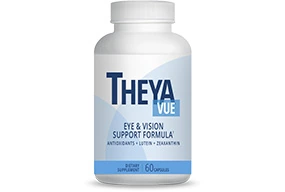
Order TheYavue on the official website
Two tracks, both of them slow: pigment that accumulates over weeks and a nutrient base from the AREDS trials. Sixty days to decide, opened bottles included.
One bottle $59 · six bottles $234 · 60-day money-back guarantee
Order TheYavue On The Official WebsiteOne capsule twice a day · 60 a bottle · lot THE-26/TH-4593