TheYavue Official Website › Benefits
BenefitsWhat the TheYavue label claims, read strictly, and the one claim this desk declined
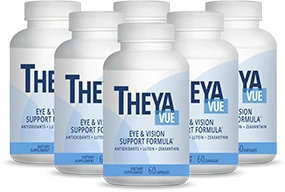
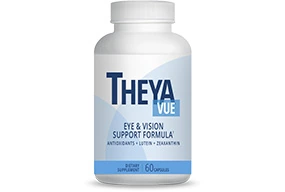
The TheYavue bottle makes one claim and repeats it: eye and vision support. Under it runs the line “Antioxidants, Lutein, Zeaxanthin”, and the seller’s artwork adds “made for daily use”. That is the whole ceiling. Nothing on the bottle promises sharper sight, and this website does not either.
A benefits page that reads the label strictly is more useful than one that reads it generously, because the strict version is the one you can hold the product to.
The three TheYavue claims, and what each one commits to
Printed on the bottle and on the seller’s own artwork:
- Eye & Vision Support Formula
- Antioxidants · Lutein · Zeaxanthin
- Made for daily use
| The claim | What it commits to | What would have to be true |
|---|---|---|
| Eye & Vision Support Formula | That the ingredients are relevant to how the eye works. | Ingredients with a plausible role in ocular tissue. Lutein and zeaxanthin qualify; so do zinc and copper. |
| Antioxidants | That the formula contains compounds with antioxidant activity. | Straightforwardly true. Vitamin C, vitamin E, alpha lipoic acid, the carotenoids and the flavonoids all qualify chemically. |
| Lutein · Zeaxanthin | That both are present. | Both are on the panel, first and fifth in the blend. Present is all it says. |
| Made for daily use | That the format suits a daily routine. | A capsule taken twice a day. True, and the accumulation biology means daily use is the only version that makes sense. |
A support claim is a structure-function claim under US supplement law. It is a statement about the ingredients, not a promise about an outcome.
Read that way, all four claims hold. They are also modest, and the modesty is doing work: none of them can be falsified by a person whose sight is unchanged after two months, because none of them promised a change in sight.
The TheYavue claim this desk declined to carry
The sales page this product is sold from is titled: 3-Second “Rapid Finger Trick” Restores Blurry Eyesight To 20/20.
That headline is not on the bottle, it is not in the distributor’s own claim list, and nothing in the reference set at the foot of this page supports it. Restoring acuity to 20/20 is a treatment claim about a medical outcome, and a dietary supplement cannot make one.
It is named here once for a specific reason. A reader who arrived from that page and then read this one would otherwise be left wondering which of the two is the real product description. The bottle is.
What the bottle says and what a sales page says are allowed to differ, and where they do, the bottle is the thing that arrives in the box and the thing a regulator reads.
Nothing in this formula changes refractive error, treats cataract, glaucoma, diabetic retinopathy or macular degeneration, or substitutes for an eye examination. AREDS2 and the Cochrane review of the field are the trials that looked at clinical outcomes in this category, and both were run in people already under specialist care.
What the TheYavue ingredients can support, on the published evidence
Below is the honest version of a benefits list: what each area of the formula has behind it, and how firm that footing is.
Macular pigment
The strongest thing here. A 2024 network meta-analysis pooled the randomised trials and found carotenoid supplementation raises macular pigment optical density, a directly measured quantity.
It applies to lutein and zeaxanthin, which are first and fifth in this blend at undisclosed amounts.
Antioxidant status
Chemically sound and clinically vague. Vitamin C at 200 mg a day and vitamin E at 20 mg are real intakes. Whether raising antioxidant status changes an eye outcome is the question the AREDS trials were built to answer, and the 2023 Cochrane review is the most careful summary of what they found.
Zinc and copper status
Two rows placed well. Thirty-two milligrams of zinc a day sits between the AREDS and AREDS2 arms, and the 2 mg of copper matches the pairing the original trial used to protect copper status against it.
Screen-related eye fatigue
The weakest footing of the four. The relevant trial is the 12-week ciliary-muscle study, which used 240 mg a day of bilberry extract. The entire blend here weighs 240.5 mg a capsule across ten ingredients, so that dose is not reproduced.
The ranking matters more than the list. A benefits page that presents four equally confident bullet points is hiding the fact that they are not equally confident.
HONEST CRITIQUE: what a TheYavue buyer is really getting
Stripped of the marketing, the offer is this.
You are buying breadth. Twenty-four ingredients on one panel, covering the carotenoids, a botanical group, the four AREDS nutrients and a B-vitamin base, for $39 to $59 a bottle. Assembled separately that is five or six products and considerably more money.
You are giving up verification. The ten ingredients that justify the category sit behind one number, and no reading of the label recovers them. If the milligrams are what you came for, this is the wrong bottle and there are right ones.
And you are accepting some passengers. Eyebright has no oral trial. Quercetin, rutin and taurine have no eye-outcome trial. Selenium, chromium, calcium and magnesium are present at a few per cent of a daily value. On a label of twenty-four, seven are doing very little, and a shorter list at published doses would be a better formula.
Against that: lutein leads the blend, zeaxanthin is in it, the zinc is the best-placed figure on the panel, the copper is matched to it deliberately, and the beta-carotene is far below the amount that ended the first AREDS formula. Somebody who knew this literature wrote the printed half of this label.
What TheYavue does well
- Twenty-four ingredients for the price of one product.
- Fourteen printed amounts, which is above the category average.
- Zinc at 32 mg a day, between the two AREDS arms.
- Copper at 2 mg, matched to the zinc exactly as the trial did.
- Beta-carotene present at an amount far below the level of concern.
- Sixty days to test it, opened bottles included.
What TheYavue does badly
- Lutein and zeaxanthin have no individual figure.
- The blend total is smaller than the bilberry trial’s own dose.
- Eyebright is fourth by weight with no oral trial behind it.
- Niacin reaches 40 mg NE a day against a 35 mg upper level.
- Four rows are present at a few per cent of a daily value.
- The sales page headline is a claim the bottle does not make.
TheYavue benefits: common questions
Does TheYavue improve vision?
The bottle claims support, not improvement, and this website holds to that. What the evidence supports is that carotenoid supplementation raises macular pigment optical density. That is a measurement in the retina, and it is not a promise about what you will see.
Why does the sales page say it restores eyesight to 20/20?
That headline belongs to the sales page and not to the bottle. It is a treatment claim, no source in this desk’s reference set supports it, and it appears on this website only where it is being declined.
What is the single best-supported thing TheYavue does?
Delivers lutein and zeaxanthin daily in a convenient form. The pigment effect is repeatedly measured. The amount in this particular bottle is the part the label will not tell you.
Will TheYavue help with dry, tired eyes at the end of a screen day?
Possibly, and the evidence for it here is thin. The bilberry trial that measured ciliary muscle contraction used 240 mg a day, and the whole blend is 240.5 mg a capsule across ten ingredients. Blinking, breaks and screen distance have better evidence and cost nothing.
Is TheYavue better value than buying the ingredients separately?
On price, clearly. On certainty, clearly not. Separate products print their amounts; this one prints a blend total. That is the trade, and it is the same trade every proprietary blend on this shelf offers.
The sources behind this TheYavue claims page
Nine sources, including the FDA labelling regulation that permits a proprietary blend to print one total instead of ten figures.
- Hu W, Seah V, Huang V, et al. Effect of antioxidant supplementation on macular pigment optical density and visual functions: a systematic review and network meta-analysis of randomized controlled trials. Adv Nutr. 2024;15(5):100216. PMID 38582248. https://pubmed.ncbi.nlm.nih.gov/38582248/
- Age-Related Eye Disease Study 2 (AREDS2) Research Group. Lutein + zeaxanthin and omega-3 fatty acids for age-related macular degeneration: the Age-Related Eye Disease Study 2 (AREDS2) randomized clinical trial. JAMA. 2013;309(19):2005-15. PMID 23644932. https://pubmed.ncbi.nlm.nih.gov/23644932/
- Age-Related Eye Disease Study Research Group. A randomized, placebo-controlled, clinical trial of high-dose supplementation with vitamins C and E, beta carotene, and zinc for age-related macular degeneration and vision loss: AREDS report no. 8. Arch Ophthalmol. 2001;119(10):1417-36. PMID 11594942. https://pubmed.ncbi.nlm.nih.gov/11594942/
- Evans JR, Lawrenson JG. Antioxidant vitamin and mineral supplements for slowing the progression of age-related macular degeneration. Cochrane Database Syst Rev. 2023;9(9):CD000254. PMID 37702300. https://pubmed.ncbi.nlm.nih.gov/37702300/
- Kosehira M, Machida N, Kitaichi N. A 12-week-long intake of bilberry extract (Vaccinium myrtillus L.) improved objective findings of ciliary muscle contraction of the eye: a randomized, double-blind, placebo-controlled, parallel-group comparison trial. Nutrients. 2020;12(3):600. PMID 32106548. https://pubmed.ncbi.nlm.nih.gov/32106548/
- Zhang Y, Yang J, Na X, et al. Association between beta-carotene supplementation and risk of cancer: a meta-analysis of randomized controlled trials. Nutr Rev. 2023;81(9):1118-1130. PMID 36715090. https://pubmed.ncbi.nlm.nih.gov/36715090/
- Minto C, Vecchio MG, Lamprecht M, et al. Definition of a tolerable upper intake level of niacin: a systematic review and meta-analysis of the dose-dependent effects of nicotinamide and nicotinic acid supplementation. Nutr Rev. 2017;75(6):471-490. PMID 28541582. https://pubmed.ncbi.nlm.nih.gov/28541582/
- 21 CFR 101.36 — Nutrition labeling of dietary supplements. U.S. Food and Drug Administration, Code of Federal Regulations. https://www.ecfr.gov/current/title-21/chapter-I/subchapter-B/part-101/subpart-A/section-101.36
- Questions and Answers on Dietary Supplements. U.S. Food and Drug Administration. https://www.fda.gov/food/information-consumers-using-dietary-supplements/questions-and-answers-dietary-supplements
Order TheYavue on the official website
Eye and vision support, which is what the bottle claims and all it claims. Sixty days to decide, opened bottles included.
One bottle $59 · six bottles $234 · 60-day money-back guarantee
Order TheYavue On The Official WebsiteOne capsule twice a day · 60 a bottle · lot THE-26/TH-4593