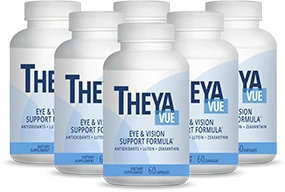
TheYavue Official Website › Ingredients
IngredientsTheYavue ingredients: all twenty-four on the panel, with the dose each one’s research used
TheYavue lists twenty-four ingredients. Fourteen vitamins and minerals carry a printed amount; ten more share a 240.5 mg proprietary blend with no individual figures. Lutein leads the blend and zeaxanthin is fifth. This page takes all twenty-four in order and prints the dose the published research used beside each one.
The pack names six of them. The panel names twenty-four, and where the two disagree the panel is the bottle that arrives in the box.
Where the TheYavue ingredient list actually comes from
Three documents describe this formula and they do not agree, so it is worth saying at the top which one governs.
The distributor’s product pack names six ingredients: lutein, zeaxanthin, bilberry extract, eyebright, alpha lipoic acid and vitamin A as beta-carotene. It prints no amount against any of them.
The seller ships two ingredient graphics. One shows the same six. The other shows five, dropping alpha lipoic acid and vitamin A and adding grape seed extract, and it prints the blend total of 240.5 mg.
The Supplement Facts panel resolves all of it. Every ingredient on both graphics is on the panel, grape seed included. The pack was short rather than wrong, and the difference is stated here once rather than smoothed over.
The pack lists six ingredients. The panel lists twenty-four. Nothing on the pack contradicts the panel; it simply stops early. Where a figure exists it comes from the panel, because the panel is what is printed on the bottle.
The other-ingredients line reads: Cellulose (Vegetable Capsule), Rice Flour, Magnesium Stearate, Silicon Dioxide. That line is the reason the vegetarian mark on the pack survives scrutiny, and it is a cellulose shell rather than gelatin.
The ten inside the TheYavue proprietary blend
These are the ten a buyer is shopping for and the ten with no individual amount. They appear below in the order the label prints them, which federal labelling rules require to be descending order of weight. That order is the only quantitative information published about any of them.
Lutein
Xanthophyll carotenoid1st by weight in the blendThe pigment the macula concentrates, and the reason a bottle like this exists. It is not synthesised in the body; it arrives from dark leafy greens, egg yolk and maize, and it accumulates in the retina over weeks.
AREDS2 randomised 10 mg a day alongside 2 mg of zeaxanthin in more than four thousand people and followed them for five years. The long-term follow-up reported on the same cohort at ten. Those are the reference doses for this ingredient, and they are the only ones worth quoting.
Listing lutein first means it outweighs the other nine. It does not mean it reaches 10 mg, and nothing on this label says whether it does.
Bilberry Extract
Vaccinium myrtillus (fruit)2nd by weightAn anthocyanin-rich berry extract with a long reputation and a mixed record.
The reputation is night vision, and a 2004 systematic review went looking for it across twelve placebo-controlled trials. The four most rigorous, in healthy people with normal sight, were all negative. That is the single most useful thing anyone can tell you about bilberry.
The better evidence is elsewhere. A 2020 randomised trial gave 240 mg a day of standardised extract for twelve weeks and measured objective ciliary muscle contraction after screen work, which is a narrower claim and a more convincing one.
Hold that 240 mg figure next to the blend total of 240.5 mg a capsule. Bilberry is second of ten here.
Alpha Lipoic Acid
ALA3rd by weightAn antioxidant that is soluble in both fat and water, which is unusual and is why it turns up in formulas aimed at tissue with a high metabolic rate.
Two trials set its range. A phase II trial randomised 1,200 mg a day against placebo in geographic atrophy. An earlier trial used 300 mg a day for three months and measured contrast sensitivity in people with diabetes.
Three hundred milligrams is the smaller of the two and it is still more than the entire daily blend. Third by weight out of ten cannot get close to it.
Eyebright
Euphrasia officinalis (herb)4th by weightA herb named for this exact use, with essentially nothing behind the name.
Four separate PubMed searches for a clinical trial of oral Euphrasia returned nothing at all. The only human record is a 2000 cohort, a single-arm prospective cohort of single-dose eye DROPS in conjunctivitis. The only other is an in-vitro corneal-cell assay.
Drops onto the eye and a capsule swallowed are not the same intervention, and conjunctivitis is not vision. This desk records eyebright as a refused claim. It is fourth by weight in a ten-ingredient blend, which means it is displacing something with a better record.
Zeaxanthin
Xanthophyll carotenoid5th by weightLutein’s partner, and the pigment that sits at the very centre of the macula where lutein thins out. The two are always discussed together and were always tested together.
AREDS2 used 2 mg of it, a fifth of the lutein dose, so finding it below lutein on a label is expected. Finding it below three botanicals is the part worth noticing.
A 2024 network meta-analysis pooled the supplementation trials that measured macular pigment optical density directly and found the carotenoid arms raise it. That is a measured biological effect rather than a marketing claim, and it is the strongest thing this category has.
Quercetin
Sophora japonica (bud)6th by weightA flavonol with a large laboratory literature and a well-documented absorption problem. A 2013 trial found dietary fat raises how much reaches the blood, and a lecithin phytosome study exists because plain quercetin is absorbed so poorly that delivery systems are built for it.
Human trials of quercetin cover altitude sickness, vaccine response and inflammation. None of the ones this desk found measured an eye outcome. Sixth by weight in a 240.5 mg blend, in a form known to absorb badly.
Rutin
Sophorae japonica L. (flower)7th by weightA flavonoid glycoside from the same plant as the quercetin above, which is why the two appear together.
Its best evidence is vascular. A 2015 systematic review reviewed the hydroxyethylrutoside trials in chronic venous insufficiency, where the outcome is leg oedema and heaviness. That is a real result about capillary behaviour and it is not an eye result.
The reasoning for putting it in an eye formula is that retinal capillaries are capillaries. That is an argument, not a finding.
L-Taurine
Amino acid8th by weightThe retina holds taurine at a higher concentration than almost any other tissue, and the evidence that it matters is unusually direct for a supplement ingredient. It is also evidence of the wrong kind.
A 2009 study showed that the anti-epileptic drug vigabatrin causes retinal damage by depleting taurine, and a 2012 follow-up followed the mechanism through cone photoreceptors and ganglion cells. Taurine deficiency damages the retina.
What does not follow is that adding taurine to a person who is not deficient does anything. Deficiency evidence is not supplementation evidence, and this desk does not treat it as though it were.
Grape Seed Extract
Vitis vinifera (seed)9th by weightA proanthocyanidin source with a genuine randomised literature, all of it cardiovascular. A 2022 meta-analysis ran a dose-response analysis across controlled trials of flow-mediated dilation, blood pressure and heart rate, and a 2016 meta-analysis pooled sixteen trials on blood pressure alone.
There is no eye endpoint at any dose. The panel prints its Latin name as “Vitis vinfera L.”, which is a typesetting slip for vinifera; the ingredient is what everyone means by grape seed extract.
This is also the ingredient the distributor’s product sheet never names and one of the seller’s own graphics does, which is how the pack was shown to be an extract of the label rather than a contradiction of it.
Lycopene
Carotenoid10th by weightThe tomato carotenoid, and last of the ten, which means there is less of it here than of anything else in the blend.
Its macular evidence is observational. A case-control study found serum carotenoid levels differ between people with and without age-related macular degeneration, and a 2005 study reported that lycopene specifically falls in serum and lipoproteins in those patients.
A lower blood level in people with a condition is an association. It does not establish that raising it helps, and tenth of ten is not a dose in any case.
The fourteen TheYavue nutrients that do print an amount
Everything below carries a figure on the bottle, so everything below can be checked against something. Amounts are given per day, at the label’s two-capsule direction, because that is what a person takes.
Vitamin C
Ascorbic acid200 mg a dayThe largest printed amount on the panel, and one of the four nutrients the original AREDS trial built its formula on, where it was given at 500 mg a day. Two hundred is forty per cent of that and still more than twice a daily value.
A 2002 cohort found vitamin C intake associated with lower cataract risk in a Mediterranean cohort. The Physicians' Health Study II randomised vitamins C and E in men and found no cataract benefit. Both are in the reference list because the honest position is that the observational and randomised evidence disagree.
Zinc
Zinc oxide32 mg a dayThe best-placed number on this label, and it deserves saying in plain terms.
AREDS used 80 mg a day as zinc oxide. AREDS2 tested a low-zinc arm at 25 mg and the secondary analysis reported that it progressed no differently. Thirty-two milligrams sits between those two figures, above the 11 mg adult requirement and below the 40 mg upper level.
The form is worth one note: zinc oxide is the least well absorbed of the common zinc salts, and it is also the form AREDS itself used, so the label is in good company.
At 32 mg a day this is eighty per cent of the upper level from one product. Stacked with an immune formula it goes over, and a systematic review of zinc toxicity and a 2025 case report are what happens at the far end of that.
Copper
Copper gluconate2 mg a dayTwo milligrams is not decoration. AREDS paired exactly 2 mg of copper with its zinc for a specific reason: sustained zinc intake competes with copper absorption and can produce a copper deficiency that presents as anaemia or a neuropathy.
This label matches that pairing precisely, which is the single clearest sign that somebody who knew the AREDS literature wrote this panel.
Vitamin E
DL-alpha tocopherol acetate20 mg a dayA thirteenth of the 400 IU AREDS used, which is about 268 mg of alpha-tocopherol. On most labels that would read as a shortfall.
Here it is arguably the right call. The 400 IU dose is the one with the safety questions attached, and the randomised trial found no cataract benefit from randomising it. A supporting amount inside a broader formula is a defensible choice rather than a missed one.
Vitamin A
Beta-carotene100 mcg RAE a dayThe row with the most history behind it. AREDS included 15 mg of beta-carotene; AREDS2 removed it and substituted lutein and zeaxanthin, because a 2010 meta-analysis and a 2023 update established a raised cancer risk from supplemental beta-carotene in smokers.
An analysis of national brands looked specifically at retail multivitamins and the amounts in them. This bottle carries 100 mcg RAE a day. Beside 15 mg that is a rounding error, and the conclusion is a reassuring one: the ingredient that ended the first AREDS formula cannot reproduce the problem at this amount.
A Cochrane review reached the same place from the other direction, reviewing beta-carotene among drugs studied for lung-cancer prevention.
Vitamin B3
Niacin, 20 mg NE a capsule40 mg NE a dayThe one row where following the directions crosses a published ceiling.
A 2017 systematic review put the adult tolerable upper intake level for nicotinic acid at 35 mg a day, derived from flushing rather than from organ damage. Two capsules supply 40 mg NE. One capsule does not.
A 2024 review describes the mechanism: a prostaglandin-mediated flush, usually face and upper chest, usually within half an hour, usually settling with repeated exposure. A 2025 overview of reviews surveys the broader adverse-effect literature, and is published in an ophthalmology journal, which makes it the right reference for a reader of this page.
This is a tolerability note, not an alarm. It belongs on side effects and it is there in full.
Biotin
Vitamin B7800 mcg a dayTwo thousand six hundred per cent of a daily value, and no eye rationale that this desk could find.
The practical point is not the amount, it is the laboratory. A 2022 review sets out how biotin interferes with streptavidin-biotin immunoassays, which includes thyroid panels and cardiac troponin. A 2018 report is a case report of exactly that pattern.
Documented interference starts well above 800 mcg a day. Telling the phlebotomist anyway costs nothing.
B1, B2 and B12
Thiamine, riboflavin, cyanocobalamin8 mg, 8 mg, 27 mcg a dayA standard water-soluble B base at multivitamin amounts. The percentages look dramatic because the daily values for these three are small, not because the doses are large.
None of the three has an eye-specific case behind it. They are here because this is a multivitamin with an eye blend attached, and saying so is more useful than inventing a retinal mechanism for riboflavin.
Magnesium
Magnesium oxide40 mg a dayTen per cent of a daily value, in the form that came last on absorption. A 2003 study compared preparations in a randomised double-blind design and found citrate more bioavailable than oxide.
Forty milligrams of a poorly absorbed salt is a small number made smaller. It is not a problem; it is simply not doing much.
Selenium, chromium and calcium
AAC, picolinate, carbonate8 mcg, 3.6 mcg, 50 mg a dayThe three token rows, and naming them as such is more honest than finding a story for each.
Selenium at 8 mcg is fourteen per cent of a daily value against trial doses of 100 to 200 mcg. A 2018 study found serum selenium associated with age-related cataract, which is a reason to care about selenium status and not a reason to think 8 mcg changes it.
Chromium at 3.6 mcg is a hundredth of what the glycaemic meta-analysis pooled. Calcium at 50 mg is four per cent of a daily value with no eye rationale at all.
HONEST LABEL ANALYSIS: what the TheYavue amounts add up to
Taken as a whole, this panel splits into four groups and it is fairer to the product to name them than to average them.
| Group | Rows | This desk’s reading |
|---|---|---|
| Well placed | Zinc, copper | Zinc between the AREDS and AREDS2 doses; copper matched to it exactly. Somebody read the literature. |
| Supporting | Vitamin C, vitamin E, B1, B2, B12 | Below trial doses, above nothing. A multivitamin base rather than a replication. |
| Token | Calcium, magnesium, selenium, chromium | A few per cent of a daily value each. Present on the label, absent in effect. |
| Worth watching | Niacin, biotin | Niacin crosses a published ceiling at two capsules. Biotin is high enough to be worth mentioning to a laboratory. |
The ten blend ingredients are not in this table because no amount is published for any of them. That is the point of the section below.
And the blend. 240.5 milligrams a capsule, 481 a day, ten ways. The clearest way to show what that costs a reader is to set it against one of its own ingredients: the bilberry trial used 240 mg of extract a day, and the whole blend weighs 240.5 mg a capsule. Bilberry is second of ten.
Alpha lipoic acid is the same story at a larger scale, third by weight against trial doses of 300 mg and 1,200 mg. Quercetin, rutin, taurine, grape seed and lycopene have no eye-outcome trial at any dose, so there is nothing to fall short of. Eyebright has no oral trial at all.
What the blend can hold, comfortably, is the AREDS2 pair. Twelve milligrams of lutein and zeaxanthin inside 481 is entirely plausible. It is also entirely unverifiable, and those two facts sit together.
What this desk refused to write about TheYavue
Four claims were available and are not on this website. They are recorded here so that a later revision cannot quietly reinstate one.
Oral eyebright supports sight
Four PubMed searches for a clinical trial of oral Euphrasia officinalis returned nothing. The only human record is a single-arm cohort of eye DROPS in conjunctivitis; the only other is an in-vitro corneal assay.
TheYavue restores blurry eyesight to 20/20
The seller's own sales-page headline. Restoring acuity is a treatment claim, it is not printed on the bottle, and nothing in this reference set supports it.
A milligram figure for lutein or zeaxanthin
Both sit inside a 240.5 mg proprietary blend of ten ingredients. Descending order tells us lutein outweighs zeaxanthin and nothing more. No estimate is made anywhere here.
Quercetin, rutin or L-taurine improve vision
Human trials exist for all three and none of them measured an eye outcome. Taurine's retinal evidence is a deficiency story from a drug side effect, not a supplement result.
A refusal is only worth something if the reasoning is visible, which is why each one names the search or the source that produced it.
TheYavue ingredient questions
How much lutein is in TheYavue?
The label does not say. Lutein is the first-listed ingredient in a 240.5 mg blend of ten, so it outweighs the other nine, and that is the whole of the published information. AREDS2 used 10 mg a day; whether this reaches it is not knowable from the bottle.
Is there grape seed extract in TheYavue or not?
Yes. It is ninth by weight in the blend. The distributor’s product sheet never names it and one of the seller’s own graphics does, which is how the pack was established to be a short extract of the label rather than a different formula.
Why is eyebright in TheYavue if it has no evidence?
Tradition, most likely: the plant is named for the use. Four PubMed searches for a clinical trial of oral Euphrasia returned nothing, and the only human record is eye drops in conjunctivitis. It is fourth by weight, which means it occupies room that something better evidenced could have used.
Does TheYavue contain the AREDS2 formula?
No, and it does not claim to. It carries all four AREDS nutrients plus lutein and zeaxanthin, but at different amounts and inside a much broader formula. An AREDS2 product prints 10 mg and 2 mg on the label; this one prints a blend total.
Are the TheYavue capsules suitable for a vegan diet?
The shell is cellulose and the other three other-ingredients are rice flour, magnesium stearate and silicon dioxide, none of them animal-derived. The pack carries a vegetarian mark rather than a vegan one, so a vegan buyer should confirm with the manufacturer before assuming.
The sources behind this TheYavue ingredient page
Every PubMed record below was confirmed through the NCBI summary API in this session, and the dose each trial used is quoted in the card it belongs to.
- Age-Related Eye Disease Study 2 (AREDS2) Research Group. Lutein + zeaxanthin and omega-3 fatty acids for age-related macular degeneration: the Age-Related Eye Disease Study 2 (AREDS2) randomized clinical trial. JAMA. 2013;309(19):2005-15. PMID 23644932. https://pubmed.ncbi.nlm.nih.gov/23644932/
- Chew EY, Clemons TE, SanGiovanni JP, et al. Secondary analyses of the effects of lutein/zeaxanthin on age-related macular degeneration progression: AREDS2 report No. 3. JAMA Ophthalmol. 2014;132(2):142-9. PMID 24310343. https://pubmed.ncbi.nlm.nih.gov/24310343/
- Chew EY, Clemons TE, Agrón E, et al. Long-term outcomes of adding lutein/zeaxanthin and omega-3 fatty acids to the AREDS supplements on age-related macular degeneration progression: AREDS2 report 28. JAMA Ophthalmol. 2022;140(7):692-698. PMID 35653117. https://pubmed.ncbi.nlm.nih.gov/35653117/
- Hu W, Seah V, Huang V, et al. Effect of antioxidant supplementation on macular pigment optical density and visual functions: a systematic review and network meta-analysis of randomized controlled trials. Adv Nutr. 2024;15(5):100216. PMID 38582248. https://pubmed.ncbi.nlm.nih.gov/38582248/
- Kosehira M, Machida N, Kitaichi N. A 12-week-long intake of bilberry extract (Vaccinium myrtillus L.) improved objective findings of ciliary muscle contraction of the eye: a randomized, double-blind, placebo-controlled, parallel-group comparison trial. Nutrients. 2020;12(3):600. PMID 32106548. https://pubmed.ncbi.nlm.nih.gov/32106548/
- Canter PH, Ernst E. Anthocyanosides of Vaccinium myrtillus (bilberry) for night vision: a systematic review of placebo-controlled trials. Surv Ophthalmol. 2004;49(1):38-50. PMID 14711439. https://pubmed.ncbi.nlm.nih.gov/14711439/
- Kim BJ, Hunter A, Brucker AJ, et al. Orally administered alpha lipoic acid as a treatment for geographic atrophy: a randomized clinical trial. Ophthalmol Retina. 2020;4(9):889-898. PMID 32418846. https://pubmed.ncbi.nlm.nih.gov/32418846/
- Gębka A, Serkies-Minuth E, Raczyńska D. Effect of the administration of alpha-lipoic acid on contrast sensitivity in patients with type 1 and type 2 diabetes. Mediators Inflamm. 2014;2014:131538. PMID 24665163. https://pubmed.ncbi.nlm.nih.gov/24665163/
- Stoss M, Michels C, Peter E, et al. Prospective cohort trial of Euphrasia single-dose eye drops in conjunctivitis. J Altern Complement Med. 2000;6(6):499-508. PMID 11152054. https://pubmed.ncbi.nlm.nih.gov/11152054/
- Paduch R, Woźniak A, Niedziela P, et al. Assessment of eyebright (Euphrasia officinalis L.) extract activity in relation to human corneal cells using in vitro tests. Balkan Med J. 2014;31(1):29-36. PMID 25207164. https://pubmed.ncbi.nlm.nih.gov/25207164/
- Guo Y, Mah E, Davis CG, et al. Dietary fat increases quercetin bioavailability in overweight adults. Mol Nutr Food Res. 2013;57(5):896-905. PMID 23319447. https://pubmed.ncbi.nlm.nih.gov/23319447/
- Riva A, Ronchi M, Petrangolini G, et al. Improved oral absorption of quercetin from Quercetin Phytosome, a new delivery system based on food grade lecithin. Eur J Drug Metab Pharmacokinet. 2019;44(2):169-177. PMID 30328058. https://pubmed.ncbi.nlm.nih.gov/30328058/
- Aziz Z, Tang WL, Chong NJ, et al. A systematic review of the efficacy and tolerability of hydroxyethylrutosides for improvement of the signs and symptoms of chronic venous insufficiency. J Clin Pharm Ther. 2015;40(2):177-85. PMID 25630350. https://pubmed.ncbi.nlm.nih.gov/25630350/
- Jammoul F, Wang Q, Nabbout R, et al. Taurine deficiency is a cause of vigabatrin-induced retinal phototoxicity. Ann Neurol. 2009;65(1):98-107. PMID 19194884. https://pubmed.ncbi.nlm.nih.gov/19194884/
- Gaucher D, Arnault E, Husson Z, et al. Taurine deficiency damages retinal neurones: cone photoreceptors and retinal ganglion cells. Amino Acids. 2012;43(5):1979-93. PMID 22476345. https://pubmed.ncbi.nlm.nih.gov/22476345/
- Foshati S, Nouripour F, Sadeghi E, et al. The effect of grape (Vitis vinifera) seed extract supplementation on flow-mediated dilation, blood pressure, and heart rate: a systematic review and meta-analysis of controlled trials with duration- and dose-response analysis. Pharmacol Res. 2022;175:105905. PMID 34798267. https://pubmed.ncbi.nlm.nih.gov/34798267/
- Zhang H, Liu S, Li L, et al. The impact of grape seed extract treatment on blood pressure changes: a meta-analysis of 16 randomized controlled trials. Medicine (Baltimore). 2016;95(33):e4247. PMID 27537554. https://pubmed.ncbi.nlm.nih.gov/27537554/
- Zhou H, Zhao X, Johnson EJ, et al. Serum carotenoids and risk of age-related macular degeneration in a Chinese population sample. Invest Ophthalmol Vis Sci. 2011;52(7):4338-44. PMID 21508112. https://pubmed.ncbi.nlm.nih.gov/21508112/
- Cardinault N, Abalain JH, Sairafi B, et al. Lycopene but not lutein nor zeaxanthin decreases in serum and lipoproteins in age-related macular degeneration patients. Clin Chim Acta. 2005;357(1):34-42. PMID 15963792. https://pubmed.ncbi.nlm.nih.gov/15963792/
- Age-Related Eye Disease Study Research Group. A randomized, placebo-controlled, clinical trial of high-dose supplementation with vitamins C and E, beta carotene, and zinc for age-related macular degeneration and vision loss: AREDS report no. 8. Arch Ophthalmol. 2001;119(10):1417-36. PMID 11594942. https://pubmed.ncbi.nlm.nih.gov/11594942/
- Valero MP, Fletcher AE, De Stavola BL, et al. Vitamin C is associated with reduced risk of cataract in a Mediterranean population. J Nutr. 2002;132(6):1299-306. PMID 12042450. https://pubmed.ncbi.nlm.nih.gov/12042450/
- Christen WG, Glynn RJ, Sesso HD, et al. Age-related cataract in a randomized trial of vitamins E and C in men. Arch Ophthalmol. 2010;128(11):1397-405. PMID 21060040. https://pubmed.ncbi.nlm.nih.gov/21060040/
- Druesne-Pecollo N, Latino-Martel P, Norat T, et al. Beta-carotene supplementation and cancer risk: a systematic review and metaanalysis of randomized controlled trials. Int J Cancer. 2010;127(1):172-84. PMID 19876916. https://pubmed.ncbi.nlm.nih.gov/19876916/
- Zhang Y, Yang J, Na X, et al. Association between beta-carotene supplementation and risk of cancer: a meta-analysis of randomized controlled trials. Nutr Rev. 2023;81(9):1118-1130. PMID 36715090. https://pubmed.ncbi.nlm.nih.gov/36715090/
- Tanvetyanon T, Bepler G. Beta-carotene in multivitamins and the possible risk of lung cancer among smokers versus former smokers: a meta-analysis and evaluation of national brands. Cancer. 2008;113(1):150-7. PMID 18429004. https://pubmed.ncbi.nlm.nih.gov/18429004/
- Cortés-Jofré M, Rueda JR, Asenjo-Lobos C, et al. Drugs for preventing lung cancer in healthy people. Cochrane Database Syst Rev. 2020;3(3):CD002141. PMID 32130738. https://pubmed.ncbi.nlm.nih.gov/32130738/
- Minto C, Vecchio MG, Lamprecht M, et al. Definition of a tolerable upper intake level of niacin: a systematic review and meta-analysis of the dose-dependent effects of nicotinamide and nicotinic acid supplementation. Nutr Rev. 2017;75(6):471-490. PMID 28541582. https://pubmed.ncbi.nlm.nih.gov/28541582/
- Javaid A, Mudavath SL. Niacin-induced flushing: mechanism, pathophysiology, and future perspectives. Arch Biochem Biophys. 2024;761:110163. PMID 39322100. https://pubmed.ncbi.nlm.nih.gov/39322100/
- Young SL, Gazzard G. The adverse effects of oral niacin/nicotinamide: an overview of reviews. Eye (Lond). 2025;39(16):2852-2859. PMID 40999226. https://pubmed.ncbi.nlm.nih.gov/40999226/
- Dutta A, Chaudhary V, Kumari S, et al. Zinc-induced hematologic toxicities: a systematic review of descriptive studies. Biol Trace Elem Res. 2026;204(9):6628-6642. PMID 42087025. https://pubmed.ncbi.nlm.nih.gov/42087025/
- Mims MH, Reid ES, Hash MG, et al. A hematologic twist: zinc-induced copper deficiency mimicking myelodysplastic syndrome. Cureus. 2025;17(7):e87624. PMID 40786321. https://pubmed.ncbi.nlm.nih.gov/40786321/
- Dasgupta A. Immunoassay design and biotin interference. Adv Clin Chem. 2022;109:165-183. PMID 35953126. https://pubmed.ncbi.nlm.nih.gov/35953126/
- Lam L, Bagg W, Smith G, et al. Apparent hyperthyroidism caused by biotin-like interference from IgM anti-streptavidin antibodies. Thyroid. 2018;28(8):1063-1067. PMID 29808739. https://pubmed.ncbi.nlm.nih.gov/29808739/
- Walker AF, Marakis G, Christie S, et al. Mg citrate found more bioavailable than other Mg preparations in a randomised, double-blind study. Magnes Res. 2003;16(3):183-91. PMID 14596323. https://pubmed.ncbi.nlm.nih.gov/14596323/
- Post M, Lubiński W, Lubiński J, et al. Serum selenium levels are associated with age-related cataract. Ann Agric Environ Med. 2018;25(3):443-448. PMID 30260193. https://pubmed.ncbi.nlm.nih.gov/30260193/
- Asbaghi O, Naeini F, Ashtary-Larky D, et al. Effects of chromium supplementation on glycemic control in patients with type 2 diabetes: a systematic review and meta-analysis of randomized controlled trials. Pharmacol Res. 2020;161:105098. PMID 32730903. https://pubmed.ncbi.nlm.nih.gov/32730903/
- 21 CFR 101.36 — Nutrition labeling of dietary supplements. U.S. Food and Drug Administration, Code of Federal Regulations. https://www.ecfr.gov/current/title-21/chapter-I/subchapter-B/part-101/subpart-A/section-101.36
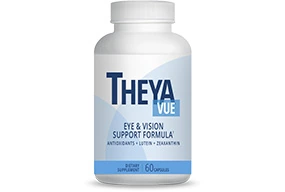
Order TheYavue on the official website
Twenty-four ingredients, fourteen with a printed amount and ten inside a 240.5 mg blend. Sixty days to decide, opened bottles included.
One bottle $59 · six bottles $234 · 60-day money-back guarantee
Order TheYavue On The Official WebsiteOne capsule twice a day · 60 a bottle · lot THE-26/TH-4593