TheYavue Official Website › Testing & Quality
Testing & QualityTheYavue testing and quality: ten marks on the pack, taken one at a time
TheYavue ships with ten marks on its pack and four of them can be checked against the label itself. Vegetarian, dairy-free, gluten-free and the money-back seal all hold up. The other six are statements about process with no certifier, facility or clinician named, which is the ordinary state of a supplement pack.
Taking a seal wall apart is more useful than reprinting it, and unusually for this shelf, this one comes out of it well on the checkable half.
The ten marks on the TheYavue pack
 VegetarianThe capsule shell is cellulose. Checks out.
 Dairy freeNo milk derivative on the other-ingredients line.
 Naturally gluten freeRice flour is the only grain named.
 Non-GMOA supplier declaration. No certifier named.
 Natural ingredientsAn unregulated phrase. The vitamins are synthesised forms.
 Manufactured in the USANo facility named on the artwork or the paperwork.
 GMPNo certifying body named, so it reads as a claim about practice.
 FDA registered facilityA filing requirement for the factory, not an approval of the product.
 Doctor formulatedNo clinician is named anywhere on the pack or the artwork.
 Money-back satisfactionReal, operated by the order desk, 60 days from purchase.
Which TheYavue marks check out, and which cannot
| Mark | Verdict | Why |
|---|---|---|
| Vegetarian | Checks out against the label | the capsule shell is cellulose, not gelatin |
| Dairy free | Checks out against the label | nothing on the other-ingredients line is a milk derivative |
| Naturally gluten free | Checks out against the label | rice flour is the only grain on the line |
| Non-GMO | Unverifiable from what is published | a supplier declaration, with no certifier named on the artwork |
| Natural ingredients | Unverifiable from what is published | an unregulated phrase; the panel's vitamins are synthesised forms |
| Manufactured in the USA | Unverifiable from what is published | no facility is named on the artwork |
| GMP | Unverifiable from what is published | no certifying body is named on the artwork |
| FDA registered facility | Unverifiable from what is published | registration is a filing requirement for the factory, not an approval of the product |
| Doctor formulated | Unverifiable from what is published | no clinician is named anywhere on the artwork or the pack |
| Money-back satisfaction | Checks out against the label | a 60-day purchase policy the order desk operates |
A mark that cannot be checked is not a false mark. It is a claim with nothing published behind it, which is a different and much more common thing.
Four out of ten is a better score than most packs on this shelf manage, and the reason is the other-ingredients line. Cellulose, rice flour, magnesium stearate and silicon dioxide is a short, plain list, and a short plain list is what makes a dietary mark checkable at all.
Compare that with a pack carrying a vegetarian mark over a gelatin capsule, which happens often enough in this category to be worth looking for. This one does not have that problem. The mark and the label agree.
The four TheYavue marks that mean less than they look like
FDA registered facility
The most frequently misread mark in the whole category. Facility registration is a filing obligation: a plant that makes dietary supplements registers with the FDA. It is a form, not an inspection outcome, and it says nothing about the product.
The FDA does not approve dietary supplements before they are sold. The FDA's consumer guidance is the agency’s own explanation of that, and it is worth five minutes.
GMP
Good Manufacturing Practice is a real standard and a certified facility is a meaningful thing. The mark on this pack names no certifying body, so a reader cannot tell whether it refers to third-party certification or to a self-description of practice.
The difference between those two is the whole value of the mark.
Doctor formulated
No clinician is named. Not on the artwork, not on the pack, not in the distributor’s paperwork.
A named clinician with stated credentials would be checkable and would be worth something. An unnamed one is a design element. That is worth saying flatly on the page whose job is to audit these.
Natural ingredients
The word natural has no regulatory definition in supplements. It is also, on this particular panel, at odds with the contents: thiamine mononitrate, cyanocobalamin, DL-alpha tocopheryl acetate and zinc oxide are all synthesised.
That is not a criticism of the formula. Synthesised vitamins are what every trial in the reference list used. It is a criticism of the word.
What TheYavue quality assurance would look like if it were published
The marks describe process. What a buyer actually wants is a result, and the two are not the same document.
Identity testing confirms the plant in the bottle is the plant on the label, which for botanical extracts is the commonest failure point in the whole supplement industry. Potency testing gives a figure for each active against a specification. Contaminant testing covers heavy metals, microbial counts and residual solvents. Stability testing is what a best-before date should be derived from.
None of those results is published for this product. That is not unusual and it is still the answer to the question.
For a proprietary blend there is one further point, and it is the sharpest one on this page. A potency assay does not respect a labelling convention. A laboratory measuring this capsule would produce ten numbers, one for each blend ingredient, because that is what an assay produces. Publishing those numbers would answer the single biggest question about this product, and the labelling rule that permits the blend does not prevent anybody from doing it.
A published certificate of analysis for lot THE-26/TH-4593 naming the laboratory, the methods and a figure for each of the ten blend ingredients. If one is issued, it goes on this page and the review date moves.
How the TheYavue capsule itself holds up
Separate from the marks, a few things about the physical product are checkable from the label and worth recording.
The shell is cellulose, which is a plant-derived hypromellose capsule. It suits a vegetarian diet, it does not carry the bovine-source questions a gelatin shell does, and it is generally more moisture-stable, which matters for a bottle that may sit open for a month.
The excipients are conventional and minimal. Rice flour is a filler, magnesium stearate is a flow agent, silicon dioxide is an anti-caking agent. Four other ingredients on a twenty-four-ingredient formula is a short list.
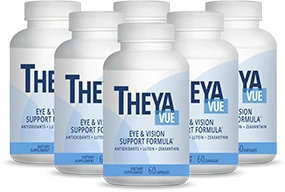
The bottle is opaque, which matters more here than on most supplements: carotenoids degrade in light, and a clear bottle on a shelf would be a genuine formulation error.
The forms chosen are mostly the cheap ones. Magnesium oxide, zinc oxide, calcium carbonate and DL-alpha tocopheryl acetate are the inexpensive members of their families. A randomised comparison found citrate more bioavailable than magnesium oxide. That is a cost decision showing through, and at the amounts involved it changes very little.
- Cellulose shell, consistent with the vegetarian mark.
- Four excipients, all conventional.
- Opaque bottle, which is correct for a carotenoid product.
- Inexpensive mineral forms throughout, which shows in the zinc and the magnesium.
- Sixty capsules against a two-a-day direction, so a bottle is exactly thirty days.
TheYavue quality questions
Is TheYavue FDA approved?
No, and no dietary supplement is. The FDA does not approve supplements before sale. The FDA-registered mark on the pack refers to the manufacturing facility having filed a registration, which is a form rather than an inspection result.
Is TheYavue third-party tested?
No third-party assay has been published for this run. A certificate reference exists on the distributor’s paperwork; a reference is an index entry rather than a laboratory result.
Is the TheYavue vegetarian mark accurate?
Yes. The other-ingredients line reads Cellulose (Vegetable Capsule), Rice Flour, Magnesium Stearate and Silicon Dioxide. None is animal-derived. On plenty of packs in this category the same mark sits over a gelatin shell.
What does doctor formulated mean on TheYavue?
No clinician is named on the pack, the artwork or the paperwork. An unnamed formulator cannot be checked, so the mark carries no information a buyer can use.
Is TheYavue made in the USA?
The pack carries a manufactured-in-the-USA mark and names no facility. Country-of-origin marks are self-declared, and without a named plant there is nothing to verify against.
Does TheYavue contain heavy metals?
Unknown from what is published, which is the honest answer. Contaminant testing is standard practice in the industry and its results are not standardly published. No assay for this run has been released.
What this TheYavue quality page relies on
Five sources, including the FDA's own explanation of what supplement facility registration does and does not mean.
- Questions and Answers on Dietary Supplements. U.S. Food and Drug Administration. https://www.fda.gov/food/information-consumers-using-dietary-supplements/questions-and-answers-dietary-supplements
- 21 CFR 101.36 — Nutrition labeling of dietary supplements. U.S. Food and Drug Administration, Code of Federal Regulations. https://www.ecfr.gov/current/title-21/chapter-I/subchapter-B/part-101/subpart-A/section-101.36
- Dietary Supplements for Eye Conditions: Fact Sheet for Health Professionals. Office of Dietary Supplements, National Institutes of Health. https://ods.od.nih.gov/factsheets/Eyes-HealthProfessional/
- Walker AF, Marakis G, Christie S, et al. Mg citrate found more bioavailable than other Mg preparations in a randomised, double-blind study. Magnes Res. 2003;16(3):183-91. PMID 14596323. https://pubmed.ncbi.nlm.nih.gov/14596323/
- Age-Related Eye Disease Studies (AREDS/AREDS2). National Eye Institute, National Institutes of Health. https://www.nei.nih.gov/research/clinical-trials/age-related-eye-disease-studies-aredsareds2
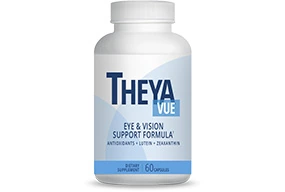
Order TheYavue on the official website
Ten marks on the pack, four of which check out against the label itself. Sixty days to decide, opened bottles included.
One bottle $59 · six bottles $234 · 60-day money-back guarantee
Order TheYavue On The Official WebsiteOne capsule twice a day · 60 a bottle · lot THE-26/TH-4593