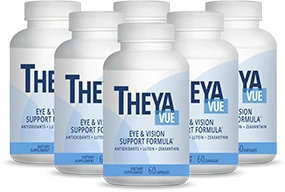
TheYavue Official Website › Supplement Facts
Supplement FactsTheYavue supplement facts: the panel per capsule and per day, row by row
The TheYavue panel prints a serving size of one capsule and 60 servings a bottle. The directions ask for one capsule twice daily. Both statements are on the same label, and together they mean every printed figure doubles across a day. This page reproduces the panel and prints the per-day column beside it.
Fourteen rows with a number, one proprietary blend with a total, and ten names inside it in descending order of weight.
The TheYavue panel, exactly as the bottle prints it
Below is the Supplement Facts table, reproduced. The two left-hand number columns are the label. The two right-hand columns are the same figures at the label’s own dosing instruction, and they are generated rather than printed anywhere on the bottle.
| As the label prints it | Per 1 capsulethe panel’s own serving | Per dayat one capsule twice daily | ||
|---|---|---|---|---|
| Amount | %DV | Amount | %DV | |
| Vitamin A (as Beta-carotene) | 50 mcg RAE | 5% | 100 mcg RAE | 10% |
| Vitamin C (as Ascorbic Acid) | 100 mg | 111% | 200 mg | 222% |
| Calcium (as Calcium carbonate) | 25 mg | 2% | 50 mg | 4% |
| Vitamin E (DL-Alpha tocopherol acetate) | 10 mg | 66% | 20 mg | 132% |
| Vitamin B1 (as Thiamine mononitrate) | 4 mg | 333% | 8 mg | 666% |
| Vitamin B2 (as Riboflavin) | 4 mg | 307% | 8 mg | 614% |
| Vitamin B3 (as Niacin) | 20 mg NE | 125% | 40 mg NE | 250% |
| Vitamin B12 (as Cyanocobalamin) | 13.5 mcg | 562% | 27 mcg | 1,124% |
| Biotin | 400 mcg | 1,333% | 800 mcg | 2,666% |
| Magnesium (as Magnesium oxide) | 20 mg | 5% | 40 mg | 10% |
| Zinc (as Zinc oxide) | 16 mg | 145% | 32 mg | 290% |
| Selenium (as Selenium AAC) | 4 mcg | 7% | 8 mcg | 14% |
| Copper (as Copper gluconate) | 1 mg | 111% | 2 mg | 222% |
| Chromium (as Chromium picolinate) | 1.8 mcg | 5% | 3.6 mcg | 10% |
| Proprietary Blend | 240.5 mg | † | 481 mg | † |
| Lutein, Bilberry Extract (Vaccinium myrtillus) (fruit), Alpha Lipoic Acid (ALA), Eyebright (Euphrasia officinalis) (herb), Zeaxanthin, Quercetin (Sophora japonica) (bud), Rutin (Sophorae japonica L.) (flower), L-Taurine, Grape Seed Extract (Vitis vinfera L.) (seed), Lycopene | ||||
Serving Size 1 Capsule. Servings Per Container 60. † Daily Value not established. Percent Daily Values are based on a 2,000 calorie diet. Other Ingredients: Cellulose (Vegetable Capsule), Rice Flour, Magnesium Stearate, Silicon Dioxide.
A panel written per capsule against a twice-daily direction is common and it is legal. It is also the single commonest way this product gets misreported: a summary that quotes the panel without the direction understates the whole formula by half. Printing both is the only honest way to reproduce this particular label.
What the TheYavue blend line does and does not tell you
One line on this panel reads Proprietary Blend 240.5 mg and carries a dagger rather than a percentage, because no daily value exists for most of what is in it. Beneath it are ten names.
21 CFR 101.36 is the rule that permits this. A proprietary blend may declare a total weight and list its contents in descending order of predominance, without an amount for any individual ingredient. The manufacturer is not withholding anything it is obliged to publish.
What that leaves a reader with is an ordering, and an ordering is genuinely informative if you read it carefully.
- 1LuteinThe xanthophyll the macula concentrates. First by weight of the ten.
- 2Bilberry Extract (Vaccinium myrtillus) (fruit)An anthocyanin-rich berry extract, second by weight.
- 3Alpha Lipoic Acid (ALA)A fat- and water-soluble antioxidant, third by weight.
- 4Eyebright (Euphrasia officinalis) (herb)A traditional eye herb, fourth by weight.
- 5ZeaxanthinLutein's partner pigment, concentrated at the very centre of the macula. Fifth by weight, so there is less of it here than of the four above.
- 6Quercetin (Sophora japonica) (bud)A flavonol, sixth by weight.
- 7Rutin (Sophorae japonica L.) (flower)A flavonoid glycoside from the same plant as the quercetin, seventh.
- 8L-TaurineAn amino acid the retina holds at high concentration, eighth.
- 9Grape Seed Extract (Vitis vinfera L.) (seed)A proanthocyanidin source, ninth. The distributor's product sheet never names it.
- 10LycopeneThe tomato carotenoid, tenth and therefore the smallest of the ten.
Three things follow from that list and nothing else does.
Lutein outweighs the other nine, which is the right leading position for an eye formula and is worth crediting. Zeaxanthin is fifth, behind three botanicals, which is the one placement worth questioning, since zeaxanthin is the pigment concentrated at the very centre of the macula. And lycopene is tenth, which makes it the smallest quantity in the blend by definition.
What does not follow is any figure. Ten ingredients share 240.5 mg a capsule and 481 mg a day. The split could be 200 mg of lutein and a dusting of the rest, or it could be ten roughly equal portions of 24 mg. Both are consistent with the label, and no reasoning from the outside narrows it.
AREDS2 used 10 mg of lutein with 2 mg of zeaxanthin daily. Twelve milligrams fits inside 481 many times over, so the AREDS2 pair is entirely achievable here. Achievable and confirmed are different words, and only the first one applies.
Reading each TheYavue row: form, amount and what the form is for
| Row | The form on the label | What that form means |
|---|---|---|
| Vitamin A | Beta-carotene | A provitamin rather than preformed retinol. The body converts what it needs, which makes overdose far harder than with retinol. |
| Vitamin C | Ascorbic acid | The standard form and the one every trial used. Two hundred milligrams a day is around the point at which plasma begins to saturate. |
| Calcium | Calcium carbonate | The cheapest calcium salt, needing stomach acid to dissolve. At 50 mg a day the form is academic. |
| Vitamin E | DL-alpha tocopherol acetate | The synthetic racemic form, about half as active as natural d-alpha. Acetate is an ester used for shelf stability. |
| Vitamin B1 | Thiamine mononitrate | A stable salt used in almost every multivitamin. Nothing unusual. |
| Vitamin B2 | Riboflavin | Free riboflavin. This is the row that turns urine bright yellow, which is harmless and startles people who were not warned. |
| Vitamin B3 | Niacin | Named as niacin rather than niacinamide, which conventionally means nicotinic acid: the flushing form. It is the reason the 35 mg ceiling matters here. |
| Vitamin B12 | Cyanocobalamin | The stable synthetic form. Well absorbed at supplement doses in people with normal gastric function. |
| Biotin | Biotin | Free biotin. The row worth mentioning before blood tests. |
| Magnesium | Magnesium oxide | The highest elemental magnesium per gram and the worst absorbed. A randomised comparison found citrate outperformed it. |
| Zinc | Zinc oxide | The form AREDS itself used, at 80 mg. Poorly absorbed relative to picolinate or citrate, and a known quantity in this literature. |
| Selenium | Selenium amino acid chelate | A reasonable form at an amount too small to matter: 8 mcg a day against trial doses of 100 to 200 mcg. |
| Copper | Copper gluconate | Well absorbed, and at 2 mg it matches the pairing AREDS used against its zinc. |
| Chromium | Chromium picolinate | The most studied chromium form, here at a hundredth of the amounts the glycaemic meta-analysis pooled. |
Forms are read off the panel. The right-hand column is this desk’s reading of what each form is generally used for.
Two of those rows are worth a second look and they are the ones that change at the label’s own dose. Niacin as nicotinic acid at 40 mg NE a day sits above the 35 mg adult upper intake level a 2017 systematic review derived. Zinc at 32 mg a day is eighty per cent of the 40 mg upper level.
Both are covered properly on side effects, which is the page whose job that is.
HONEST LABEL ANALYSIS: what the TheYavue panel is, as a document
Taken as a piece of disclosure rather than as a formula, this panel is better than most of what is on this shelf and worse than it needs to be, in two specific ways each.
Better, first. Fourteen rows with an amount and a percentage is genuine disclosure. Many competitors in this category print four or five nutrients and put everything else behind a blend. The forms are all named, which lets a reader judge absorption. And the zinc-to-copper pairing at 32 mg to 2 mg is an AREDS reference that somebody had to know the literature to get right.
Worse, second. The ten ingredients that justify the product’s existence are behind one number. And the serving size is one capsule against a two-capsule direction, which is legal, common, and the reason a casual reader will understate this formula by half.
The second of those is fixable at no cost to anybody. A panel headed “Serving Size: 2 Capsules” with doubled figures would describe exactly the same product and would be read correctly the first time. The choice not to do that is the one thing on this label that has no defence at all.
| What a reader can check | What a reader cannot |
|---|---|
| The amount of all fourteen vitamins and minerals | The amount of lutein |
| The chemical form of each of the fourteen | The amount of zeaxanthin |
| The total weight of the blend | The split of the blend between its ten ingredients |
| The order of weight within the blend | Whether any blend ingredient reaches a studied dose |
| The capsule shell and the three other ingredients | The facility, the certifier or the assay behind any seal |
Nothing in the right-hand column is being withheld improperly. It is simply not published, and a buyer should know which column their question is in.
TheYavue against an AREDS2-formula label
| Row | TheYavue per day | A typical AREDS2 product | Comment |
|---|---|---|---|
| Lutein | In a blend, 1st of 10 | 10 mg | The figure is the whole difference. |
| Zeaxanthin | In a blend, 5th of 10 | 2 mg | Same. |
| Vitamin C | 200 mg | 500 mg | Forty per cent. |
| Vitamin E | 20 mg | 180 mg (400 IU in AREDS) | Well below, and the high dose is the one with questions attached. |
| Zinc | 32 mg | 25 mg or 80 mg | Between the two arms tested. |
| Copper | 2 mg | 2 mg | Matched. |
| Everything else | 18 further ingredients | None | Breadth against verification. |
An AREDS2-formula product is the reference point in this category, not a competitor this desk sells.
The comparison is not flattering on the two rows that matter most, and it is worth stating that plainly on the page whose job is the panel. An AREDS2 product exists to reproduce a trial; TheYavue exists to cover a lot of ground for one price. They are answering different questions and a buyer should know which question they are asking.
TheYavue panel questions
What is the serving size of TheYavue?
One capsule, according to the panel. Two capsules, according to the directions. Both appear on the same label. Sixty servings a container at one capsule each is thirty days at the directed dose.
Why does TheYavue not print the amount of lutein?
Because it is in a proprietary blend, and 21 CFR 101.36 permits a blend to declare a total weight and list its contents in descending order without individual amounts. Nothing is being withheld improperly. It is simply not published.
How much of the 240.5 mg is lutein?
Unknown, and unknowable from the label. Lutein is listed first, so it weighs more than each of the other nine. That is the entirety of the published information, and no estimate appears on this website.
Is 240.5 mg a lot for a proprietary blend?
It is a normal size and a small one relative to what is in it. For scale, the 2020 bilberry trial used 240 mg a day of bilberry extract alone, and bilberry is second of ten ingredients sharing 240.5 mg here.
What are the other ingredients in TheYavue?
Cellulose (Vegetable Capsule), Rice Flour, Magnesium Stearate, Silicon Dioxide. The cellulose shell is what makes the vegetarian mark on the pack hold up.
Does TheYavue contain any allergens?
The other-ingredients line names no milk, wheat, soy, egg, fish or nut derivative. Rice flour is the only grain. The pack carries dairy-free and gluten-free marks and both check out against that line.
The sources behind this TheYavue panel page
Ten sources, including the federal regulation that permits a proprietary blend to print one total instead of ten figures.
- 21 CFR 101.36 — Nutrition labeling of dietary supplements. U.S. Food and Drug Administration, Code of Federal Regulations. https://www.ecfr.gov/current/title-21/chapter-I/subchapter-B/part-101/subpart-A/section-101.36
- Age-Related Eye Disease Study 2 (AREDS2) Research Group. Lutein + zeaxanthin and omega-3 fatty acids for age-related macular degeneration: the Age-Related Eye Disease Study 2 (AREDS2) randomized clinical trial. JAMA. 2013;309(19):2005-15. PMID 23644932. https://pubmed.ncbi.nlm.nih.gov/23644932/
- Chew EY, Clemons TE, SanGiovanni JP, et al. Secondary analyses of the effects of lutein/zeaxanthin on age-related macular degeneration progression: AREDS2 report No. 3. JAMA Ophthalmol. 2014;132(2):142-9. PMID 24310343. https://pubmed.ncbi.nlm.nih.gov/24310343/
- Age-Related Eye Disease Study Research Group. A randomized, placebo-controlled, clinical trial of high-dose supplementation with vitamins C and E, beta carotene, and zinc for age-related macular degeneration and vision loss: AREDS report no. 8. Arch Ophthalmol. 2001;119(10):1417-36. PMID 11594942. https://pubmed.ncbi.nlm.nih.gov/11594942/
- Kosehira M, Machida N, Kitaichi N. A 12-week-long intake of bilberry extract (Vaccinium myrtillus L.) improved objective findings of ciliary muscle contraction of the eye: a randomized, double-blind, placebo-controlled, parallel-group comparison trial. Nutrients. 2020;12(3):600. PMID 32106548. https://pubmed.ncbi.nlm.nih.gov/32106548/
- Minto C, Vecchio MG, Lamprecht M, et al. Definition of a tolerable upper intake level of niacin: a systematic review and meta-analysis of the dose-dependent effects of nicotinamide and nicotinic acid supplementation. Nutr Rev. 2017;75(6):471-490. PMID 28541582. https://pubmed.ncbi.nlm.nih.gov/28541582/
- Walker AF, Marakis G, Christie S, et al. Mg citrate found more bioavailable than other Mg preparations in a randomised, double-blind study. Magnes Res. 2003;16(3):183-91. PMID 14596323. https://pubmed.ncbi.nlm.nih.gov/14596323/
- Asbaghi O, Naeini F, Ashtary-Larky D, et al. Effects of chromium supplementation on glycemic control in patients with type 2 diabetes: a systematic review and meta-analysis of randomized controlled trials. Pharmacol Res. 2020;161:105098. PMID 32730903. https://pubmed.ncbi.nlm.nih.gov/32730903/
- Post M, Lubiński W, Lubiński J, et al. Serum selenium levels are associated with age-related cataract. Ann Agric Environ Med. 2018;25(3):443-448. PMID 30260193. https://pubmed.ncbi.nlm.nih.gov/30260193/
- Questions and Answers on Dietary Supplements. U.S. Food and Drug Administration. https://www.fda.gov/food/information-consumers-using-dietary-supplements/questions-and-answers-dietary-supplements
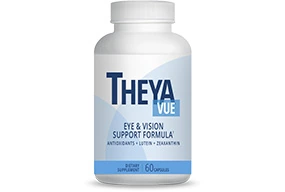
Order TheYavue on the official website
Fourteen printed amounts, a 240.5 mg blend of ten, and sixty capsules a bottle. Sixty days to decide, opened bottles included.
One bottle $59 · six bottles $234 · 60-day money-back guarantee
Order TheYavue On The Official WebsiteOne capsule twice a day · 60 a bottle · lot THE-26/TH-4593