TheYavue Official Website › Choosing A Vision Supplement
Choosing A Vision SupplementChoosing a vision supplement: six checks a label either passes or fails
Six things decide whether an eye supplement label is worth its price. The serving size against the directions, whether the carotenoids carry a figure, what a blend total could hold, the zinc-to-copper pairing, the mineral forms, and whether any mark on the pack can be checked. All six are answerable in a shop, in a minute.
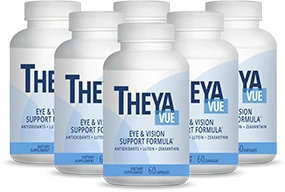
Written about the category. TheYavue is the worked example throughout, and it passes four of the six.
Check one: the serving size against the directions
Start here, because it changes every other number on the panel and almost nobody looks.
A Supplement Facts panel is written against a serving size the manufacturer chooses. The directions are printed separately, often on a different panel. When the two differ, the numbers a buyer reads are not the numbers a buyer takes.
A panel headed “Serving Size: 1 Capsule” on a bottle whose directions say two a day is describing a half-day. Every figure on it doubles. A panel headed “Serving Size: 2 Capsules” on the same formula describes exactly the same product and gets read correctly the first time.
It is legal either way and there is no requirement that the two match. The check takes ten seconds: find the serving size on the panel, find the directions on the label, and multiply if they differ.
The panel reads Serving Size 1 Capsule, Servings Per Container 60. The directions read one capsule twice daily. So every printed amount doubles, which moves the niacin to 40 mg NE a day against a 35 mg upper intake level a 2017 systematic review derived, and the zinc to 32 mg. Neither figure is printed anywhere on the bottle.
This is worth treating as the first check rather than a footnote, because a reader who misses it gets every subsequent check wrong by a factor of two.
Check two: do the carotenoids carry a number
Lutein and zeaxanthin are the reason this category exists, so the question of how much of each a bottle contains is the whole question.
AREDS2 randomised 10 mg of lutein with 2 mg of zeaxanthin daily, in over four thousand people, for five years. A follow-up report reported on the same cohort at ten years. Those two figures are the reference doses and a label either states its own amounts against them or it does not.
A label that prints “Lutein 10 mg” can be judged. A label that puts lutein inside a proprietary blend cannot, at any price and by any reader.
That is not an accusation. 21 CFR 101.36 expressly permits a blend to declare one total weight and list its contents in descending order of predominance. It is a legal choice, made for commercial reasons that are usually about formula confidentiality and sometimes about cost.
| What the label does | What you can conclude |
|---|---|
| Prints an amount for lutein and zeaxanthin | Everything. You can compare it directly with 10 mg and 2 mg. |
| Prints a blend total and lists them first and second | That they outweigh the rest. Nothing about whether either reaches a studied dose. |
| Prints a blend total and lists them fifth and eighth | That four other things weigh more, which is worth knowing. |
| Names them on the front and not on the panel at all | Almost nothing. This is the weakest form of disclosure in the category. |
The first row is what an AREDS2-formula product does. Most of the shelf is in one of the other three.
Lutein is first and zeaxanthin fifth in a 240.5 mg blend of ten. Both are present, neither carries a figure, and the ordering tells you lutein outweighs zeaxanthin and nothing more.
Check three: what the blend total could possibly hold
A blend total is not nothing. It sets a ceiling, and a ceiling is the most useful thing you can get out of a formula that will not give you a figure.
The method is simple arithmetic. Take the blend total, multiply by the number of servings a day, and set the result against the trial dose of each ingredient in it. If a single ingredient’s trial dose is larger than the whole blend, that ingredient cannot be at its studied amount no matter how the split falls.
That test is unanswerable. It requires no assumption about the split and no charity towards the manufacturer.
| Ingredient | A published trial dose | What it needs of a daily blend |
|---|---|---|
| Lutein and zeaxanthin | 10 mg and 2 mg (AREDS2) | 12 mg. Fits inside almost any blend. |
| Bilberry extract | 240 mg a day for 12 weeks | 240 mg. Larger than most eye blends in their entirety. |
| Alpha lipoic acid | 300 mg, and 1,200 mg in the larger trial | 300 mg minimum. Larger than most eye blends. |
| Grape seed extract | No eye trial at any dose | Nothing to fall short of, which is its own answer. |
| Eyebright | No oral trial at all | Same, and worse: there is no dose to aim at. |
Trial doses are the figures printed in the papers cited at the foot of this page.
The blend is 240.5 mg a capsule and 481 mg a day across ten ingredients. The AREDS2 pair fits comfortably. The bilberry trial’s own 240 mg does not fit inside one capsule’s worth of the entire blend, and bilberry is second of ten by weight. Alpha lipoic acid is third against a 300 mg minimum trial dose.
Doing this arithmetic on any blend you are considering takes two minutes and is the single most informative thing a buyer can do with a label that hides its numbers.
Check four: is the zinc paired with copper
This is the check that separates a formula written by somebody who read the trials from one written by somebody who read a competitor’s label.
The original AREDS trial used 80 mg of zinc as zinc oxide, and it used 2 mg of copper as cupric oxide alongside it. The copper was not decoration. Sustained zinc intake competes with copper absorption, and a resulting copper deficiency presents as anaemia or a neuropathy rather than as anything recognisably zinc-related. A 2026 systematic review reviewed the descriptive reports and a 2025 report is a recent case initially mistaken for a bone-marrow disorder.
AREDS2 later tested a 25 mg zinc arm and the secondary analysis reported it progressed no differently, which is why the sensible modern range is 25 to 40 mg rather than 80.
So the check is two questions. Is there zinc, at somewhere between 25 and 40 mg a day? And is there copper beside it, at around 2 mg?
Zinc at 32 mg a day, between the AREDS and AREDS2 arms and under the 40 mg upper level. Copper at 2 mg, matching the AREDS pairing exactly. Somebody had to know that literature to get both right.
Thirty-two milligrams is eighty per cent of the adult upper intake level from one product. A multivitamin carrying 11 to 15 mg takes the daily total over it. Check the zinc line on everything else before adding an eye formula.
Check five: which forms the minerals and vitamins are in
Named forms are a genuine form of disclosure and they are free to read.
The pattern to look for is whether a label uses the cheap member of each family throughout. Magnesium oxide, zinc oxide, calcium carbonate and DL-alpha tocopheryl acetate are the inexpensive options. Citrate, picolinate, bisglycinate and d-alpha are the expensive ones.
One randomised study compared magnesium preparations directly in a randomised double-blind design and found citrate more bioavailable than oxide. Similar comparisons exist across the other families.
Two caveats keep this check honest. Cheap forms are what the large trials used, so a formula using them is in the same company as the evidence. And at token amounts the form is irrelevant: eight micrograms of selenium is eight micrograms however well chelated.
| Family | The inexpensive form | The better-absorbed form |
|---|---|---|
| Magnesium | Oxide | Citrate, glycinate |
| Zinc | Oxide | Picolinate, citrate, bisglycinate |
| Calcium | Carbonate | Citrate |
| Vitamin E | DL-alpha tocopheryl acetate | d-alpha tocopherol |
| Chromium | Picolinate | Picolinate is the studied one |
The right-hand column is generally better absorbed. It is also generally more expensive, and the large eye trials used the left-hand column.
Inexpensive forms throughout: magnesium oxide, zinc oxide, calcium carbonate, DL-alpha tocopheryl acetate. It is a cost decision and it shows. It is also exactly what AREDS used, and at the amounts involved on four of those rows it changes nothing.
Check six: can any mark on the pack be verified
Seal walls are designed to be scanned rather than read, and reading them takes about a minute per pack.
The distinction that matters is between a mark that can be checked against something and a mark that describes an unnamed process. “Vegetarian” is checkable: look at the other-ingredients line and see whether the shell is cellulose or gelatin. “GMP” with no certifying body named is not, because there is nothing to look at.
The one to watch for particularly is FDA registration. Facility registration is a filing obligation for a plant that makes supplements. It is a form. The FDA's consumer guidance is the agency’s own explanation, and the key fact in it is that the FDA does not approve dietary supplements before they are sold.
“Doctor formulated” with no clinician named is the other one. A named clinician with stated credentials is checkable and is worth something. An unnamed one is a design element.
| Mark | Checkable? | Against what |
|---|---|---|
| Vegetarian or vegan | Yes | The other-ingredients line |
| Gluten free, dairy free | Yes | The same line |
| Third-party tested, with a certifier named | Yes | The certifier’s register |
| Non-GMO with no certifier | No | Nothing published |
| GMP with no certifying body | No | Nothing published |
| FDA registered facility | No, and it means less than it looks | It is a filing, not an approval |
| Doctor formulated with no name | No | Nobody is named |
| Natural | No | The word has no regulatory definition |
A mark that cannot be checked is not a false mark. It is a claim with nothing published behind it.
Ten marks. Vegetarian, dairy-free, gluten-free and the money-back seal all check out against the label or the terms. The other six name no certifier, no facility and no clinician. Four out of ten is above the category average, and the reason is a short, plain other-ingredients line.
The six checks as a shopping list
| Check | The question | TheYavue |
|---|---|---|
| 1. Serving size | Does the panel’s serving match the directions? | Fails |
| 2. Carotenoid figures | Is there a number for lutein and zeaxanthin? | Fails |
| 3. Blend ceiling | Could the blend hold a studied dose of what is in it? | Partly: yes for the carotenoids, no for the bilberry or the ALA |
| 4. Zinc and copper | 25 to 40 mg of zinc with about 2 mg of copper? | Passes, and it is the best thing on the panel |
| 5. Forms | Which member of each family? | Passes, with the cheap options throughout |
| 6. Verifiable marks | Can any seal be checked against something? | Passes on four of ten, which is above average |
Four of six, with the two failures on the checks a carotenoid buyer probably cares about most. Which way that resolves depends on what you came for.
The honest conclusion is the one this desk keeps arriving at from different directions. If you want a verified figure for lutein, buy a product that prints one, and there are several. If you want twenty-four ingredients at one price and you accept that ten of them are behind a total, this is a reasonable version of that purchase.
What nobody should do is buy a blend expecting a figure to appear later. It will not.
Sources for this buying guide
Sixteen sources. Every trial dose quoted above is the figure printed in the paper, and every record was verified through the NCBI summary API in this session.
- Age-Related Eye Disease Study 2 (AREDS2) Research Group. Lutein + zeaxanthin and omega-3 fatty acids for age-related macular degeneration: the Age-Related Eye Disease Study 2 (AREDS2) randomized clinical trial. JAMA. 2013;309(19):2005-15. PMID 23644932. https://pubmed.ncbi.nlm.nih.gov/23644932/
- Chew EY, Clemons TE, SanGiovanni JP, et al. Secondary analyses of the effects of lutein/zeaxanthin on age-related macular degeneration progression: AREDS2 report No. 3. JAMA Ophthalmol. 2014;132(2):142-9. PMID 24310343. https://pubmed.ncbi.nlm.nih.gov/24310343/
- Chew EY, Clemons TE, Agrón E, et al. Long-term outcomes of adding lutein/zeaxanthin and omega-3 fatty acids to the AREDS supplements on age-related macular degeneration progression: AREDS2 report 28. JAMA Ophthalmol. 2022;140(7):692-698. PMID 35653117. https://pubmed.ncbi.nlm.nih.gov/35653117/
- Age-Related Eye Disease Study Research Group. A randomized, placebo-controlled, clinical trial of high-dose supplementation with vitamins C and E, beta carotene, and zinc for age-related macular degeneration and vision loss: AREDS report no. 8. Arch Ophthalmol. 2001;119(10):1417-36. PMID 11594942. https://pubmed.ncbi.nlm.nih.gov/11594942/
- Evans JR, Lawrenson JG. Antioxidant vitamin and mineral supplements for slowing the progression of age-related macular degeneration. Cochrane Database Syst Rev. 2023;9(9):CD000254. PMID 37702300. https://pubmed.ncbi.nlm.nih.gov/37702300/
- Hu W, Seah V, Huang V, et al. Effect of antioxidant supplementation on macular pigment optical density and visual functions: a systematic review and network meta-analysis of randomized controlled trials. Adv Nutr. 2024;15(5):100216. PMID 38582248. https://pubmed.ncbi.nlm.nih.gov/38582248/
- Kosehira M, Machida N, Kitaichi N. A 12-week-long intake of bilberry extract (Vaccinium myrtillus L.) improved objective findings of ciliary muscle contraction of the eye: a randomized, double-blind, placebo-controlled, parallel-group comparison trial. Nutrients. 2020;12(3):600. PMID 32106548. https://pubmed.ncbi.nlm.nih.gov/32106548/
- Kim BJ, Hunter A, Brucker AJ, et al. Orally administered alpha lipoic acid as a treatment for geographic atrophy: a randomized clinical trial. Ophthalmol Retina. 2020;4(9):889-898. PMID 32418846. https://pubmed.ncbi.nlm.nih.gov/32418846/
- Dutta A, Chaudhary V, Kumari S, et al. Zinc-induced hematologic toxicities: a systematic review of descriptive studies. Biol Trace Elem Res. 2026;204(9):6628-6642. PMID 42087025. https://pubmed.ncbi.nlm.nih.gov/42087025/
- Mims MH, Reid ES, Hash MG, et al. A hematologic twist: zinc-induced copper deficiency mimicking myelodysplastic syndrome. Cureus. 2025;17(7):e87624. PMID 40786321. https://pubmed.ncbi.nlm.nih.gov/40786321/
- Minto C, Vecchio MG, Lamprecht M, et al. Definition of a tolerable upper intake level of niacin: a systematic review and meta-analysis of the dose-dependent effects of nicotinamide and nicotinic acid supplementation. Nutr Rev. 2017;75(6):471-490. PMID 28541582. https://pubmed.ncbi.nlm.nih.gov/28541582/
- Walker AF, Marakis G, Christie S, et al. Mg citrate found more bioavailable than other Mg preparations in a randomised, double-blind study. Magnes Res. 2003;16(3):183-91. PMID 14596323. https://pubmed.ncbi.nlm.nih.gov/14596323/
- 21 CFR 101.36 — Nutrition labeling of dietary supplements. U.S. Food and Drug Administration, Code of Federal Regulations. https://www.ecfr.gov/current/title-21/chapter-I/subchapter-B/part-101/subpart-A/section-101.36
- Questions and Answers on Dietary Supplements. U.S. Food and Drug Administration. https://www.fda.gov/food/information-consumers-using-dietary-supplements/questions-and-answers-dietary-supplements
- Dietary Supplements for Eye Conditions: Fact Sheet for Health Professionals. Office of Dietary Supplements, National Institutes of Health. https://ods.od.nih.gov/factsheets/Eyes-HealthProfessional/
- Age-Related Eye Disease Studies (AREDS/AREDS2). National Eye Institute, National Institutes of Health. https://www.nei.nih.gov/research/clinical-trials/age-related-eye-disease-studies-aredsareds2
Order TheYavue on the official website
Four of six checks passed, and the two failures named. Sixty days to decide, opened bottles included.
One bottle $59 · six bottles $234 · 60-day money-back guarantee
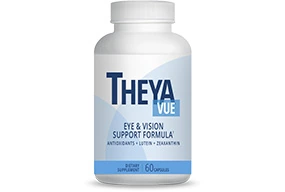
Order TheYavue On The Official WebsiteOne capsule twice a day · 60 a bottle · lot THE-26/TH-4593