Eye Vitamins for Adults Over 50: What to Look For
| Short version | After 50, vision nutrition matters more — macular pigment thins and diets often drift away from carotenoid-rich foods. A daily eye vitamin helps fill the gap. |
| Look for | Lutein and zeaxanthin in real milligram amounts, in a sensible ratio, inside a broader eye-nutrition complex with bilberry and supporting nutrients. |
| Practical fit | A once-daily capsule that is easy to swallow and easy to remember; quality signals like GMP manufacturing. |
| Important | Older adults on medication should check with a doctor or pharmacist first, and keep up regular eye exams. |
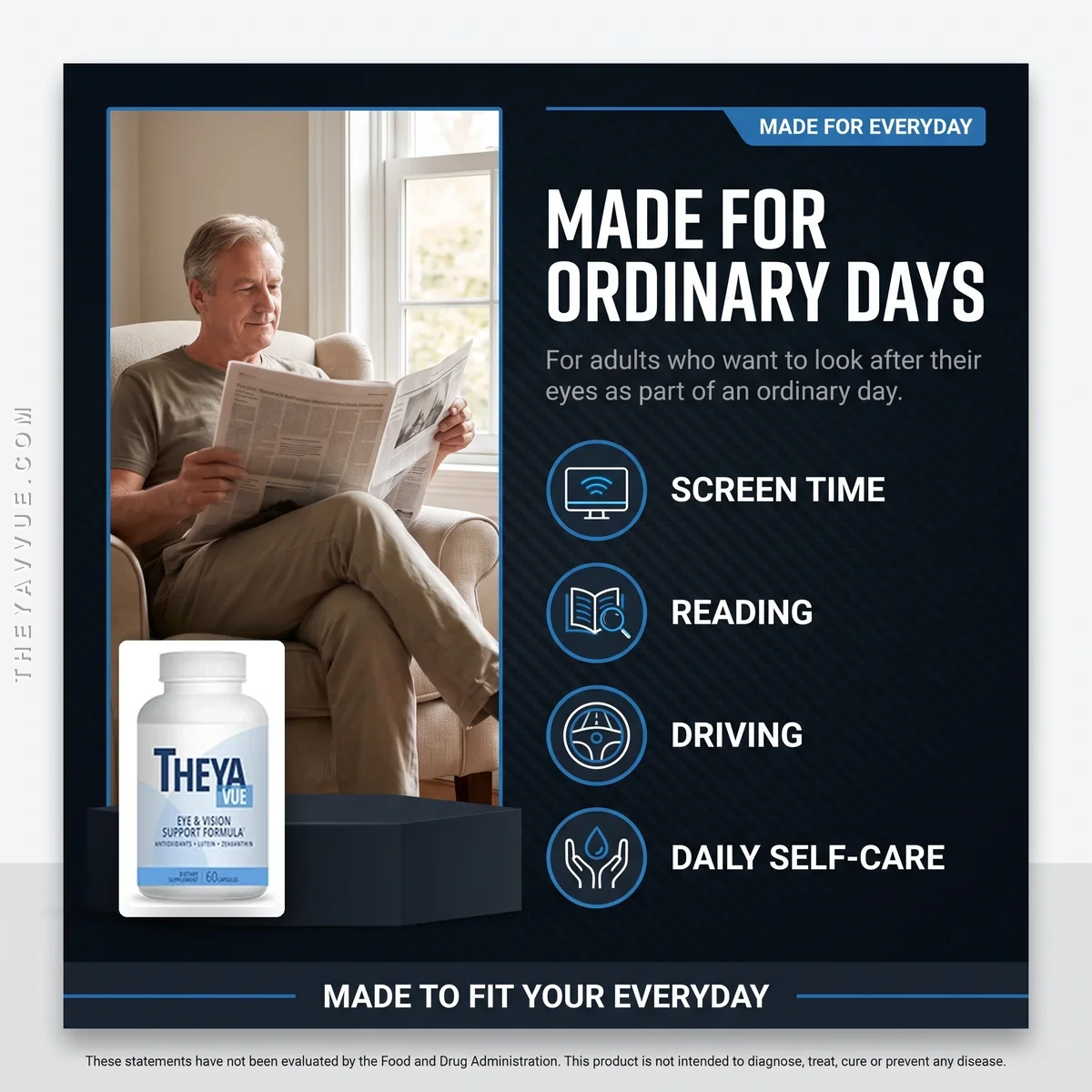
Why eye vitamins matter more after 50
Turning 50 is often the point where eye health moves from “something I never think about” to “something I want to look after.” That instinct is well founded. With age, several things quietly shift at once: the eye's protective macular pigment tends to thin, the tissues at the back of the eye carry a lifetime of accumulated exposure to light and oxidative stress, and — just as importantly — everyday diets often drift away from the carotenoid-rich foods that supply the eye's key nutrients. Put together, that is why the over-50 years are exactly when a thoughtful approach to vision nutrition pays off.
An eye vitamin is not a magic bullet, and this guide will never pretend otherwise. It is one practical, consistent way to help supply the nutrients an older eye draws on — sitting alongside a healthy diet, sensible screen and UV habits, and, crucially, regular professional eye exams. The purpose of this article is to help you choose well: which nutrients genuinely matter after 50, which label features signal a quality product, and which practical details make a supplement one you will actually keep taking.
The nutrients that matter most after 50
Not every ingredient on a busy label earns its place. For adults over 50, a short list does most of the work.
Lutein and zeaxanthin: the core pair
These are the two carotenoids that deposit in the macula to form its protective pigment, and they are the non-negotiable centre of any eye formula. Lutein spreads across the wider macula; zeaxanthin concentrates in the central fovea where your sharpest, most detailed vision happens. They are always best considered together — our lutein vs zeaxanthin explainer covers exactly why. Because macular pigment tends to thin with age, keeping these two topped up is the single most relevant nutritional goal after 50.
The zeaxanthin gap widens with a changing diet
Zeaxanthin is the harder carotenoid to get from food at any age — its richest sources are corn, orange peppers, goji berries and egg yolks — and if appetite or diet variety narrows over the years, that gap can widen. This is often the most compelling everyday reason an older adult chooses a supplement. For the specific amounts worth aiming at, see our guide to how much lutein and zeaxanthin per day.
Supporting antioxidants and botanicals
Lutein and zeaxanthin work best surrounded by a supporting team. Bilberry (a close relative of the blueberry) is a traditional eye botanical, and a well-rounded formula also brings eye-relevant vitamins and minerals. The value is in the complex working together, not any single hero ingredient.
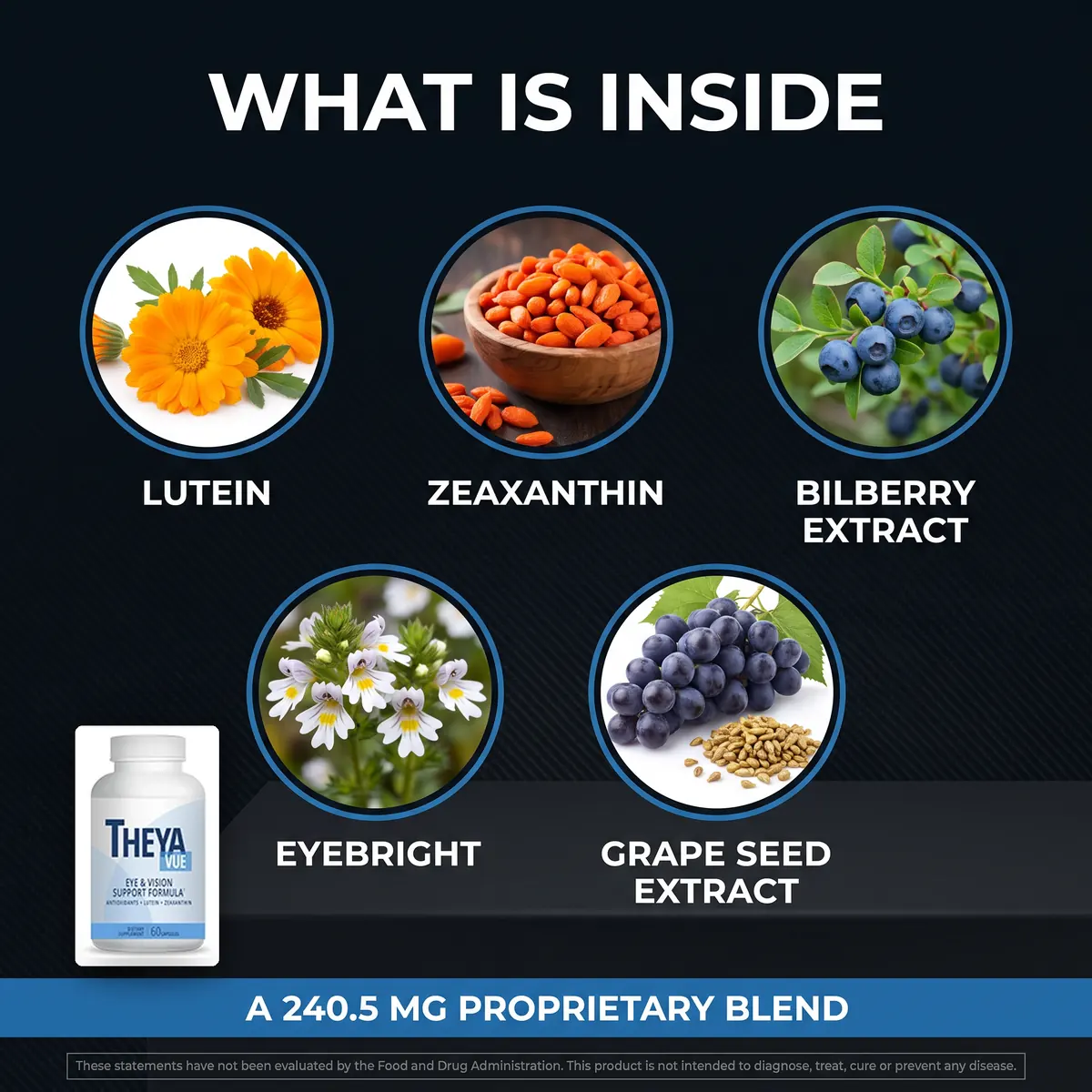
What to look for on the label
Once you know the nutrients, the label tells you whether a product delivers them. Here is a practical checklist tuned for older buyers:
- ✓ Both carotenoids, in milligrams: lutein and zeaxanthin each with a real number, not hidden in a vague blend.
- ✓ A sensible ratio: around 5:1 lutein to zeaxanthin, the well-studied pattern.
- ✓ A broader complex: supporting antioxidants, botanicals like bilberry, and eye-relevant vitamins and minerals.
- ✓ Quality manufacturing: made in a GMP-compliant, FDA-registered facility, ideally non-GMO.
- ✓ An easy serving: a single once-daily capsule beats a multi-capsule regimen you will forget.
- ✓ A guarantee: a money-back guarantee lets you try it without financial risk.
If you want the complete version of this checklist — including the red flags to avoid and how to judge real value per serving — our full buyer's guide to choosing an eye health supplement goes deeper. And if you have heard about the clinical AREDS2 formula and wonder how a modern everyday supplement compares, our TheyaVue vs AREDS2 comparison explains the difference.
Practical details that matter for older adults
Choosing an eye vitamin after 50 is not only about the ingredient panel. A few practical factors decide whether a supplement actually becomes a habit.
Easy to swallow, easy to remember
A small, once-daily capsule is far easier to keep up than a serving of several large pills. Because macular-pigment nutrients build up gradually over weeks — typically 8 to 12 weeks of consistent use, as we explain in how long eye vitamins take to work — consistency is the whole game. The best formula is the one you will still be taking three months from now.
Take it with a meal
Lutein and zeaxanthin are fat-soluble, so pairing the capsule with a meal that contains a little healthy fat aids absorption. Attaching it to breakfast or lunch also makes it easier to remember.
Talk to your doctor if you take medication
This is the most important practical note for the over-50 group, simply because they are more likely to be on prescription medicine. An eye supplement is generally well tolerated, but a quick check with your doctor or pharmacist — who can see your full medication list — is the responsible move. We cover the broader question of combining products in can you take eye vitamins with other supplements.
Supplements are one part of the picture
It would be dishonest to frame an eye vitamin as the whole answer. After 50, the most valuable habit of all is a regular comprehensive eye exam, which can catch changes a supplement never could. Around that, the familiar fundamentals still do the heavy lifting: a diet rich in leafy greens and colourful vegetables, sunglasses against UV, not smoking, managing blood pressure and blood sugar with your doctor, and giving your eyes breaks during screen time. A supplement's job is to help fill the nutritional gaps in that picture — our guide to supporting eye health naturally ties all of these together.
A once-daily eye vitamin built for everyday support
TheyaVue combines lutein and zeaxanthin with bilberry and a broad eye-nutrition complex in one small capsule — made in the USA in a GMP-compliant, FDA-registered facility, and easy to fit into a daily routine after 50. Backed by a 60-day money-back guarantee.
See TheyaVue Packages
Multi-bottle packs support the long-term consistency that matters most, with the biggest savings per bottle.
The bottom line
Eye vitamins for adults over 50 come down to a clear set of priorities: put lutein and zeaxanthin at the centre, insist on real milligram amounts in a sensible ratio inside a broader eye-nutrition complex, favour a once-daily capsule you will actually keep taking, and look for quality signals like GMP manufacturing and a money-back guarantee. Pair the supplement with a good diet, UV protection, and — above all — regular professional eye exams, and check with your doctor first if you take medication. For your next step, read our full eye supplement buyer's guide or return to the TheyaVue homepage to see the complete formula.
Frequently asked questions
Why do eye vitamins matter more after 50?
As we age, the macular pigment tends to thin, the eye's tissues face a lifetime of accumulated exposure, and diets often shift away from the carotenoid-rich foods that supply lutein and zeaxanthin. A daily eye supplement is a practical way to help supply those vision nutrients consistently, alongside a healthy diet and regular eye exams.
What nutrients should older adults look for in an eye vitamin?
The core pair is lutein and zeaxanthin, the carotenoids that build macular pigment. A well-rounded formula also includes supporting antioxidants and botanicals such as bilberry, plus eye-relevant vitamins and minerals. Look for both carotenoids listed in real milligram amounts in a sensible ratio, inside a broader complex.
Are eye vitamins for over-50s the same as AREDS2?
AREDS2 is a specific research-based formula studied in a clinical context and often discussed with an eye doctor. A general everyday eye supplement shares key ingredients like lutein and zeaxanthin but is aimed at broad daily wellness. If you have an eye condition already under care, ask your ophthalmologist which is appropriate for you.
Should older adults take an eye vitamin with their other medications?
Many older adults take an eye supplement alongside other products without issue, but this is exactly the group that should check with a pharmacist or doctor first, because they are more likely to be on prescription medication. A quick review of your full medication list prevents accidental interactions or nutrient doubling-up.
How long before an older adult notices anything from eye vitamins?
Macular-pigment nutrients act gradually, typically over roughly 8 to 12 weeks of consistent daily use, and they are best understood as a long-term foundation rather than a quick fix. Consistency and a healthy overall lifestyle matter more than any single day's dose.
References
- National Eye Institute. “Age-Related Eye Disease Study 2 (AREDS2).” nei.nih.gov
- American Academy of Ophthalmology. “Eye Health & Aging.” aao.org
- American Optometric Association. “Diet and Nutrition — Lutein & Zeaxanthin.” aoa.org
- National Institutes of Health, Office of Dietary Supplements. “Carotenoids — Fact Sheet.” ods.od.nih.gov
† These statements have not been evaluated by the Food and Drug Administration. This product is not intended to diagnose, treat, cure or prevent any disease. This article is for general educational information only and is not medical advice. Always consult a qualified eye-care professional or physician about your individual needs.