Can You Take Eye Vitamins With Other Supplements or Vitamins?
| Short version | For most healthy adults, yes — an eye vitamin can usually be taken alongside a multivitamin, fish oil, vitamin D and similar products. |
| The one real risk | Not a dangerous interaction but accidental doubling-up — exceeding sensible amounts of a nutrient that appears in more than one product. |
| The fix | Read every label, add up overlapping nutrients (C, E, zinc especially), and keep each within recommended limits. |
| Ask a doctor if | You take prescription medicine (especially blood thinners), are pregnant or breastfeeding, or manage a health condition. |
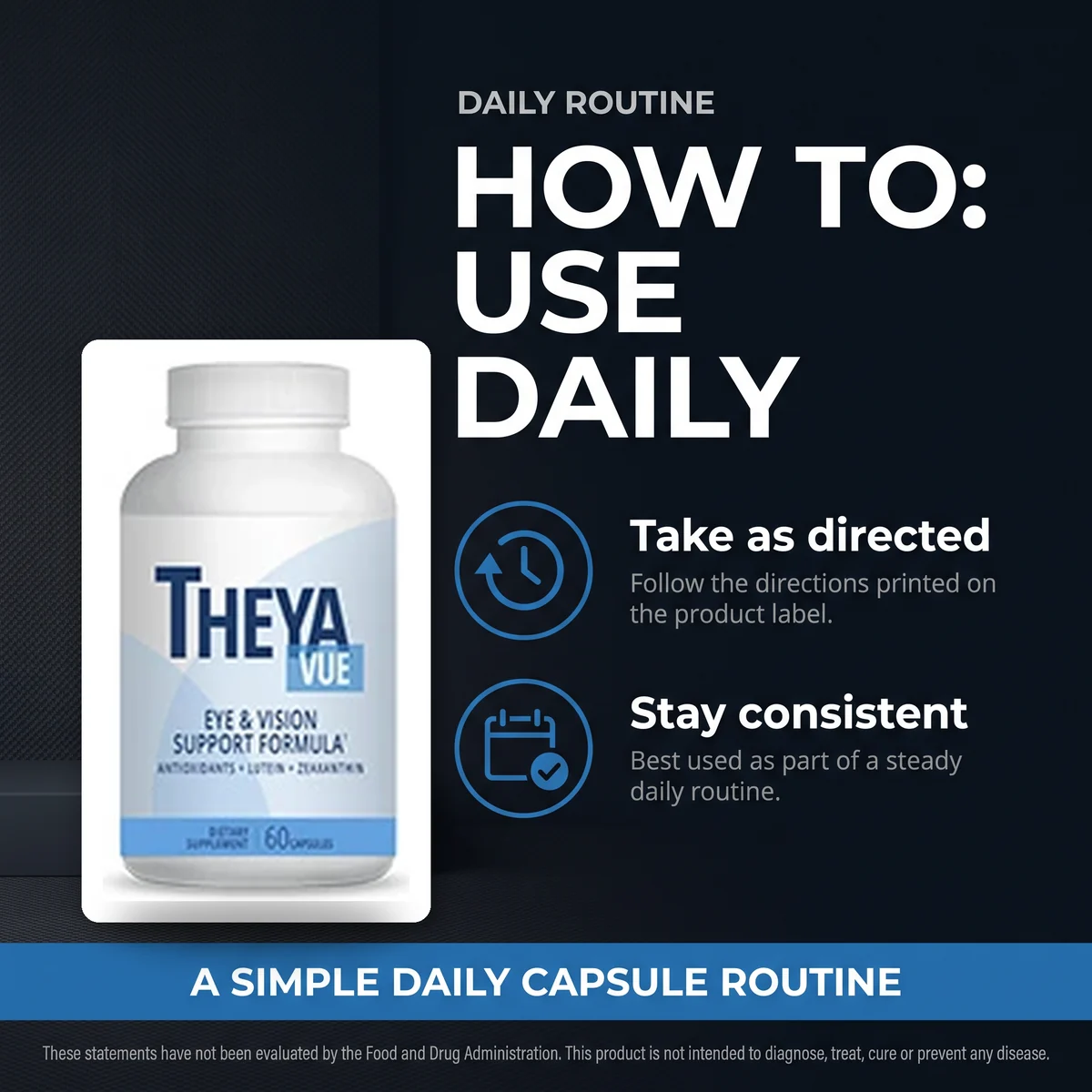
Can you take eye vitamins with other supplements?
It is one of the most practical questions people ask once they add an eye supplement to a shelf that already holds a multivitamin, some fish oil and a bottle of vitamin D: is it safe to take them all together? For the large majority of healthy adults, the answer is yes — an eye vitamin built around lutein, zeaxanthin and supporting nutrients can generally sit comfortably alongside other everyday supplements. But “yes” comes with one genuinely useful caveat, and understanding it will keep your whole routine sensible.
The real issue is almost never a dramatic interaction between an eye vitamin and another supplement. It is something quieter and far more common: accidental doubling-up. When the same nutrient shows up in two or three products at once, the totals add up, and it is easy to drift past the recommended amount without realising. This guide walks through the popular combinations one by one, shows you how to spot and prevent that overlap, and flags the situations where a quick word with your doctor is the right move.
The one thing to actually watch: overlap
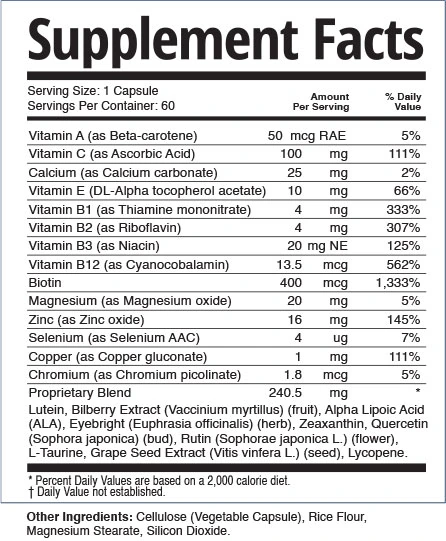
Think of your supplements as ingredients rather than brands. Two different bottles might both contain vitamin C, vitamin E or zinc — and the amount that matters for your health is the sum across everything you take, not the number on any single label. Most sensible supplement amounts leave plenty of headroom, so a little overlap is usually harmless. The caution applies mainly to nutrients where large excesses are undesirable, which is exactly why totalling them up is the single most valuable habit when combining products.
The good news for eye supplements specifically is that their defining ingredients — the carotenoids lutein and zeaxanthin — are often present only in trace amounts, if at all, in a standard multivitamin. That is the whole reason a dedicated eye formula exists, a point we explore in eye supplement vs multivitamin. So the parts that make an eye vitamin distinctive rarely double up with anything else; it is the shared background vitamins and minerals you keep an eye on.
Common combinations, one by one
Eye vitamin + multivitamin
This is the most common pairing and generally fine. The lutein and zeaxanthin in your eye supplement fill a gap most multivitamins leave, so the two are usually complementary. Just compare the two labels for shared nutrients — vitamin C, vitamin E and zinc are the usual suspects — and make sure the combined totals stay within sensible amounts. If they overlap heavily, you might choose one as your primary and treat the other as a top-up.
Eye vitamin + fish oil (omega-3)
A popular and generally compatible combination. Fish oil supplies omega-3 fatty acids while your eye supplement supplies carotenoids and other nutrients, so there is no meaningful overlap. There is even a small bonus: because lutein and zeaxanthin are fat-soluble, taking them around the same meal as fish oil can support absorption — more on timing in our guide to the best time to take eye vitamins. If you take blood thinners, mention omega-3 to your doctor, as it can be relevant there.
Eye vitamin + vitamin D
Vitamin D generally poses no conflict with an eye supplement. The only universal rule is the same one: fat-soluble vitamins should not be casually mega-dosed across several products, so know how much D you are getting in total.
Eye vitamin + collagen, probiotics, magnesium and similar
These sit in entirely different lanes from an eye formula and typically combine without issue. As always, glance at the labels for any surprise overlap, but for most people these are easy companions.
| 1. Line up labels | Put every Supplement Facts panel side by side. |
| 2. Circle repeats | Mark any nutrient that appears on more than one label. |
| 3. Add the totals | Sum each repeated nutrient across all your products. |
| 4. Sanity-check | Keep each total within recommended amounts; ask a pharmacist if unsure. |
When to check with a doctor first
Combining well-tolerated supplements is low-risk for most healthy adults, but some situations deserve a professional's eyes on the whole picture — because a website can total nutrients but cannot see your medical history or medication list. Speak to your doctor or pharmacist before stacking supplements if you:
- ✓ Take any prescription medication, especially blood thinners or drugs with a narrow safety window.
- ✓ Are pregnant or breastfeeding.
- ✓ Manage a chronic condition such as kidney or liver issues.
- ✓ Are heading into surgery — many clinicians ask you to pause non-essential supplements.
- ✓ Are already taking several products and are unsure of your combined totals.
This is the same responsible-use principle we cover in our broader look at whether an eye supplement is right for you and any safety considerations and possible side effects. None of it means combining supplements is dangerous — it means a two-minute check pays off whenever your situation is anything other than routine.
Practical tips for a tidy supplement routine
Once you have confirmed your combination is sensible, a few habits keep it easy and consistent:
- ✓ Take them with a meal: fat-soluble nutrients like lutein and zeaxanthin absorb better with food, and mealtime is easy to remember.
- ✓ Keep a short list: write down every supplement and its key amounts so you (and your pharmacist) can see the whole picture.
- ✓ Prune duplicates: if two products heavily overlap, you may not need both — simpler routines are easier to sustain.
- ✓ Be consistent: the benefit of eye nutrients comes from steady daily use over weeks, not from stacking more bottles.
That last point is worth underlining. When it comes to eye vitamins, the payoff comes from consistency rather than quantity — adding more overlapping products rarely helps and can just cost more. A single, well-formulated eye supplement taken every day usually does more than a crowded shelf taken haphazardly.
An eye vitamin designed to fit your routine
TheyaVue pairs lutein and zeaxanthin with bilberry and a broad eye-nutrition complex in one small daily capsule — the carotenoids most multivitamins leave out, in a formula that slots neatly alongside your other supplements. Backed by a 60-day money-back guarantee.
See TheyaVue Packages
Multi-bottle packs support the daily consistency that matters most — with the biggest savings per bottle.
The bottom line
Can you take eye vitamins with other supplements? For most healthy adults, yes — an eye supplement generally combines well with a multivitamin, fish oil, vitamin D and similar products. The single habit that keeps the whole routine safe is to watch for overlap: read every label, total up shared nutrients like vitamin C, vitamin E and zinc, and keep each within sensible amounts. Because the carotenoids that define an eye supplement rarely appear elsewhere, an eye vitamin is usually complementary rather than redundant. When medication or a health condition is in the mix, let your doctor or pharmacist make the final call. For your next read, compare an eye supplement vs a multivitamin or return to the TheyaVue homepage.
Frequently asked questions
Can you take eye vitamins with a multivitamin?
Usually yes, but watch for overlap. A multivitamin and an eye supplement can both contain vitamins like C, E or zinc, so take both means adding up the totals to stay within recommended amounts. The carotenoids that make an eye supplement distinctive — lutein and zeaxanthin — are often barely present in a standard multivitamin, so the two are frequently complementary.
Can you take eye vitamins with fish oil or omega-3?
Generally yes, and they are commonly taken together. Fish oil provides omega-3 fatty acids while an eye supplement provides carotenoids and other nutrients, so they do not overlap problematically. Because lutein and zeaxanthin are fat-soluble, taking them around the same meal as fish oil may even help absorption. Check with your doctor if you take blood thinners.
Should you take eye vitamins with vitamin D or other single vitamins?
Vitamin D generally poses no conflict with an eye supplement. The universal rule with any single-vitamin add-on is to total how much of each nutrient you get across all your products so you stay within sensible amounts — fat-soluble vitamins in particular should not be casually mega-dosed across multiple supplements.
What is the main risk of taking several supplements together?
The most common issue is not a dangerous interaction but accidental doubling-up — quietly exceeding recommended amounts of a nutrient that appears in two or three products at once. The fix is simple: read every label, add up the overlapping nutrients, and keep each within sensible limits. When medication is involved, ask a pharmacist or doctor.
Do I need to space eye vitamins apart from other supplements?
For most everyday combinations there is no need to space them out, and taking your supplements together with a meal is often the easiest way to remember them. If a healthcare professional has advised separating specific products, follow that guidance.
References
- National Institutes of Health, Office of Dietary Supplements. “Dietary Supplements: What You Need to Know.” ods.od.nih.gov
- U.S. Food & Drug Administration. “Dietary Supplements.” fda.gov
- American Optometric Association. “Diet and Nutrition — Lutein & Zeaxanthin.” aoa.org
- National Eye Institute. “Age-Related Eye Disease Study 2 (AREDS2).” nei.nih.gov
† These statements have not been evaluated by the Food and Drug Administration. This product is not intended to diagnose, treat, cure or prevent any disease. This article is for general educational information only and is not medical advice. Always consult a qualified eye-care professional or physician about your individual needs.