How Much Lutein and Zeaxanthin Per Day? A Dosage Guide
| Short version | There is no official RDA, but much eye-nutrition research has used about 10 mg of lutein plus 2 mg of zeaxanthin per day. |
| The ratio | Roughly 5:1 lutein to zeaxanthin, which mirrors how the two appear in a normal diet. |
| Food vs supplement | Get lutein from leafy greens; zeaxanthin is harder to obtain, so it is the one most people supplement. |
| How to take it | With a meal containing a little fat — both are fat-soluble — and consistently, day after day. |
How much lutein and zeaxanthin per day, really?
If you have started comparing eye supplements, you have run into a frustrating gap: unlike vitamin C or vitamin D, lutein and zeaxanthin have no official Recommended Daily Allowance. That does not mean amounts are a mystery — it means the guidance comes from research rather than a government number on the back of a cereal box. The most useful reference point, repeated across a great deal of eye-nutrition science, is roughly 10 mg of lutein together with about 2 mg of zeaxanthin per day. That single pattern answers most people's question, and it is the amount many quality eye formulas are built around.
The rest of this guide unpacks where that figure comes from, why the ratio between the two carotenoids matters as much as the totals, how much you can realistically get from food, and — crucially — how to read a Supplement Facts panel so you actually know what you are getting. Amounts are a common reference point, not a personal prescription, so treat your own doctor as the final word on what suits you.
Where the 10 mg + 2 mg figure comes from
The best-known source of these numbers is the National Eye Institute's AREDS2 research, a large study that examined a specific eye-nutrition formula. That formula included 10 mg of lutein and 2 mg of zeaxanthin per day, and because the study was so influential, those amounts became the de facto reference for the wider supplement world. You will see the same pairing echoed on countless labels. We compare that clinical recipe with a modern everyday formula in our article on TheyaVue vs AREDS2 eye vitamins.
It is worth being precise about what the number is and is not. It is a well-studied, sensible daily amount that reflects how researchers chose to deliver these carotenoids. It is not a minimum you are “deficient” below, nor a magic threshold. Because there is no RDA, the honest framing is: 10 mg + 2 mg is a widely used, well-tolerated reference point that a lot of thoughtful formulas aim for.
Why the ratio matters, not just the totals
Lutein and zeaxanthin are two distinct carotenoids that sit in complementary zones of the macula — lutein across the wider area, zeaxanthin concentrated in the central fovea where your sharpest vision happens. Because of that division of labour, the ratio between them matters, not just the individual milligrams. The classic pattern is roughly 5:1 lutein to zeaxanthin (hence 10 mg to 2 mg), which also mirrors how the two naturally appear in a typical diet, where lutein is far more abundant. For the full story on how these two differ and why they are almost always paired, see our lutein vs zeaxanthin explainer.
The practical warning that follows is this: a product boasting a huge lutein number while burying a trace of zeaxanthin is not automatically “better.” It may just be cheaper lutein padding a headline figure. Balance across the two carotenoids is a more meaningful signal of a thoughtful formula than one large number.
How much can you get from food?
Food is always the foundation, and it is the honest starting point for any dosage conversation. The catch is that the two carotenoids are very different to obtain from the plate.
Lutein: achievable through greens
Lutein is genuinely reachable through diet. A generous serving of cooked spinach can supply well into the multi-milligram range, and kale, collards and broccoli are all strong sources. Someone who eats leafy greens most days is doing a lot of the lutein work through food alone.
Zeaxanthin: the everyday gap
Zeaxanthin is the difficult one. Its richest sources — sweetcorn, orange bell peppers, goji berries, saffron and egg yolks — are not staples for most people, and even a healthy diet heavy in greens can under-supply it. This is the single most common real-world gap in eye nutrition, and it is precisely why zeaxanthin is the carotenoid a supplement most usefully tops up.
| Cooked spinach (1 cup) | A large share of a day's lutein — but little zeaxanthin |
| Kale, collards, broccoli | Strong lutein sources |
| Sweetcorn, orange peppers | Among the better everyday zeaxanthin sources |
| Egg yolk | Well-absorbed lutein & zeaxanthin, thanks to its fat |
Because both carotenoids are fat-soluble, absorption improves when you eat them with a little healthy fat — olive oil on the spinach, avocado in the salad, or simply the fat in an egg yolk. That same principle applies to supplements, which is why timing them with a meal helps; we cover the details in the best time to take eye vitamins.
How to read a label for the right dose
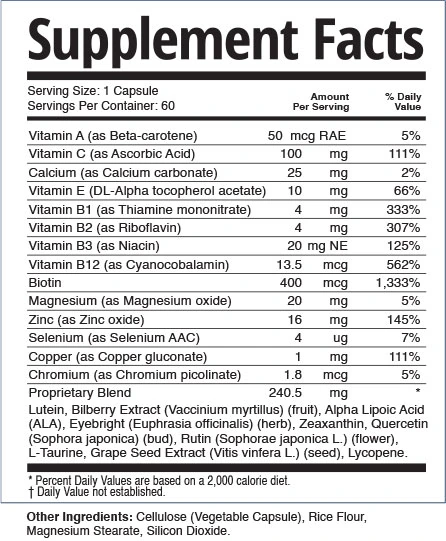
Once you know the target, the Supplement Facts panel tells you whether a product actually delivers it. Four checks do the job:
1. Are both listed with milligram amounts?
You want to see lutein and zeaxanthin each with its own number. “Marigold extract” or “lutein complex” with no stated zeaxanthin figure often means the zeaxanthin content is negligible.
2. Is the ratio sensible?
Around 5:1 lutein to zeaxanthin (such as 10 mg to 2 mg) is the well-studied pattern. A wildly lopsided ratio is a flag.
3. Is it a serving you'll actually take?
Check whether the stated amount is per capsule or spread across several. A once-daily capsule is easier to stick with than a three-capsule serving, and consistency is what builds macular pigment over time.
4. What surrounds the carotenoids?
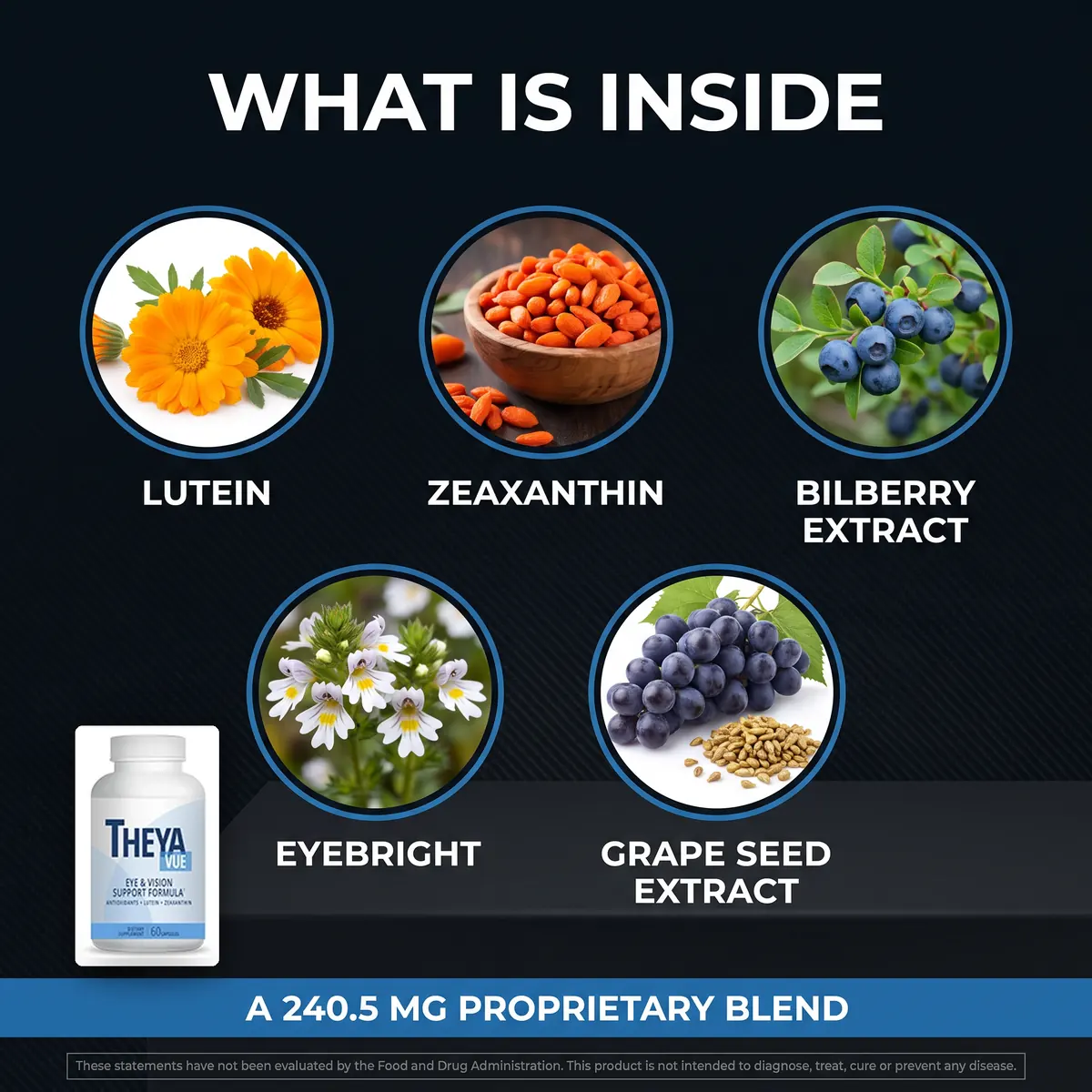
Lutein and zeaxanthin work best as part of a team. A thoughtful formula pairs them with supporting nutrients and botanicals. For a complete checklist across any brand, see our buyer's guide to choosing an eye health supplement.
Is more ever better?
It is tempting to assume a bigger number is a better product, but that is not how these carotenoids work. The goal is to build macular pigment steadily, and that depends far more on taking a sensible amount consistently than on chasing a large single dose. Lutein has a strong safety record and higher intakes have been studied, but piling on lutein while ignoring zeaxanthin simply unbalances the pair. As with any supplement, if you are considering unusually high doses, talk to a healthcare professional first — and remember that consistency over months beats intensity for a day.
The well-studied pattern, in one daily capsule
TheyaVue is built around lutein and zeaxanthin in a sensible ratio, paired with bilberry and a broad eye-nutrition complex — an easy way to hit a consistent daily amount, especially the zeaxanthin most diets miss. Backed by a 60-day money-back guarantee.
See TheyaVue Packages
A multi-bottle pack makes daily consistency easy — the thing that matters most for macular pigment.
The bottom line
How much lutein and zeaxanthin per day? There is no official RDA, but the reference point echoed across eye-nutrition research is about 10 mg of lutein and 2 mg of zeaxanthin — roughly a 5:1 ratio that mirrors a normal diet. Get your lutein from leafy greens, recognise that zeaxanthin is the harder carotenoid to obtain from food, take both with a meal containing a little fat, and prize consistency over chasing a large number. When comparing supplements, insist on seeing both carotenoids listed in real milligrams and in a sensible ratio. For the next step, read our eye supplement buyer's guide or return to the TheyaVue homepage to see the full formula.
Frequently asked questions
How much lutein and zeaxanthin should I take per day?
There is no official Recommended Daily Allowance, but a great deal of eye-nutrition research has used roughly 10 mg of lutein with about 2 mg of zeaxanthin per day, and many quality supplements follow this pattern. Treat it as a common reference point rather than a prescription, and check with your doctor about your own situation.
Is 20 mg of lutein a day too much?
Lutein has a strong safety record and higher intakes have been studied, but more is not automatically better. Much of the well-known research settled around 10 mg because the aim is to build macular pigment steadily. A sensible amount taken consistently generally matters more than a large single number — talk to a professional before taking high doses.
Can I get enough lutein and zeaxanthin from food alone?
Lutein is achievable through a diet rich in dark leafy greens like kale and spinach. Zeaxanthin is harder, because its best sources — corn, orange peppers, goji berries, egg yolks — are less common on the everyday plate. Food should be the foundation, but zeaxanthin is the carotenoid most people fall short on, which is where a supplement can help.
What is the best ratio of lutein to zeaxanthin?
Roughly 5 parts lutein to 1 part zeaxanthin — for example 10 mg to 2 mg — is the pattern used in much of the research and mirrors how the two appear in a normal diet. Look for both listed with real milligram amounts in a sensible ratio, not just lutein alone.
Should I take lutein and zeaxanthin with food?
Yes. Both are fat-soluble carotenoids, so taking them with a meal that contains a little healthy fat improves absorption compared with an empty stomach. The exact time of day matters less than consistency and taking them alongside food.
References
- National Eye Institute. “Age-Related Eye Disease Study 2 (AREDS2).” nei.nih.gov
- National Institutes of Health, Office of Dietary Supplements. “Carotenoids — Fact Sheet.” ods.od.nih.gov
- Harvard T.H. Chan School of Public Health. “The Nutrition Source: Carotenoids.” hsph.harvard.edu
- American Optometric Association. “Diet and Nutrition — Lutein & Zeaxanthin.” aoa.org
† These statements have not been evaluated by the Food and Drug Administration. This product is not intended to diagnose, treat, cure or prevent any disease. This article is for general educational information only and is not medical advice. Always consult a qualified eye-care professional or physician about your individual needs.