How Long Do Eye Vitamins Take to Work? A Realistic Timeline
| Short version | Eye vitamins work gradually. A realistic window to judge a consistent daily routine is about 8–12 weeks, with many people continuing longer. |
| Why so slow | Lutein and zeaxanthin must be absorbed, carried in the blood and slowly deposited into the macular pigment — there is no overnight switch. |
| What to expect | Quiet, cumulative nutritional support — not a fast jump in sharpness and never a replacement for glasses. |
| Biggest lever | Consistency. A daily dose taken with food beats an occasional higher dose every time. |
The short answer, and why it needs context
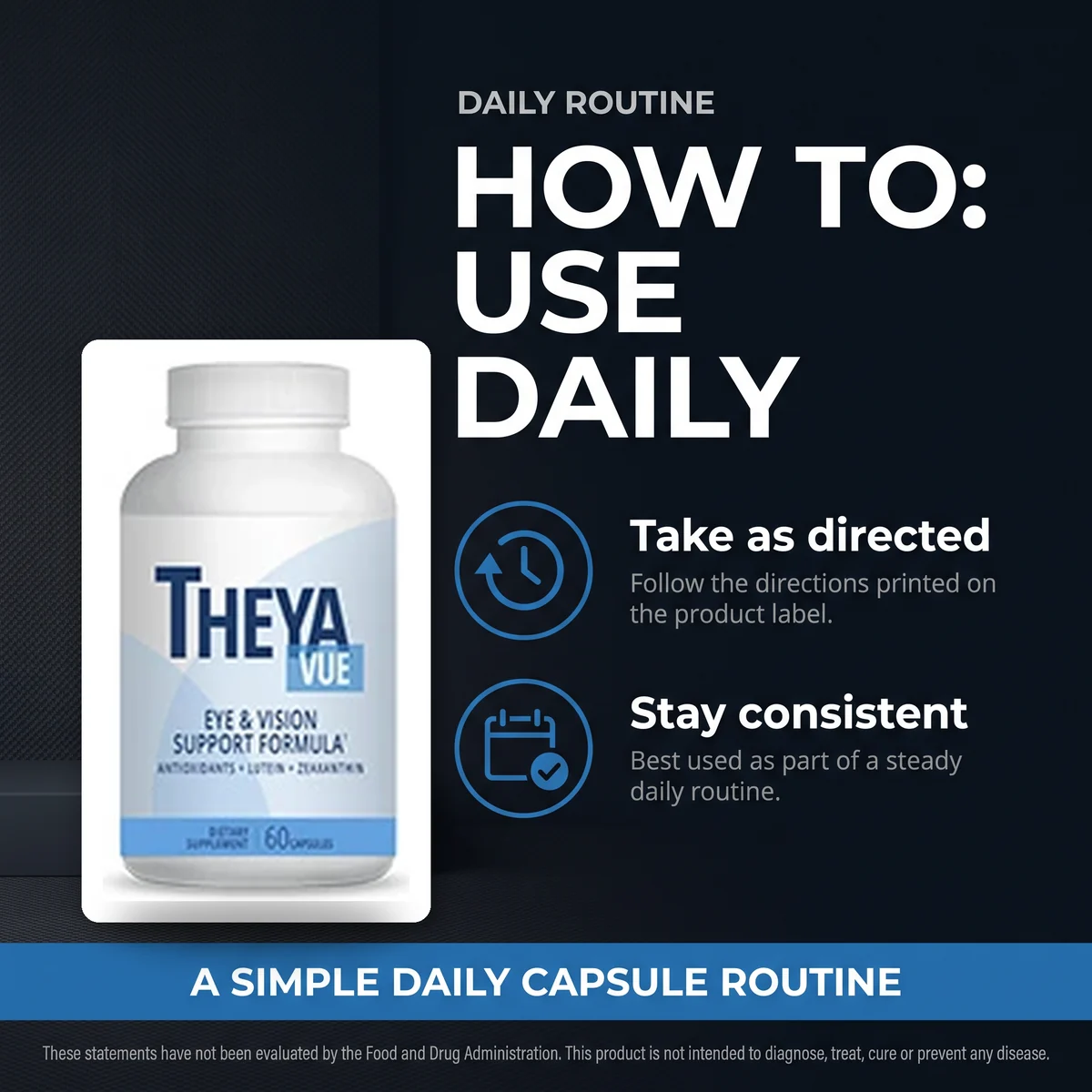
“How long do eye vitamins take to work?” is a fair question, and the short answer is: longer than you probably hope, and that is completely normal. Unlike a painkiller that acts in an hour, eye vitamins support a slow biological process. A sensible window to give a consistent daily routine is roughly eight to twelve weeks, and plenty of people take them far longer as an ongoing part of their diet. If you go in expecting an overnight change in your eyesight, you will be disappointed — not because the nutrients are useless, but because that is simply not how nutrition works.
To set the right expectations, it helps to understand what “working” actually means for an eye vitamin, what is happening inside the eye during those weeks, and how to tell whether you are on the right track. That is what the rest of this guide covers.
What “working” really means for an eye vitamin
The first thing to get straight is the difference between correction and support. Eye vitamins do not correct refractive error — they will not sharpen a blurry prescription or let you throw away your glasses. What a good formula does is supply nutrients the eye uses for its normal, everyday function: lutein and zeaxanthin for the macular pigment, plus supporting antioxidants like zinc and vitamins C and E.
Because that support is nutritional, the “result” is not a dramatic moment you can point to. It is more like the effect of eating well in general: quiet, cumulative and largely invisible from day to day. This is the crucial mental shift. If you are waiting to “feel it kick in,” you are applying the wrong model. The right model is closer to building a habit than taking a medicine. For the bigger picture on whether that support is worth pursuing at all, see our companion piece on whether eye vitamins are worth it.
A realistic week-by-week timeline
No two people are identical, and this is general guidance rather than a promise, but here is a realistic way to think about the journey of a daily eye vitamin:
The single most important thing this table shows is that the early weeks feel like nothing is happening — and that is expected. The temptation to quit at three or four weeks is exactly the mistake to avoid, because you would be stopping right as the deposition stage is getting going.
Why eye vitamins work so gradually
To understand the timeline, it helps to follow the nutrients on their journey. When you take lutein and zeaxanthin, they are not teleported into the eye. They have to be:
- ✓ Absorbed from the gut — and because they are fat-soluble, this works best alongside a little dietary fat.
- ✓ Transported through the bloodstream to the tissues that use them.
- ✓ Deposited into the macular pigment at the back of the eye — the slow step that governs the whole timeline.
- ✓ Maintained with ongoing intake, since the pigment is not a one-time build.
That deposition step is the bottleneck. The macular pigment builds a little at a time, which is precisely why consistency beats intensity. Taking your dose most days for three months does far more than taking a big dose sporadically. If you want to squeeze the most out of each dose, the timing and food pairing genuinely matter — we cover that in our guide to the best time to take eye vitamins.

How to tell whether your eye vitamins are working
This is the honest part: with good nutrition, you often cannot “feel” the benefit, because the goal is support rather than a sensation. That makes the “is it working?” question tricky. Here are the most useful ways to think about it:
Judge the process, not a feeling
The most reliable indicator you control is simply whether you have taken the supplement consistently and covered a dietary gap. If you have done that with a well-dosed formula for a couple of months, you have done the thing that gives it a chance to work.
Look for the absence of a gap
If your diet was previously low in lutein and zeaxanthin — because you rarely ate leafy greens or orange vegetables — then a daily supplement is meaningfully changing your intake, whether or not you feel it. Our guide to supporting eye health naturally explains the food side of that equation.
Ask a professional for objective markers
An eye-care professional can measure certain aspects of eye health over time if you want objective feedback rather than relying on subjective impressions. This is the gold standard if you really want to know.
Give consistency a real chance
TheyaVue is a once-daily capsule of lutein, zeaxanthin, bilberry and a 20+ nutrient complex — built for the kind of steady, months-long routine that eye nutrients actually reward. Backed by a 60-day money-back guarantee, so you have room to give it a fair trial.
Start Your Daily Routine
Because the timeline runs in months, a multi-bottle pack keeps you from running out mid-routine — and costs less per day.
Common mistakes that stretch the timeline
Quitting too early
The number-one mistake is judging at three or four weeks and giving up. That is right before the deposition stage does its most useful work. Plan for at least eight to twelve weeks from the start.
Skipping doses
Because the effect is cumulative, an on-and-off routine never lets levels build. A missed day here and there is fine; a habit of skipping is not.
Taking it without any fat
Lutein and zeaxanthin are fat-soluble. Taking them with a meal that contains a little healthy fat improves absorption and, over time, the amount that reaches the eye.
Expecting a prescription change
Eye vitamins are not glasses. If you are waiting for your sharpness to jump, you are measuring the wrong thing, and no timeline will satisfy that expectation.
The bottom line
How long do eye vitamins take to work? Think in weeks and months, not days — a realistic window is eight to twelve weeks of consistent daily use, with many people continuing indefinitely as a dietary habit. The nutrients work by slowly building the macular pigment, which is why patience and consistency are the whole game. Set your expectations to “quiet, cumulative support,” take your dose most days with a little food, and give it a proper trial before you judge. Do that, and you are giving your eye vitamin the one thing it actually needs to do its job: time.
Frequently asked questions
How long do eye vitamins take to work?
Most eye vitamins work gradually. The macular pigment they help build accumulates over weeks and months, so a realistic window to give a consistent daily routine is around 8 to 12 weeks, with many people continuing for longer. There is no overnight change; the benefit is cumulative and quiet rather than sudden.
Will eye vitamins improve my eyesight quickly?
No. Eye vitamins are nutritional support, not a correction for refractive error, so they will not replace glasses or produce a fast jump in sharpness. What they can do is supply the nutrients that support normal eye function over time when taken consistently.
Why do eye vitamins take so long to work?
Lutein and zeaxanthin have to be absorbed, transported and then deposited into the macular pigment layer of the retina, and that deposition happens slowly. Because the effect depends on gradual accumulation rather than a single dose, patience and consistency matter far more than any short-term change.
How will I know if my eye vitamins are working?
The honest answer is that you may not feel a dramatic difference, because good nutrition often works quietly in the background. The most reliable sign is simply that you have taken the supplement consistently and covered a dietary gap. An eye-care professional can measure certain markers if you want objective feedback.
Should I stop if I see no change after a month?
A month is usually too early to judge a nutrient that builds up over a longer period. If you are taking a well-dosed formula consistently, giving it a full 8 to 12 weeks is more reasonable before deciding. Discuss your individual situation with an eye-care professional.
References
- National Eye Institute. “Age-Related Eye Disease Study 2 (AREDS2).” nei.nih.gov
- National Institutes of Health, Office of Dietary Supplements. “Carotenoids — Fact Sheet.” ods.od.nih.gov
- American Academy of Ophthalmology. “Nutrition and Eye Health.” aao.org
- American Optometric Association. “Diet and Nutrition — Lutein & Zeaxanthin.” aoa.org
† These statements have not been evaluated by the Food and Drug Administration. This product is not intended to diagnose, treat, cure or prevent any disease. This article is for general educational information only and is not medical advice. Always consult a qualified eye-care professional or physician about your individual needs.