Eye Vitamins vs Eye Drops: Which Is Better for Tired, Dry Eyes?
| Short version | Eye drops and eye vitamins are not competitors — they solve different problems and many people use both. |
| Eye drops | Add moisture to the eye's surface for fast, short-term relief from dryness and grittiness. |
| Eye vitamins | Work from the inside over weeks, supplying nutrients like lutein and zeaxanthin the eye uses over time. |
| Which to choose | Reach for a drop for instant comfort; take a daily supplement as a long-term foundation. See an eye doctor for persistent dryness. |
Eye vitamins vs eye drops: two tools, two different jobs
If your eyes feel tired, dry or gritty at the end of a long day, you have probably stood in the pharmacy aisle wondering whether to buy a bottle of lubricating drops or a bottle of eye vitamins. It is a fair question, but it contains a hidden assumption — that the two are alternatives you must choose between. They are not. Eye drops and eye vitamins work through completely different routes, on different timescales, to address different problems. Understanding that distinction is the fastest way to stop wasting money on the wrong tool for the moment you are in.
Here is the one-line version: eye drops treat the surface of the eye right now; eye vitamins support the eye from the inside over time. A drop is a fire extinguisher for immediate discomfort. A daily supplement is more like eating well — a quiet, cumulative habit whose value shows up over weeks and months. Once you see them that way, the “which is better?” question mostly answers itself: better for what, and when?
What eye drops actually do
The vast majority of over-the-counter eye drops are lubricating drops, also called artificial tears. Their job is to top up or mimic your natural tear film — the thin layer of water, oil and mucus that keeps the front of your eye smooth, moist and comfortable. When that tear film thins out or evaporates too quickly (which happens a lot during screen work, in air conditioning, or on a plane), the eye surface feels dry, scratchy and tired. A lubricating drop adds moisture back almost instantly.
The strengths and limits of drops both come from the same fact: they act on the surface. That makes them wonderfully fast — relief in seconds — but also temporary, because tears drain away and evaporate. Drops do not deliver meaningful nutrition to the deeper structures of the eye, and most everyday artificial tears are not designed to. There are also medicated and prescription drops for specific conditions, but those are a different category entirely and belong under the direction of an eye-care professional.
Best use for drops
Immediate, in-the-moment relief from dryness, grittiness and that “my eyes are tired” feeling — especially during or after long screen sessions. Think of them as spot treatment.
What eye vitamins actually do
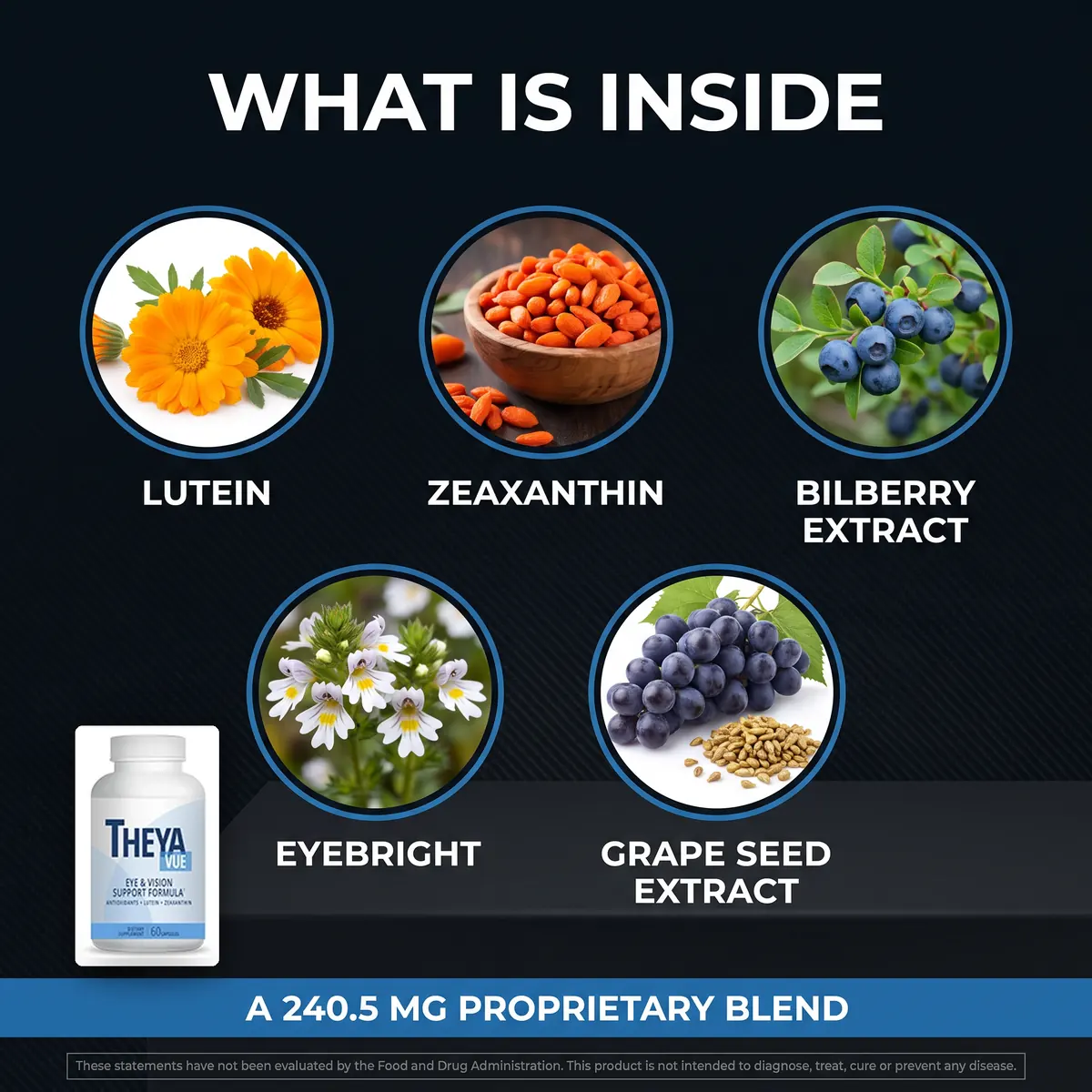
Eye vitamins take the opposite approach. Instead of coating the surface, they supply nutrients through your digestive system and bloodstream that the eye draws on over time. The headline nutrients in a quality eye formula are the carotenoids lutein and zeaxanthin — the only two dietary carotenoids that deposit in the macula, where they form a protective pigment layer. A good formula surrounds them with supporting vitamins, minerals and botanicals such as bilberry. If you want the full picture of how those two carotenoids differ and why they are always paired, our lutein vs zeaxanthin explainer covers it in depth.
Because this works through nutrition rather than surface moisture, eye vitamins are slow by nature. Macular pigment builds up gradually — typically over roughly 8 to 12 weeks of consistent daily use — which is why nothing dramatic happens the first day. We lay out a realistic week-by-week picture in how long eye vitamins take to work. The trade-off is worth it: a supplement addresses a long-term foundation that no drop can, precisely because a drop washes away in minutes.
Best use for eye vitamins
A daily, long-term habit to help supply the vision nutrients your diet may fall short on — a foundation rather than a quick fix.
Side-by-side: eye vitamins vs eye drops
So which is better for tired, dry eyes?
The honest answer is that the “better” choice depends on what you are actually feeling. If your eyes are dry, scratchy and uncomfortable right now after three hours at a screen, a lubricating drop is the correct tool — a supplement cannot add moisture to your eye surface. But if your real goal is to look after your eyes for the long haul and help cover the vision nutrients your diet may miss, that is exactly what a daily eye vitamin is for, and no amount of drops will substitute for it.
This is why so many people who spend their days on screens end up using both: a drop for the acute moment and a supplement as the steady background habit. If long monitor days are your main concern, our guide to eye supplements for screen users pairs the nutrient side with the practical habits — blinking, the 20-20-20 rule, lighting — that reduce dryness in the first place. And for the broader lifestyle picture, supporting eye health naturally ties food, screens, sleep and UV protection together.
| My eyes feel dry right now | Reach for a lubricating drop — fast, surface-level relief. |
| I want a long-term eye-health habit | Take a daily eye vitamin with lutein and zeaxanthin. |
| Both apply to me | Use them together — they work through different routes and don't compete. |
| Dryness is persistent or painful | See an eye-care professional — that needs a proper assessment. |
The one thing drops can't do
Here is the point that decides most people's routines: a lubricating drop, by design, does nothing for your long-term nutritional foundation. It moisturises and then drains away. If the deeper question on your mind is “am I giving my eyes the nutrients they need over the years?”, that is a job for food first and, where your plate falls short, a well-formulated daily supplement — not a bottle of artificial tears.
That is where a once-daily formula earns its place alongside, not instead of, your drops. It is the part of eye care that compounds quietly over time, in the same way that eating leafy greens or wearing sunglasses does. Drops handle the moment; the supplement handles the months.
Give your eyes the nutrients drops can't
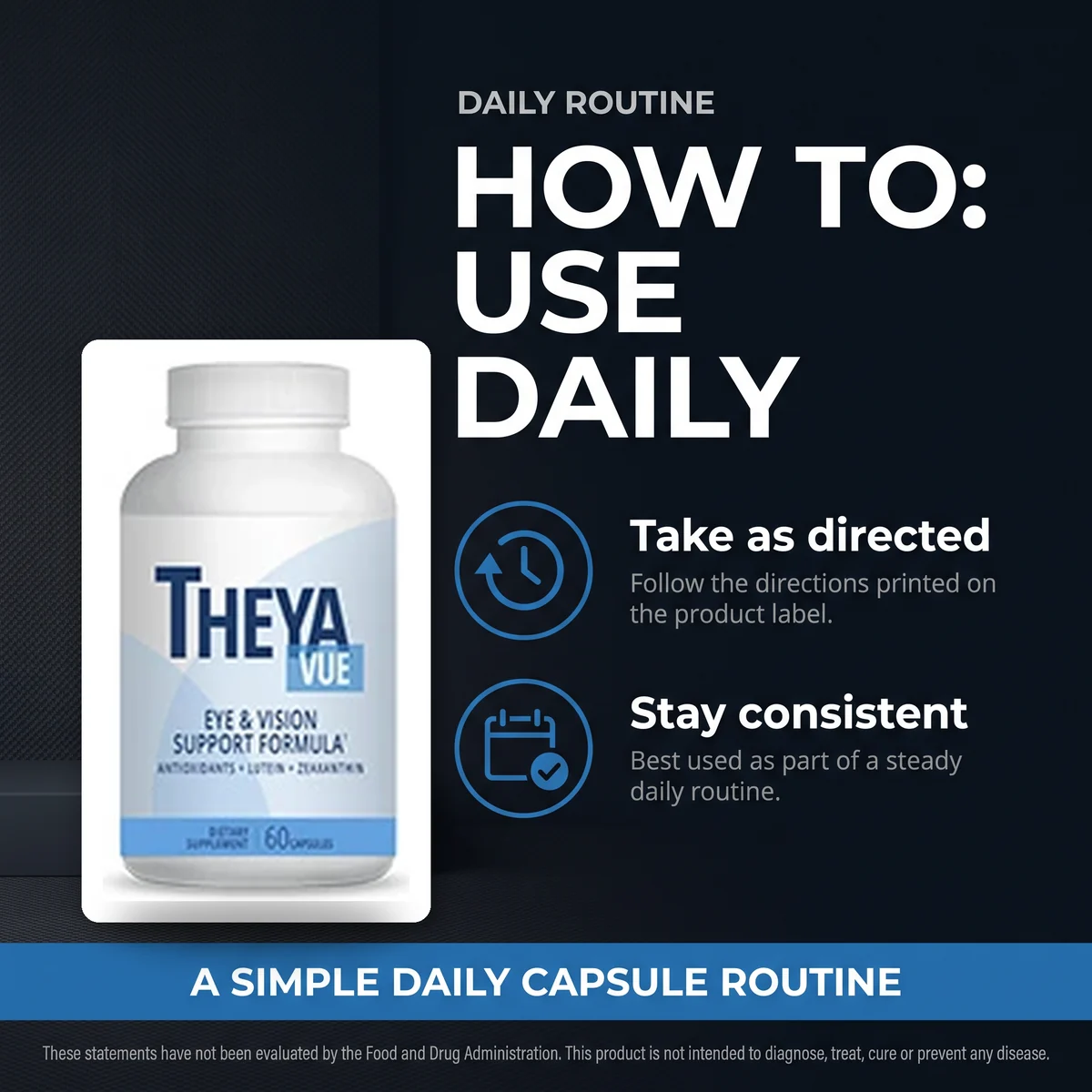
TheyaVue delivers lutein, zeaxanthin and bilberry with a broad eye-nutrition complex in one small daily capsule — the long-term foundation that no lubricating drop provides. Backed by a 60-day money-back guarantee.
See TheyaVue Packages
Multi-bottle packs cover a full daily routine and bring the biggest savings per bottle.
The bottom line
Eye vitamins versus eye drops is not a contest with a single winner, because they were never trying to do the same thing. Drops add moisture to the surface for fast, temporary comfort; eye vitamins supply nutrients from the inside for a slow, cumulative benefit. Use a drop when your eyes feel dry in the moment, take a daily supplement as your long-term foundation, and use both together if both needs apply — they act through different routes and do not interfere. And if dryness is persistent, painful or getting worse, skip the guesswork and see an eye-care professional. To choose a supplement worth taking every day, start with our buyer's guide to eye health supplements, or head back to the TheyaVue homepage.
Frequently asked questions
Are eye vitamins or eye drops better for dry eyes?
They do different jobs, so it is not strictly either/or. Lubricating drops add moisture to the eye surface for fast, short-term relief. Eye vitamins work from the inside over weeks by supplying nutrients such as lutein and zeaxanthin. Many people use a drop for immediate comfort and a daily supplement as a longer-term habit; persistent dryness should be assessed by an eye-care professional.
Do eye drops contain vitamins?
Most everyday over-the-counter drops are lubricants (artificial tears) that mimic your natural tear film rather than deliver nutrition. Some specialty drops add small amounts of vitamins, but the eye absorbs far less through a drop than through the bloodstream, so an oral supplement or nutrient-rich diet is the more reliable route for nutrients.
Can I use eye drops and take eye vitamins at the same time?
Generally yes — they act through completely different routes. A lubricating drop sits on the eye's surface while an oral supplement is digested and absorbed, so they do not compete. Follow the directions on each product, and check with your eye doctor if you use prescription drops or have an ongoing condition.
Which works faster, eye drops or eye vitamins?
Eye drops act within seconds because they add moisture directly to the eye surface, but the relief is temporary. Eye vitamins are the opposite: macular-pigment nutrients build up gradually over roughly 8 to 12 weeks of consistent daily use. One is for immediate comfort, the other for a long-term foundation.
Do I still need drops if I take an eye supplement?
Possibly, because a supplement does not lubricate the eye surface. If you get dry, gritty eyes during long screen sessions, a drop can still be the right tool in the moment. The supplement addresses a different need over time, so the two are complementary rather than interchangeable.
References
- American Academy of Ophthalmology. “Eye Health — Dry Eye & Artificial Tears.” aao.org
- American Optometric Association. “Diet and Nutrition — Lutein & Zeaxanthin.” aoa.org
- National Eye Institute. “Age-Related Eye Disease Study 2 (AREDS2).” nei.nih.gov
- National Institutes of Health, Office of Dietary Supplements. “Carotenoids — Fact Sheet.” ods.od.nih.gov
† These statements have not been evaluated by the Food and Drug Administration. This product is not intended to diagnose, treat, cure or prevent any disease. This article is for general educational information only and is not medical advice. Always consult a qualified eye-care professional or physician about your individual needs.