Best Eye Supplements for Screen & Computer Users: What to Look For
| Short version | For screen users, look for an eye supplement with real doses of lutein and zeaxanthin — the carotenoids that build the blue-light-filtering macular pigment. |
| Also look for | Zinc, vitamins C and E, and botanicals like bilberry — a well-rounded supporting complex. |
| What it won't do | Replace screen breaks, blinking and good workspace lighting — supplements layer on top of habits. |
| Best paired with | The 20-20-20 rule, good lighting and a nutrient-rich diet. |
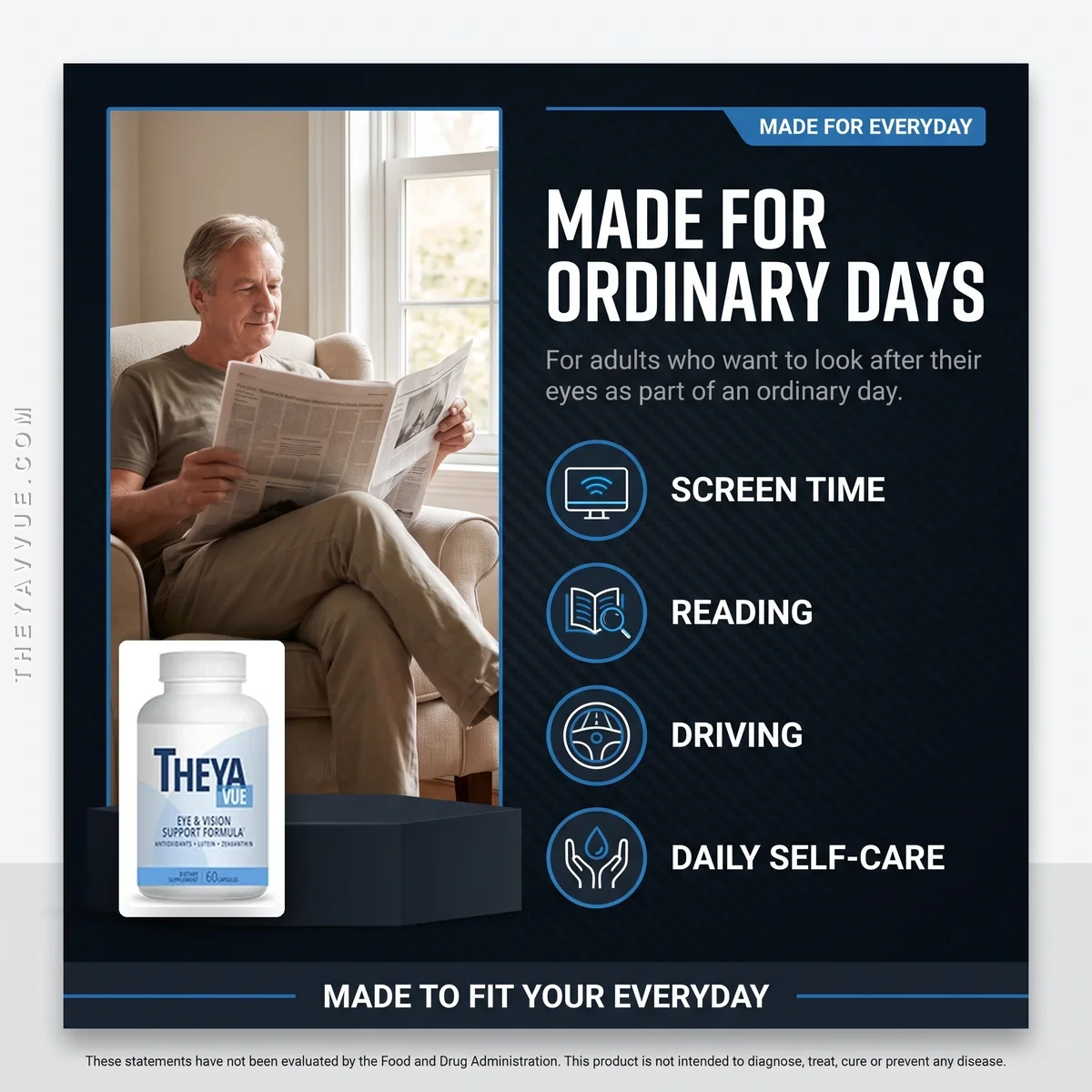
Why screen users ask about eye supplements
If you spend your day moving between a laptop, a phone and a second monitor, you already know the feeling: tired, dry, achy eyes by mid-afternoon. It is no surprise that “best eye supplements for screen users” and “eye vitamins for computer users” are among the most searched vision queries. The instinct to reach for nutritional support makes sense — but to buy well, you need to be clear about what a supplement can and cannot do for a screen-heavy life.
Here is the honest framing we will build on throughout this guide: a supplement is nutritional support that layers on top of good screen habits — it is not a cure for digital eye strain. Most of that end-of-day discomfort comes from how you use screens, not from a nutrient deficiency. So the smartest approach combines the right supplement with the right habits. Get both, and you are covering the two levers that actually matter.
What screens actually do to your eyes
Understanding the mechanism tells you which problems a supplement can help with and which it cannot. Long screen sessions cause discomfort mainly through three routes:
- ✓ Reduced blinking: we blink far less when focused on screens, which dries the surface of the eye.
- ✓ Sustained near focus: holding focus at one close distance tires the focusing muscles.
- ✓ Light exposure: screens emit high-energy blue light, part of which reaches the retina.
The first two are habit-and-environment problems, and no capsule fixes them — breaks and blinking do. The third is where nutrition has a genuine, describable role, because the macular pigment made from lutein and zeaxanthin naturally absorbs a portion of blue light before it reaches the deeper retina. That is the specific, honest reason these carotenoids come up so often for screen users. It is support, not a switchable filter, and it works gradually.
The nutrients to look for on the label
When you compare eye supplements as a screen user, the label is where the real decision happens. Prioritise in this order:
1. Lutein and zeaxanthin (the priority)
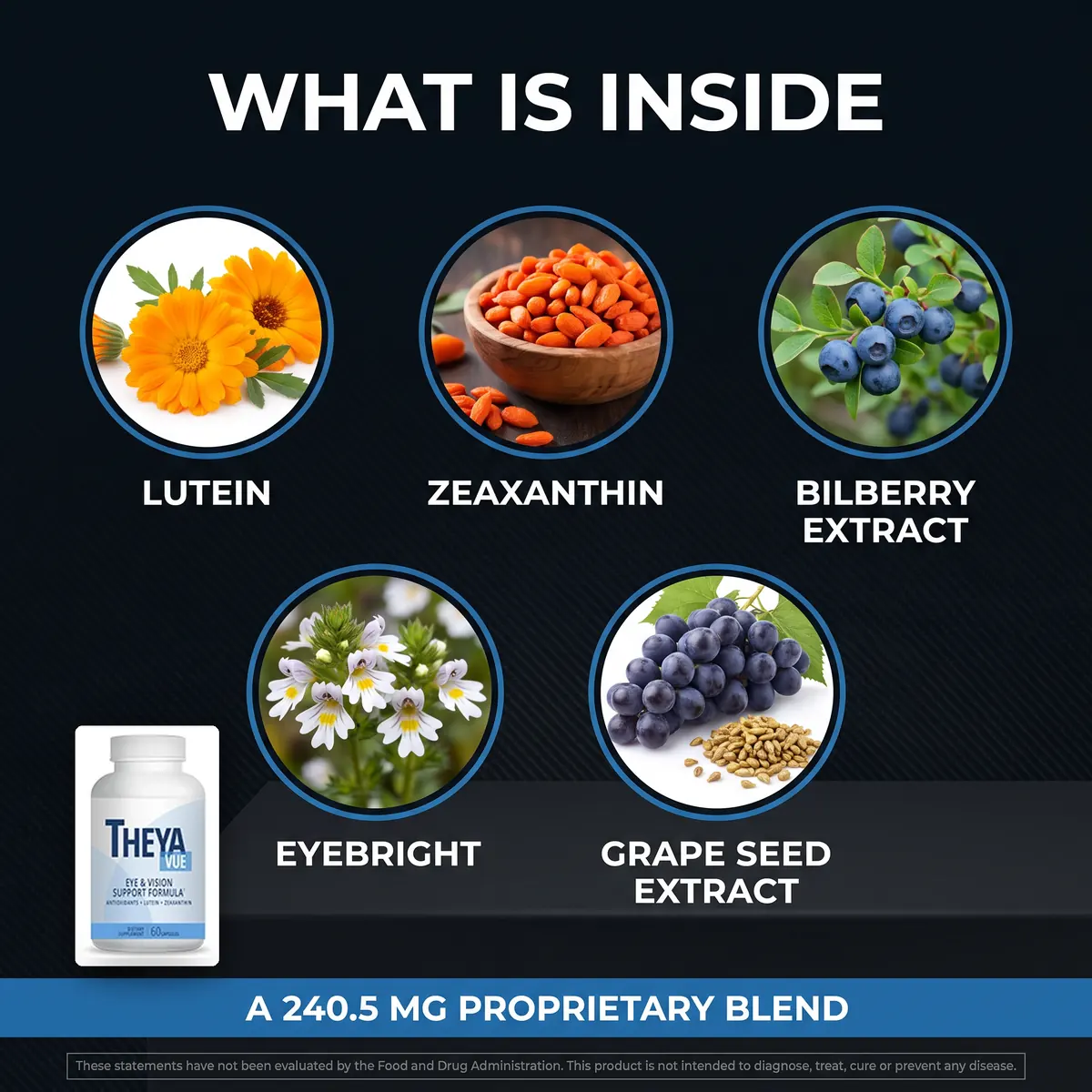
These two carotenoids build the macular pigment, the eye's own blue-light-filtering layer, and they are the single most important thing to check. You want both listed with real milligram amounts, not a token mention. Our explainer on lutein vs zeaxanthin covers exactly why you need the pair rather than one of them.
2. Zinc, vitamin C and vitamin E
These support the body's antioxidant defences and normal eye tissue, and they round out a serious eye formula. They are supporting players, but a good formula includes them at sensible amounts.
3. Bilberry and other botanicals
Bilberry is a traditional eye botanical rich in anthocyanins and is a common, welcome addition. Treat botanicals as a complement to the carotenoid core, not a replacement for it.
4. Transparent dosing over proprietary blends
Favour a Supplement Facts panel that states the amount of each ingredient. A long “proprietary blend” that hides individual doses makes it impossible to know whether you are getting a real amount of lutein or a sprinkle. The full label checklist lives in our guide to choosing an eye health supplement.
The habits that do the heavy lifting
No buyer's guide for screen users would be honest without saying this plainly: your habits matter more than any supplement for day-to-day comfort. The good news is they are simple and free. Pair your supplement with these:
Think of it as a two-part strategy: habits handle the immediate comfort, and a supplement supplies the nutrients your eyes use over the long term. Neither replaces the other. For the food side of that equation — the leafy greens and orange vegetables that carry these nutrients naturally — see our guide to supporting eye health naturally.
A screen-day-friendly daily capsule
TheyaVue delivers lutein and zeaxanthin alongside bilberry and a 20+ vitamin, mineral and botanical complex in one small daily capsule — an easy nutritional baseline to layer on top of good screen habits. Backed by a 60-day money-back guarantee.
See TheyaVue for Screen Users
A multi-bottle pack keeps a busy, screen-heavy routine stocked without reordering — and lowers the cost per day.
How to choose the right one for you
Putting it together, here is the decision path for a screen-heavy buyer:
Step 1: Confirm the carotenoid doses
Turn the bottle over and check that lutein and zeaxanthin are both present with real amounts. If they are missing or vague, keep looking.
Step 2: Check the supporting cast
Look for zinc, vitamins C and E, and a botanical like bilberry, with transparent per-ingredient dosing.
Step 3: Weigh format and convenience
A once-daily capsule is easy to fit into a workday. If you are torn between capsules and gummies, our comparison of eye vitamin capsules vs gummies lays out the trade-offs.
Step 4: Factor in the guarantee
A money-back guarantee lets you trial it for the weeks it takes eye nutrients to build up, with little risk.
Once you have chosen, remember that these nutrients work over months, not days — so give any product a fair, consistent run before judging it, exactly as we describe in how long eye vitamins take to work.
The bottom line
For screen and computer users, the best eye supplement is one with real doses of lutein and zeaxanthin, rounded out by zinc, vitamins C and E, and a botanical like bilberry, on a transparent label. Those carotenoids build the macular pigment that filters some of the blue light your screens emit — genuine nutritional support, delivered gradually. What a supplement will never do is replace the free, powerful habits that fix most screen discomfort: breaks, blinking, good lighting and a sensible workspace. Combine a well-chosen supplement with those habits and a nutrient-rich diet, and you have built the complete, honest strategy for looking after your eyes through long screen days.
Frequently asked questions
Do eye supplements help with screen use?
Eye supplements do not fix digital eye strain, which is mostly a habits-and-environment issue, but the nutrients they supply — especially lutein and zeaxanthin — help build the macular pigment that filters some blue light. For heavy screen users, a supplement is best seen as nutritional support layered on top of good screen habits.
Which nutrients matter most in an eye supplement for computer users?
Look for meaningful amounts of lutein and zeaxanthin first, since they build the macular pigment. A well-rounded formula also includes zinc, vitamins C and E, and botanicals such as bilberry. The dose of the headline carotenoids matters more than a long list of trace ingredients.
Can supplements replace the 20-20-20 rule?
No. The 20-20-20 rule — every 20 minutes, look at something 20 feet away for 20 seconds — addresses the muscle fatigue and reduced blinking that cause most screen discomfort. A supplement supports the eye nutritionally but cannot substitute for breaks, blinking and a well-set-up workspace.
Do blue-light nutrients actually work?
Lutein and zeaxanthin form the macular pigment, which naturally absorbs a portion of high-energy blue light before it reaches the deeper retina. That is a genuine, well-described function. It is nutritional support rather than a filter you can switch on instantly, so it works gradually alongside sensible screen habits.
How do I choose an eye supplement as a heavy screen user?
Check the Supplement Facts panel for stated amounts of lutein and zeaxanthin, favour transparent per-ingredient dosing over proprietary blends, look for a broader supporting nutrient complex, and factor in the guarantee. Then pair it with screen breaks, good lighting and a nutrient-rich diet.
References
- American Academy of Ophthalmology. “Computers, Digital Devices and Eye Strain.” aao.org
- American Optometric Association. “Computer Vision Syndrome.” aoa.org
- National Institutes of Health, Office of Dietary Supplements. “Carotenoids — Fact Sheet.” ods.od.nih.gov
- National Eye Institute. “Keep Your Eyes Healthy.” nei.nih.gov
† These statements have not been evaluated by the Food and Drug Administration. This product is not intended to diagnose, treat, cure or prevent any disease. This article is for general educational information only and is not medical advice. Always consult a qualified eye-care professional or physician about your individual needs.