Are Eye Vitamins Worth It? Do Vision Supplements Actually Work?
| Short version | Eye vitamins are worth it when your diet falls short on key vision nutrients — and a poor use of money when they are under-dosed or duplicate what you already eat. |
| Who gains most | Heavy screen users, people who rarely eat leafy greens or orange vegetables, and anyone wanting a steady daily baseline. |
| What they do | Supply lutein, zeaxanthin, zinc and antioxidant vitamins that support normal eye function — gradually, over weeks. |
| How to judge value | Compare the dose per serving of the headline nutrients, not the sticker price of one bottle. |
The honest answer: it depends on the gap you are filling
“Are eye vitamins worth it?” is one of the most searched questions in the whole vision-supplement space, and it deserves a straight answer rather than a sales pitch. The truthful reply is that eye vitamins are worth it for some people and a waste of money for others — and the deciding factor is almost always the gap between what your eyes need and what your everyday diet actually delivers. If you already eat a rainbow of vegetables every single day, you may not need much help. If your weeks look more like most people's — busy, screen-heavy, light on leafy greens — a well-chosen supplement can be a genuinely sensible purchase.
Throughout this guide we will keep coming back to that idea of value rather than magic. A good eye vitamin is not a pair of glasses in a capsule and it will not rewrite your prescription. What it can do is help you hit a consistent daily intake of the nutrients most associated with normal eye function, on the weeks your plate does not. Understanding that distinction is the key to deciding whether the money is well spent.
Do vision supplements actually work?
To answer whether they work, it helps to separate two very different claims. The strong claim — that a capsule will sharpen blurry vision or reverse an eye condition — is not something any responsible supplement should make, and we do not make it here. The modest claim — that certain nutrients support the structures and everyday function of healthy eyes — is far better grounded.
The macula, the small central part of the retina responsible for your sharpest vision, contains a yellow layer called the macular pigment. That pigment is built almost entirely from two dietary carotenoids: lutein and zeaxanthin. Your body cannot manufacture them, so they have to arrive through food or a supplement. Alongside them, nutrients like zinc, vitamin C, vitamin E and copper play recognised roles in the body's antioxidant defences and in normal eye tissue. A supplement that supplies these in meaningful amounts is delivering real, identifiable building blocks — which is what “working” actually means in a nutrition context. If you want the deeper breakdown of the two headline carotenoids, our explainer on lutein vs zeaxanthin covers exactly where each one sits and what it does.
What a supplement cannot do is work instantly. Macular pigment builds slowly, so any benefit is cumulative and quiet rather than dramatic. That is not a weakness of the category — it is simply how nutrition works, and it is the reason consistency matters more than any single dose.
Who eye vitamins are genuinely worth it for
Rather than a blanket yes or no, it is more useful to picture the people who get the most out of an eye vitamin. If you see yourself in this list, the value proposition is much stronger:
- ✓ Heavy screen users — long days on phones, laptops and monitors, often with fewer blinks and more eye fatigue.
- ✓ Light-on-greens eaters — anyone whose weekly diet rarely includes kale, spinach, corn or orange peppers.
- ✓ Older adults — people who want to support the macular pigment as part of a broader healthy-ageing routine.
- ✓ Consistency seekers — those who would rather guarantee a daily baseline than hope their meals add up.
Notice that none of these are medical categories — they are lifestyle and dietary patterns. That is deliberate. The question of whether a supplement is worth it is a nutrition-and-budget question, and it is answered by looking honestly at your own habits. For a specific deep-dive on the screen-heavy case, we wrote a dedicated buyer's guide to eye supplements for screen and computer users.
When an eye vitamin is NOT worth it
Fairness cuts both ways, so here is the other side. An eye vitamin is a poor purchase when any of the following is true:
1. The doses are tiny
Some products print “lutein” proudly on the front and then supply a fraction of a milligram inside. If the amounts on the Supplement Facts panel are far below what nutrition research typically uses, you are paying for marketing, not nutrition. This is the single most common way a supplement wastes your money.
2. The label hides behind a proprietary blend
A long “proprietary blend” that lists many ingredients under one combined weight tells you nothing about how much of each you actually get. Transparent, per-ingredient dosing is a green flag; a mystery blend is a reason to be cautious.
3. It duplicates a diet you already nail
If you genuinely eat leafy greens and colourful vegetables most days, and you feel no everyday eye fatigue, the marginal value of a supplement shrinks. Food first is not a slogan — it is the correct default, as we explain in our guide to supporting eye health naturally.
4. It is a sugar delivery system
Some gummy formats carry added sugar and lower active doses than an equivalent capsule. If added sugar matters to you, that trade-off can tip a product from “worth it” to “not.”
How to judge whether a specific eye vitamin is worth the money
Value is not the same as price. A cheap bottle with negligible doses is expensive per unit of actual nutrition; a slightly pricier bottle with proper amounts can be the better deal. Here is a simple framework you can apply in the aisle or online:
Look at dose per serving, not price per bottle
Find the milligram amounts of lutein and zeaxanthin, then divide the cost by the number of servings. A product that costs a little more but supplies research-level doses often works out cheaper per unit of nutrient than a “bargain” that barely contains any.
Check that both carotenoids are present
Lutein and zeaxanthin work as a pair in the macula. A formula that lists both, in a sensible ratio, is doing more useful work than one that leans on cheap lutein alone. Our buyer's guide to choosing an eye health supplement walks through the full label checklist step by step.
Weigh the whole formula, not one hero ingredient
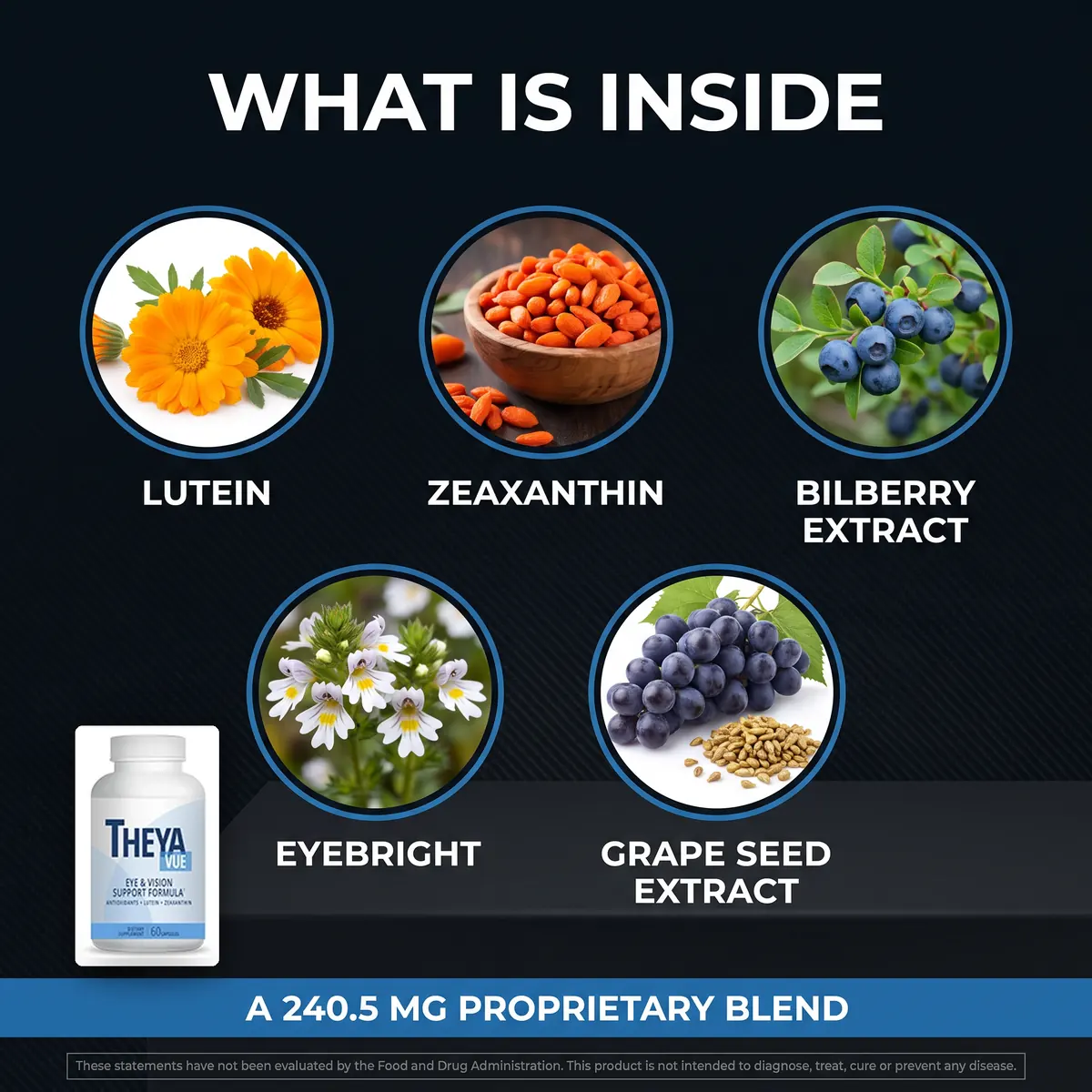
The best-value eye vitamins surround lutein and zeaxanthin with the wider supporting cast — zinc, vitamins C and E, and botanicals such as bilberry. A dedicated eye formula also tends to out-dose a general multivitamin on these specific nutrients, which is exactly the trade-off we compare in eye supplement vs multivitamin.
Factor in the guarantee
A money-back guarantee changes the risk maths. If you can try a product for weeks and return it if it is not for you, the “is it worth it” question becomes much lower-stakes.
A formula built to be worth it
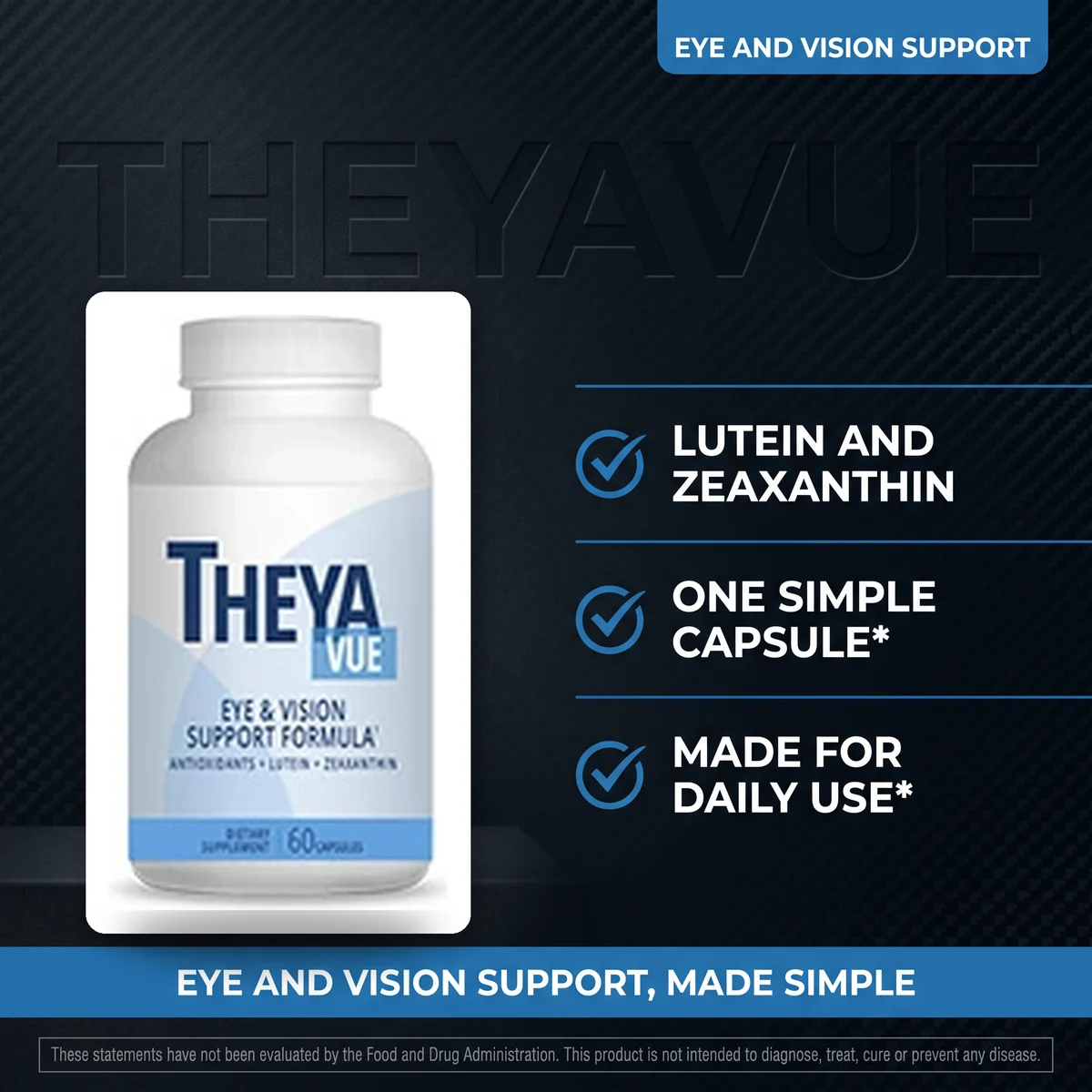
TheyaVue pairs lutein and zeaxanthin with bilberry and a 20+ vitamin, mineral and botanical complex in one small daily capsule — transparent dosing, no sugar, and a 60-day money-back guarantee so you can judge the value for yourself.
See TheyaVue Packages & Value
Because eye nutrients build up slowly, multi-bottle packs usually offer the best value per day for a consistent routine.
The cost-versus-value verdict
So, are eye vitamins worth it? The most accurate answer is: a well-dosed, transparent eye vitamin is worth it for people whose diets leave a real gap, and it is not worth it for people who already eat brilliantly or who buy an under-dosed product. The category earns its keep as consistent nutritional support, not as a shortcut to better eyesight. If you approach it with realistic expectations — a steady daily baseline of nutrients your eyes use every day — and you judge products on dose and transparency rather than hype, the money is usually well spent.
If you are still weighing it up, start from food, be honest about your weekly plate, and then decide whether a supplement fills a gap you would otherwise leave open. That single question — what gap am I filling? — answers the “worth it” question better than any marketing claim ever could.
Frequently asked questions
Are eye vitamins worth it for most people?
For someone who already eats plenty of leafy greens and colourful vegetables every day, food may cover most of the bases. Eye vitamins tend to be most worth it for people whose diets fall short on lutein and zeaxanthin, who spend long hours on screens, or who simply want a consistent daily baseline. The value comes from filling everyday gaps, not from a miracle.
Do eye vitamins actually work?
Well-formulated eye supplements deliver nutrients such as lutein, zeaxanthin, zinc and antioxidant vitamins that research has connected to normal eye function and the macular pigment. They are best understood as nutritional support that works gradually over weeks and months, not as a treatment that produces overnight changes in eyesight.
What makes an eye vitamin a waste of money?
The poor-value products are the ones with trace, under-dosed amounts of the headline nutrients, long proprietary blends that hide how little of each ingredient you get, or gummies loaded with sugar. If the milligram amounts on the label are far below what the research used, you are paying for the front of the box rather than the formula.
Can I just eat well instead of taking eye vitamins?
Yes, and food should always come first. The catch is consistency and a couple of nutrients that are genuinely hard to get. Zeaxanthin, for example, concentrates in foods most people rarely eat, so even a good diet can leave a gap. A supplement is a convenient way to keep a steady daily intake on the weeks your plate falls short.
How much should I expect to pay for a decent eye vitamin?
Judge value per serving rather than the sticker price of a single bottle. Multi-bottle packages usually bring the cost per day down and suit a nutrient that works cumulatively. A fair comparison looks at the dose of the key ingredients you receive for the price, not just the number on the front.
References
- National Eye Institute. “Age-Related Eye Disease Study 2 (AREDS2).” nei.nih.gov
- National Institutes of Health, Office of Dietary Supplements. “Zinc — Fact Sheet for Consumers.” ods.od.nih.gov
- American Optometric Association. “Diet and Nutrition — Lutein & Zeaxanthin.” aoa.org
- Harvard T.H. Chan School of Public Health. “The Nutrition Source: Vitamins and Minerals.” hsph.harvard.edu
† These statements have not been evaluated by the Food and Drug Administration. This product is not intended to diagnose, treat, cure or prevent any disease. This article is for general educational information only and is not medical advice. Always consult a qualified eye-care professional or physician about your individual needs.