Best Time to Take Eye Vitamins: Morning, Night & With Food
| Short version | The best time to take eye vitamins is with a meal that contains some fat — the food matters more than the clock. |
| Morning or night? | Either. Pick the meal you never skip so the habit sticks; breakfast and dinner are the usual winners. |
| Why food matters | Lutein, zeaxanthin and vitamin E are fat-soluble, so a little olive oil, egg, avocado or dairy boosts absorption. |
| Biggest factor | Consistency. The best time is whichever one you will actually remember every single day. |
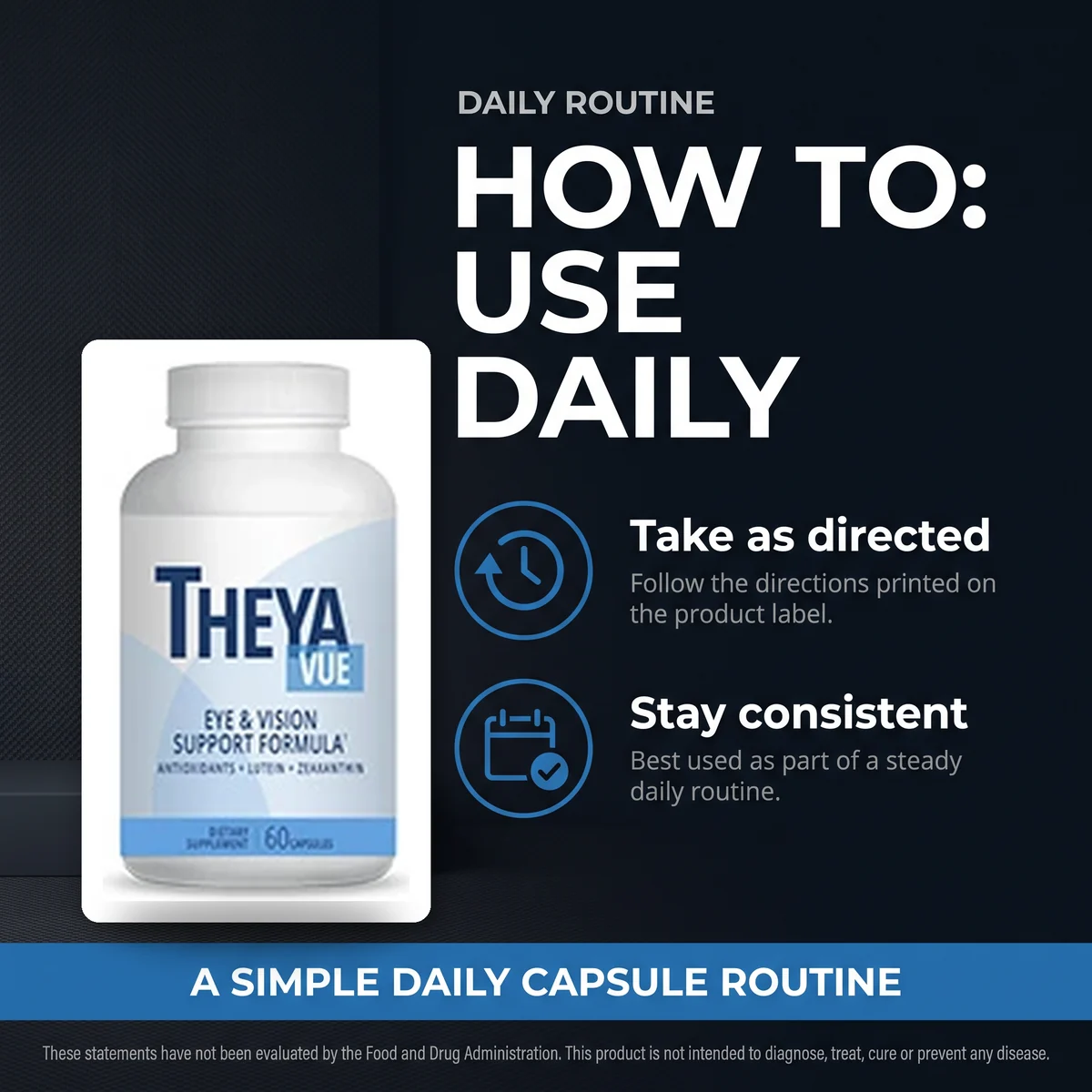
The one rule that matters most: take them with food
If you remember only one thing from this guide, make it this: the best time to take eye vitamins is with a meal that contains some fat. The exact hour on the clock is a distant second. That is because the star nutrients in an eye formula — lutein, zeaxanthin and vitamin E — are fat-soluble. They dissolve in fat, not water, so they hitch a ride into your bloodstream on the fat you eat. Swallow them with a glass of water on an empty stomach and you may absorb noticeably less than if you took the same capsule alongside eggs, avocado or a drizzle of olive oil.
This single fact reframes the whole “morning or night?” debate. The question is not really about time of day at all — it is about which meal you can reliably attach the habit to. Once you understand that, the decision becomes simple and personal.
Morning vs night: does it actually matter?
People search endlessly for whether eye vitamins are better in the morning or at night, hoping there is a secret optimal window. The honest answer is that there is no strong evidence that the time of day meaningfully changes how well eye vitamins work. Your body deposits lutein and zeaxanthin into the macular pigment slowly and continuously, so it is not waiting for a particular hour.
What does differ between morning and night is your own routine. Consider the trade-offs:
Notice that both columns come back to the same two things: is there fat, and will you remember? Choose the meal that scores well on both for your life. There is no universal right answer — only the right answer for your routine.
Why fat-soluble nutrients need a fatty meal
It is worth understanding the mechanism, because it explains every other tip in this guide. Nutrients fall into two broad camps: water-soluble (like vitamin C and the B vitamins) and fat-soluble (like vitamins A, D, E, K and carotenoids such as lutein and zeaxanthin). Water-soluble nutrients are relatively easy to absorb with or without food. Fat-soluble ones are different: they need dietary fat to be packaged up and ferried across the gut wall.
That means the same capsule can deliver more or less usable nutrient depending on what is in your stomach. A little healthy fat — a few nuts, a spoon of olive oil, some avocado, a couple of eggs, or full-fat yoghurt — is enough to make a real difference. You do not need a huge or greasy meal; you just need some fat present. This is exactly why the food you eat with your greens matters too, a theme we explore in our guide to supporting eye health naturally.
- ✓ Easy fat sources: eggs, avocado, olive oil, nuts and seeds, cheese or full-fat yoghurt.
- ✓ Pairs well with: the same leafy-green and orange-vegetable meals that supply carotenoids naturally.
- ✓ Avoid: taking the capsule with black coffee alone, or on a completely empty stomach.
Building a routine that actually sticks
Here is the part most guides skip. The “best time” is ultimately the time you will not forget, because a perfectly timed dose you skip four days a week is worse than an average-timed dose you take every day. Since eye nutrients work cumulatively — a point we cover in detail in how long eye vitamins take to work — consistency is the real lever. A few habit tricks:
Anchor it to something you already do
Attach the capsule to an existing daily anchor: the coffee-and-breakfast ritual, brushing your teeth after dinner, or sitting down for your evening meal. Habits stick best when they piggyback on habits you already have.
Keep the bottle where the meal happens
Put the bottle on the kitchen counter or dining table, not in a bathroom cabinet. Seeing it at mealtime is the cheapest reminder there is.
Pick one time and keep it
Do not overthink morning versus night. Pick one meal, commit to it, and let it become automatic. The consistency you gain is worth far more than any theoretical timing advantage.
Do not double up if you miss a dose
If you forget a day, simply resume the next day with your chosen meal. There is no need to take two at once — the cumulative approach forgives the occasional miss.
One capsule, one meal, every day
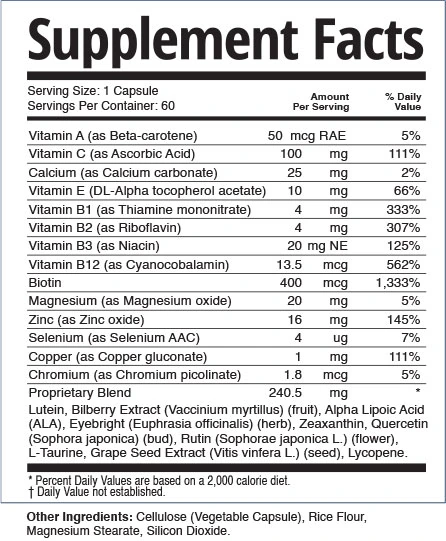
TheyaVue is designed as a simple once-daily capsule of lutein, zeaxanthin, bilberry and a 20+ nutrient complex — easy to pair with whichever fat-containing meal fits your routine. Backed by a 60-day money-back guarantee.
Get TheyaVue for Your Routine
A multi-bottle pack means you never run out mid-routine — the enemy of a nutrient that rewards consistency.
Quick answers to the timing questions people ask
Can I take my eye vitamin with my other supplements?
Usually yes — taking fat-soluble supplements together with a meal is convenient. If you take a separate multivitamin, it is worth understanding the overlap, which we compare in eye supplement vs multivitamin. When in doubt, ask a pharmacist or your doctor.
What if I only eat two meals a day?
No problem. Attach the dose to whichever of your meals contains some fat and happens reliably. Two meals a day is plenty of opportunity for good absorption.
Does splitting the dose help?
For a once-daily formula there is no need to split it. Take the full daily dose with one fat-containing meal and let the cumulative process do the rest.
The bottom line
The best time to take eye vitamins is with a meal that contains some fat, at whichever time of day you will remember without fail. Morning versus night is a red herring; food and consistency are what actually move the needle, because lutein and zeaxanthin are fat-soluble and the benefit builds up slowly over months. Pick your most reliable fat-containing meal, keep the bottle in sight, and make it automatic. Get those basics right and you are giving every capsule the best possible chance to reach your eyes.
Frequently asked questions
What is the best time to take eye vitamins?
The best time to take eye vitamins is with your largest meal of the day that contains some fat, because lutein and zeaxanthin are fat-soluble and absorb better alongside dietary fat. Whether that meal is breakfast, lunch or dinner matters far less than taking it consistently with food every day.
Should I take eye vitamins in the morning or at night?
There is no strong evidence that morning or night is inherently better for eye vitamins. The deciding factor is which time you can attach to a fat-containing meal and remember reliably. Many people pick breakfast or dinner simply because those meals are the easiest to build a lasting habit around.
Do eye vitamins work better with food?
Yes. Lutein, zeaxanthin and fat-soluble vitamins such as E are absorbed more efficiently when taken with a meal that includes some fat — a little olive oil, avocado, eggs, nuts or dairy. Taking them on an empty stomach can reduce how much you absorb.
Can I take eye vitamins on an empty stomach?
You can, but it is not ideal. Because the key carotenoids and some vitamins are fat-soluble, taking them without food may lower absorption and, for some people, cause mild stomach discomfort. Pairing the dose with a meal is the simple fix.
Does the time of day change how well eye vitamins work?
Not meaningfully. What changes absorption is the presence of dietary fat and, over the long run, how consistently you take the supplement. Consistency and food pairing drive the outcome far more than the specific hour on the clock.
References
- National Institutes of Health, Office of Dietary Supplements. “Vitamin E — Fact Sheet.” ods.od.nih.gov
- National Institutes of Health, Office of Dietary Supplements. “Carotenoids — Fact Sheet.” ods.od.nih.gov
- Harvard T.H. Chan School of Public Health. “The Nutrition Source: Fats and Cholesterol.” hsph.harvard.edu
- American Optometric Association. “Diet and Nutrition — Lutein & Zeaxanthin.” aoa.org
† These statements have not been evaluated by the Food and Drug Administration. This product is not intended to diagnose, treat, cure or prevent any disease. This article is for general educational information only and is not medical advice. Always consult a qualified eye-care professional or physician about your individual needs.